

Have you ever set personal development goals with true conviction, only to find yourself losing momentum once the initial excitement wears off? We all understand that feeling, when self-doubt creeps in, or motivation lags. Soon we leave good intentions behind and abandon the objectives we were so keen to pursue in the first place.
Well, after today, that pattern is going to change. Because we’re sharing an article to help you set and achieve personal development goals like never before. It’s a comprehensive piece, positively overflowing with compassionate goal-setting tips infused with kindness and support for you.
So, if you’ve got goals you’re ready to go all in on, keep reading.
You’ll explore practical frameworks, real-life success stories, and tools to help you build boundaries, embrace flexibility, and nurture your own confidence as you pursue meaningful change.
Because the thing is, setting goals and achieving success isn’t about ticking boxes. It’s about cultivating a life led by intention, compassion, and clarity.
We actively celebrate hustle. Yet we are ashamed by the times when may need healing or rest. We need to reframe our thoughts around our deeper values, and shape and pace our efforts accordingly to stick with it for the long haul.
Whether you’re coaching a team or individuals, navigating a personal reboot, or simply seeking a more compassionate way to grow, this is your roadmap.
In a hurry? Download our 1-page Personal Development Goals Compassionate Goal-Setting Quick Start Sheet.
Need more help to clarify your personal development goals? Take our Personal Development & Compassionate Goal-Setting Quiz.
Table of Contents
- 1. Introduction to Personal Development Goals: Everything Changes Today
- 2. Personal Development Goals: The Psychology
- 3. Core Principles of Compassionate Goal Setting
- 4. Proven Frameworks and Models
- 5. Setting Kindness-Centered Goals
- 6. Building a Developmental Plan
- 7. Tools, Printables, and Resources
- 8. Success Stories
- 9. Pitfalls and How to Avoid Them
- 10. Conclusion and Next Steps
1. Introduction to Personal Development Goals: Everything Changes Today
I stepped on the scale, expecting to have lost a bit, only to see I’d gained a pound. Almost instantly, that inner voice kicked in: “Why did you eat that cookie?” and “You should have added another mile yesterday.” My shoulders slumped, disappointment and frustration building. I wondered, “What is the point in setting goals, anyway? I never seem to achieve them.”
If you can relate to this sentiment, I’m here to tell you, this time can and will be different.
By reading on, you will discover goal-setting tips designed to honor your personal pace and respect your unique journey. As you learn to replace harsh deadlines and self-criticism with kind encouragement, you will begin to see a new approach that can fuel real, lasting progress.

Photo Credit
We’ve all been there. One data point or setback can feel like a full stop. But in the sections ahead, you’ll find the tools and resources that help you push past moments like this and stay on track with the end goal in mind.
Get ready for a goal-setting tips article like none you’ve read before.
2. Personal Development Goals: The Psychology
Many of us approach personal development goals with rigidity or self-criticism, which often leads to burnout or abandonment. By inserting kindness and self-compassion into the process, we soften that rigidity and create a sustainable path forward.
This mindset shift reframes setbacks as learning opportunities and fuels long-term motivation.
2.1 Motivational Theory
Motivation stems from a mix of internal and external drivers. Intrinsic motivation flourishes when a goal resonates with your values and sparks genuine interest, while extrinsic motivation relies on outside rewards or pressure.
Intrinsic motivation is the one in our control to tap into. It’s key to stop looking outside for feedback or validation on your progress. Instead, look inward. Cultivate the inner strength and commitment to stay the course. It will always be there for you.
Concurrently, shift your approach to your personal development goals with compassion and the focus from punishment to encouragement, strengthening that internal spark of “I want to do this” rather than “I have to do this.”
2.2 Research and Evidence
Self‑compassion supports healthier coping after setbacks and is linked to more adaptive responses to failure, suggesting it can protect motivation during goal pursuit.
Recent reviews and chapters synthesizing experimental and correlational studies show that self‑compassion is associated with sustained intrinsic motivation and can make goal‑focused practices feel more acceptable and less shaming,
Experimental work comparing self‑compassion interventions to alternatives finds mixed effects on objective goal achievement but consistent benefits for emotional well‑being and acceptability, indicating self‑compassion helps people stay engaged with goals even when progress is imperfect.
2.3 Self-Determination and Compassion
Self-Determination Theory highlights three basic psychological needs that must be met for sustainable motivation: autonomy, competence, and relatedness. Follow these guidelines to increase the odds of creating goals that you can and will achieve:
- Autonomy: Choose personal development goals that align with your personal values.
- Competence: Build confidence through clear, attainable steps.
- Relatedness: Feel supported by your own kind inner voice, and your support system.
When these needs are satisfied, you engage more fully and persist longer. Adding a layer of self-compassion provides a safety net, so stumbles become learning moments, not reasons to give up. In this way, self-compassion becomes a driver of perseverance.
2.4 Overcoming Fear of Failure
Fear of failure often shows up as mental blocks that stall progress; those nagging thoughts that tell you it’s safer not to try.
By identifying these blocks and applying a compassionate rewrite, you prevent them from becoming roadblocks. This approach reframes self-criticism into constructive insight and keeps you moving forward.
| Mental Blocks | Compassionate Alternative |
|---|---|
| All-or-nothing thinking: “If I can’t do it perfectly, why bother?” | Acknowledge the feeling: “It’s okay to feel disappointed.” |
| Catastrophizing: “One misstep means I’ve ruined everything.” | View setbacks as data: “What can I learn here?” |
| Comparison: “I’ll never measure up to others.” | Recall past wins: “I’ve overcome challenges before.” |
2.5 Additional Strategies
- Celebrate small progress: Break tasks into bite-sized steps and honor each advancement.
- Practice mindfulness: Use a brief breathing exercise when you notice these mental blocks.
- Journal with prompts: Write down three things you did well today to reinforce self-compassion.
- Seek support: Share challenges with a friend or coach to gain perspective and encouragement.
3. Personal Development Goals: Core Principles of Compassionate Goal Setting
3.1 Aligning Goals with Personal Values
A particularly effective goal-setting tip is to ensure every target ties back to your core values.
When you clearly articulate your “why,” you create a personal compass that keeps you on track, even when motivation dips.
- Identify your top values (e.g., health, creativity, generosity).
- Write a brief “why” statement for each goal.
- Regular check-in: “Does this still align with what matters most to me?”
When your personal development goals are crystal clear, and aligned to your values, they become a built-in decision-making compass and a willpower booster. Imagine you’ve committed to saving $200 each month. Seeing that exact figure in writing means every time you’re tempted by an impulse purchase, you can pause and ask, “Does this action get me closer to my savings goal?”
That instant check highlights the disconnect between your long-term priorities and fleeting desires. Each individual “no” becomes a deliberate win for your values and strengthening your resolve to stay the course.
3.2 Cultivating a Growth Mindset
Viewing challenges as opportunities is a truly empowering goal-setting tip.
A growth mindset paired with compassionate self-talk turns obstacles into steppingstones.
- Embrace challenges: “This is hard, but I can learn from it”.
- Practice self-talk: swap “I can’t” for “I’m learning how to”.
- Celebrate insight over outcome: focus on progress, not perfection.
When you start treating every roadblock like a mini experiment in growth, you build a habit of curiosity instead of defeat. For instance, if you stumble through a presentation and catch yourself thinking “I’m terrible at this,” pause and ask, “What did that glitch teach me?”
By framing the hiccup as data rather than a disaster you cultivate actionable insights. Maybe you realize you need to slow down or add a visual cue to keep your audience engaged.
Celebrating these “aha” moments (“I learned how to pace my speech”) shifts your focus from perfection to progress, fueling both your confidence and your willingness to tackle the next challenge.

3.3 Practicing Self-Compassion Daily
Building resilience starts with simple habits of kindness toward yourself.
Incorporating these goal-setting tips helps you recover swiftly from stumbles and keep moving forward.
- Mindfulness breaks: pause to notice breath and release tension.
- Journaling prompts:
- “What small win did I overlook today?”
- “How would I support a friend in my shoes?”
- “What’s one kind act I can do for myself tomorrow?”
Combining these self-kindness rituals with clear goal reflections amplifies your resilience in the moment. After a mindfulness break or journaling prompt, pause to ask, “Which small step today brought me closer to my goal?” Jot that insight alongside a gentle affirmation: “I noticed progress in my pacing when I rehearsed for five minutes.”
Then map out your next micro-action: maybe it’s drafting a single paragraph for your project or choosing a healthy meal. By experiencing compassionate pauses and targeted goal-checks together, each moment of self-care provides a powerful boost for your perseverance.
4. Personal Development Goals: Proven Frameworks and Models
4.1 SMART Goals Overview
When it comes to goal-setting tips, the SMART framework brings structure and clarity to personal objectives.
By defining each element, you create measurable checkpoints and realistic deadlines that drive consistent progress.
- Specific: clearly define what you want to achieve.
- Measurable: establish criteria to track progress.
- Achievable: set realistic targets based on resources and skills.
- Relevant: align goals with your broader values and priorities.
- Time-bound: assign deadlines to maintain momentum.
For instance, you might set a goal to publish a new self-care blog post:
- Specific: write a 1,200-word article on mindful journaling.
- Measurable: track progress by completing 400 words, an outline, and a draft.
- Achievable: plan 3 30-minute writing sessions each week, leveraging your research and writing skills.
- Relevant: aligns with your core value of generosity by sharing practical tools with your audience.
- Time-bound: finish your outline by Wednesday, complete the full draft by next Monday, and publish the post by the end of the month.
This SMART goal gives you clear checkpoints (word counts, interim deadlines, and resource allocations) that turn a broad intention into an actionable roadmap.
4.2 CLEAR Goals
CLEAR offers a flexible model ideal for collaborative environments.
These goal-setting tips emphasize teamwork and emotional connection, helping groups stay aligned and motivated.
- Collaborative: goals co-created with input from all stakeholders.
- Limited: concise objectives that avoid overwhelm.
- Emotional: tap into personal or team passion for deeper commitment.
- Appreciable: break down big goals into smaller, achievable steps.
- Refinable: adjust goals as circumstances evolve.
For instance, your team might set a goal to co-create a monthly self-care webinar series:
- Collaborative: co-design the agenda with input from facilitators, community members, and key stakeholders.
- Limited: produce a single 60-minute session each month focused on one core theme (e.g., mindful journaling).
- Emotional: invite each presenter to share a personal story or insight, tapping into genuine passion and connection.
- Appreciable: break the work into clear milestones; 1st week: survey topic preferences; 2nd week: draft outlines; 3rd week: rehearse; 4th week: host the live event.
- Refinable: collect participant feedback after each webinar and adjust the next session’s content, format, or pace based on what resonates most.
This CLEAR goal structure keeps everyone engaged in both planning and delivery, ensures objectives stay manageable, and builds in the flexibility to evolve as your team learns.

4.3 GROW Coaching Model
The GROW model is a cornerstone of coaching, providing a conversational roadmap to uncover obstacles and commit to action. Integrating these goal-setting tips in one-on-one sessions can boost self-awareness and accountability.
- Goal: clarify the desired outcome.
- Reality: assess the current situation and challenges.
- Options: brainstorm potential strategies and resources.
- Will: decide on concrete steps and establish commitment.
For instance, imagine coaching a client who wants to establish a consistent morning journaling habit:
- Goal: decide to journal for 10 minutes each morning before checking email.
- Reality: they currently write sporadically, often distracted by work notifications and family demands.
- Options: brainstorm strategies such as setting a phone reminder, using prompt cards to jumpstart entries, or pairing journaling with a morning tea ritual.
- Will: choose to block 10 minutes on their calendar at 7 AM, set an alarm labeled “Journal Time,” and track completion in a habit-tracker app for the next two weeks.
This GROW conversation creates a clear path from aspiration to action, uncovers realistic constraints, explores multiple solutions, and secures a concrete commitment, fueling both self-awareness and sustained follow-through.
4.4 Framework Comparison Table
| Framework | Focus | Key Elements | Strengths | Use Case |
|---|---|---|---|---|
| SMART | Personal productivity | Specific, Measurable, Achievable, Relevant, Time-bound | Clarity & trackability | Individual goal-setting |
| CLEAR | Team & collaborative goals | Collaborative, Limited, Emotional, Appreciable, Refinable | Flexibility & emotional buy-in | Team environments |
| GROW | Structured coaching | Goal, Reality, Options, Will | Reflection & action planning | Coaching sessions |
5. Personal Development Goals: Kindness-Centered Goals
5.1 Personal Development Goals: Compassionate Goal-Setting Tips for Reflection and Self-Audit
As you seek to set personal development goals, begin with honest self-reflection. A compassionate self-audit reveals your strengths, weaknesses, and true passions; essential for personal development goals that feel authentic and energizing.
- List your top three strengths (skills, traits, or habits you consistently rely on).
- Identify one or two areas for growth or recurring barriers.
- Note your deepest passions and interests that spark joy.
Use a self-inventory worksheet to record insights without judgment. This clarity becomes the foundation for kindness-centered planning.
5.2 Personal Development Goals: How to Craft a Vision Statement.
Convert abstract hopes into vivid visions with these goal-setting tips. A powerful vision statement animates your values and guides every action.
Techniques:
- Write in the present tense: “I am…” or “I feel…”
- Invoke your senses: describe how success looks, sounds, and feels.
- Tie descriptions back to core values that matter most.
Sample vision templates:
- “Knowing my work uplifts others, I am confidently sharing my creativity.”
- “I feel balanced and energized as I nurture my health and support loved ones.”
Access your printable vision statement work sheet here.
5.3 Personal Development Goals: How to Use a Prioritization Matrix
A prioritization matrix is one of the most effective goal-setting tips to balance urgency with impact. This tool ensures your efforts align with personal growth and relational kindness.
| Quadrant | Description | Kindness-Centered Tip |
|---|---|---|
| Urgent & Important | Immediate deadlines with high impact | Build in small breaks to sustain compassion |
| Important & Not Urgent | Long-term growth and value-driven objectives | Schedule dedicated focus time with gentle alerts |
| Urgent & Not Important | Low-significance interruptions | Delegate or set boundaries respectfully |
| Neither Urgent nor Important | Low-value activities that drain energy | Release or defer them, honoring your limits |
Apply these goal-setting tips by placing each task into the matrix and prioritizing what truly advances your values.
Here’s how this matrix might look in action for a content creator focused on kindness-centered productivity:
| Quadrant | Example Task | Kindness-Centered Tip |
|---|---|---|
| Urgent & Important | Submit a grant proposal due today | Take a 5-minute stretch break between writing sprints to clear your mind |
| Important & Not Urgent | Outline next month’s self-care e-book | Block two 45-minute sessions on your calendar, with a reminder to breathe |
| Urgent & Not Important | Approve low-impact social media memes | Delegate approval to your assistant and send a quick, appreciative note |
| Neither Urgent nor Important | Mindlessly scroll through industry news articles | Close the tab, refill your water bottle, and honor your limits |

5.4 Personal Development Goals: Compassionate Goal-Setting Tips for Action Planning
Break big goals into bite-size tasks to prevent overwhelm and build steady momentum.
- Chunk goals into weekly or daily micro-tasks.
- Assign each micro-task to a specific date or time block.
- Estimate effort and celebrate every completion, however small.
Incorporate kindness-centered check-ins as goal-setting tips:
- Weekly self-review: “What went well? How can I adjust kindly?”
- Monthly accountability session with a friend or coach.
- Reflective journaling prompt: “How did I practice self-compassion this week?”
These goal-setting tips keep you accountable, compassionate, and on track toward meaningful, kindness-centered goals.
6. Personal Development Goals: How to Build a Developmental Plan
6.1 Short-Term vs. Long-Term Planning
Distinguishing between short-term and long-term personal development goals is a foundational step that keeps you grounded in immediate action while pursuing a broader vision.
- Define clear milestones for each timeframe (e.g., “Complete draft by week 1” vs. “Publish book in 12 months”).
- Balance urgency with aspiration by allocating time blocks for both quick wins and strategic projects.
- Use a dual timeline view (daily or weekly for short-term, quarterly or annual for long-term) to maintain perspective.
Access your own printable worksheet to develop your milestones.
6.2 Milestones and Checkpoints
Setting measurable progress markers transforms ambition into actionable steps, one of the most powerful goal-setting tips for sustained momentum.
- Break each major goal into 3-5 specific milestones with dates or criteria.
- Design checkpoints that answer, “What will success look like?” and “How will I know I’m on track?”
- Celebrate each win with a moment of gratitude or a brief self-reward to reinforce progress.
6.3 Accountability Partners and Coaching
Leveraging social support is a proven goal-setting tip that amplifies commitment to your journey.
- Choose a partner who shares your values and offers constructive encouragement rather than judgment.
- Establish compassionate check-ins: agree on frequency, format (call, text, video), and tone (supportive feedback over criticism).
- Co-create accountability rituals, like a weekly “win share” or gentle reminder system, to keep each other motivated.
6.4 Adapting Personal Development Goals and Plans with Compassion
Flexibility is a hallmark of smart goal-setting tips, allowing you to pivot without succumbing to self-criticism when life shifts.
- Recognize early signals for change (missed deadlines, shifting priorities, new opportunities) and document them.
- Revisit your milestones quarterly: adjust scope, timelines, or resources based on real-world feedback.
- Replace harsh self-judgment with curious questions (“What can I learn from this?”) and reframe setbacks as data points.
7. Personal Development Goals: Tools, Printables, and Resources
Tools matter. The right resources can turn intention into action and help you stay grounded, focused, and inspired.
7.1 Personal Development Goals: Recommended Resources
Whether you’re just starting out or refining your process, these products offer structure, clarity, and emotional support all aligned with the goal-setting tips shared throughout this article.
| Product | Why It’s Recommended | Link |
|---|---|---|
| 1. Goal Setting: The Ultimate Guide to Achieving Goals That Truly Excite You | Offers the S.M.A.R.T.E.S.T method and a 4-step process to overcome mental blocks. Great for those seeking motivation and clarity. | Get Your Copy |
| 2. Goal Setting: 10 Easy Steps to Keep Motivated & Master Your Personal Goals by Matt Morris | A quick-read guide with practical steps and mindset strategies. Ideal for busy readers who want actionable advice. | Buy Your Copy |
| 3. Goal Setting (Worksmart Series) by Michael Dobson & Susan B. Wilson | Includes worksheets and quizzes to help readers set precise goals and overcome obstacles. Perfect for hands-on learners. | Get Your Copy |
| 4. Goals: How to Get the Most Out of Your Life by Zig Ziglar | Explaining the difference between action and accomplishment, Ziglar walks through the essential steps to set and hit goals. | Buy Your Copy |
| Find a Personal Goal and Progress Journal | Your dreams and progress notes deserve a special place to live! Choose one that speaks to you as a first step to honor your growth process. | Get Your Copy |
We choose to recommend these specific resources as they align best to the frameworks highlighted in this article.
7.2 How to Set Personal Development Goals: Printable worksheets
Printable worksheets help to make goal-setting more concrete. They serve as hands-on goal-setting tips you can carry anywhere.
- Goal-Setting Workbook Pages
- Self-Inventory Worksheet: capture strengths, weaknesses, and passions in a structured format.
- Vision Statement Builder: guided prompts to draft evocative, present-tense declarations.
- Developmental Plan Templates
- Milestone Planner: space to define short-term and long-term milestones with dates.
- Checkpoint Tracker: tables for logging progress markers, reflections, and compassionate celebrations.
DOWNLOAD YOUR FREE PRINTABLES HERE
7.3 Personal Development Goals: Digital Tools
Use digital tools to automate reminders, visualize progress, and reinforce goal-setting tips through data and notifications.
| Tool | Purpose | Goal-Setting Tips Integration |
|---|---|---|
| Trello | Visual project boards | Create columns for each milestone and drag tasks as you complete them |
| Habitica | Gamified habit tracker | Turn micro-tasks into “quests” to reinforce daily wins with points |
| Google Calendar | Time blocking and reminders | Color-code short-term vs. long-term tasks and set recurring progress checks |
| Notion | All-in-one workspace | Use built-in templates for goal plans, habit logs, and reflection pages |
8. Personal Development Goals: Success Stories
Real lives. Real change. These stories reflect how compassion, structure, and purposeful action can spark powerful transformations.
8.1 Personal Transformation Example
When Emma first reached out, she described herself as “invisible”; burdened by self-criticism and exhausted from striving to meet impossible expectations. Her inner dialogue echoed years of dismissive feedback and conditional approval.
Through a series of personalized coaching sessions, Emma began practicing mindfulness and self-kindness techniques designed to counter her harsh inner critic. The shift started small: journaling moments of joy, pausing to breathe through overwhelm, recognizing her strengths. Together, we reframed her negative self-talk into affirmations rooted in truth and softness.

Six months later, Emma didn’t just feel better; she believed she was worthy. She started a local peer support circle for women recovering from burnout and now writes a blog encouraging others to reclaim their voice. Her transformation stands as a beacon for the power of compassion-based coaching.
8.2 Personal Development Goals: Coaching Success Story
A mid-size nonprofit came to us facing low morale and fractured communication. Team members felt unheard, unmotivated, and unclear about expectations. The leadership wanted change, not just improved performance, but a culture shift.
We introduced structured, kindness-driven goal-setting tips, combining clarity with emotional support. Each person set their own goal rooted in values, not just tasks. Weekly check-ins invited reflection, celebration, and gentle course correction. Gratitude boards and “strength-spotting” exercises helped the team recognize wins big and small.
The result? In three months, productivity rose 27%, but more remarkably, internal surveys showed a 70% increase in feelings of connection and purpose. The team now leads workshops on compassionate goal-setting for other organizations, proving that kindness isn’t just good, it’s transformative.
9. Personal Development Goals: Pitfalls and How to Avoid Them
Growth is not a straight line. The diversions along the way help us learn to navigate the whole journey with more grace. Effective goal setting and achievement can get derailed by some common pitfalls. Here’s how to avoid them.
9.1 Goal-Setting Tips: Overcommitting
If your calendar looks more like a battlefield than a blueprint, you might be overcommitting. Common signs include:
- Constant fatigue or irritability.
- Neglecting personal care or downtime.
- Feeling guilt when saying “no” Overcommitting is often rooted in a desire to please or prove—and it’s unsustainable.
Compassionate boundary setting is critical. Setting limits isn’t selfish, it’s essential. Try these approaches:
- Use kind but clear language: “I’d love to help, but I don’t have the bandwidth right now.”
- Schedule “white space” to decompress and reflect.
- Remember: saying “no” to excess means saying “yes” to well-being.
9.2 Goal-Setting Tips: Lack of Self-Compassion
Spotting the Saboteur Within. Negative self-talk can masquerade as motivation. Phrases like “I should’ve known better” or “I’m just not good enough” often lurk beneath the surface. They don’t drive progress, they drain it. Tools to reframe criticism include:
- Write affirmations that feel true, not forced: “I am learning. I am growing.”
- Practice a daily “compassion check-in”: one kind thought about yourself.
- Use cognitive reframing: turn “I messed up” into “I’ve discovered where I can grow.”
9.3 Goal-Setting Tips: Rigidity vs. Flexibility
Finding Flow Within Structure. Structure is empowering but if it becomes a cage, progress suffers. Signs of rigidity include:
- Feeling panicked when plans change.
- All-or-nothing thinking (“I failed, so I give up”).
- Inability to pivot, even when things no longer serve you.
Compassionate Course Corrections. Flexibility doesn’t mean failure, it means wisdom. Lean into these goal-setting tips:
- Revisit goals monthly to assess alignment.
- Celebrate small pivots and new insights.
- Frame changes as refinements, not setbacks.
Kindness is not just a philosophy, or a behavior, it’s also a strategy. And every time we apply it to ourselves, we rewrite the rules for what growth can feel like.
10. Personal Development Goals: Next Steps
Growth is a daily choice. This guide has offered practical paths to walk that journey with more compassion, clarity, and courage.
10.1 Personal Development Goals: Recap of Key Takeaways
Let’s ground ourselves in the core truths that carried us through:
- Kindness is a catalyst, not a luxury; it reshapes individuals and teams alike.
- Structured goal-setting tips help create momentum with meaning.
- Self-compassion isn’t a detour. It’s the fuel that sustains every forward step.
- Boundaries and flexibility coexist: It’s about honoring our limits while evolving with purpose.
- Community creates continuity; growth deepens when shared.
From foundational principles to real-life transformation, each framework and tool is designed to help you feel seen, supported, and strong.
10.2 Personal Development Goals: Time to Start Your Journey
Even if today you only choose one compassionate thought, one boundary, one goal-setting tip, that is progress.
You don’t need to be perfect, just present.
Your journey is uniquely yours, marked not by perfection, but by intention. The compassionate strategies we’ve shared will help you to begin gently, stay curious, believe in your ability to grow, maintain daily action, and achieve your goals. Every step will ripple outward to create a life aligned with what matters most to you.
So: Name one value you want to build into your life; Write one kind affirmation to guide your week; Set one flexible goal that feels like possibility, not pressure. Take a breath, open your journal, and choose a place to begin.
For added inspiration, download our 1-page Personal Development Goals Compassionate Goal-Setting Quick Start Sheet.
Your goals are declarations of hope and optimism. Let kindness guide your progress, and trust that who you’re becoming is already worth celebrating.
Thank you as always for reading. Be sure to subscribe so you never miss a post.
Affiliate Disclosure: Some links in this post are affiliate links. As an Amazon Associate, we earn from qualifying purchases. Thank you for supporting Kindness-Compassion-and-Coaching.com at no extra cost to you.

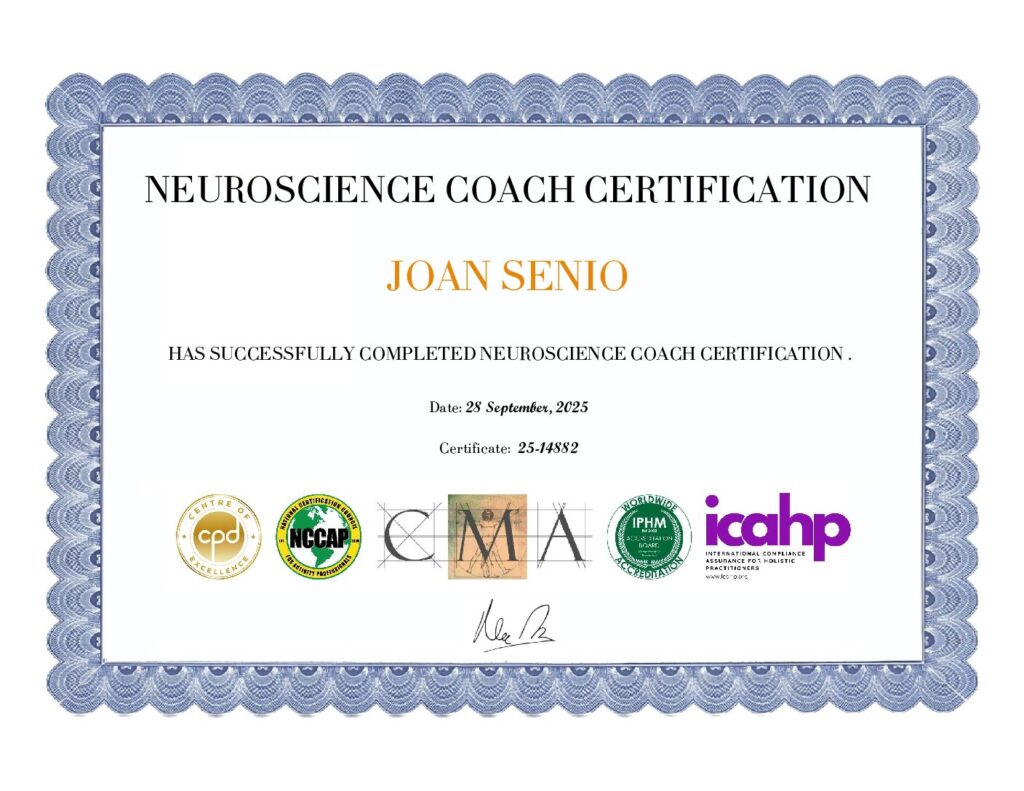
Joan Morabito Senio is the founder of Kindness-Compassion-and-Coaching.com. Joan’s career includes clinical healthcare plus 20+ years as an executive in a nationwide health care system and 15 years as a consultant. The common threads throughout Joan’s personal and professional life are a commitment to non-profit organizations, mental health, compassionate coaching, professional development and servant leadership. She is a certified Neuroscience Coach, member of the International Organization of Life Coaches, serves as a thought-leader for KuelLife.com and is also a regular contributor to PsychReg and Sixty and Me. You can read more about Joan here: Joan Senio.




No Responses