
There often comes a point in inner healing when you begin to see your existing relationships through new eyes. Behaviors you once overlooked become harder to ignore. Conversations that once felt satisfying no longer meet your needs. New questions start to surface. Is this relationship helping me grow? Can this person grow with me? Am I settling for something simply because it’s familiar – or because I’m afraid to start over?
These questions are signs that something within you has changed. As your self-awareness deepens and your sense of worth strengthens, you naturally begin to reevaluate relationship potential, and specifically, if your current relationships have the capacity to align with who you are becoming.
Today, we focus on how to thoughtfully evaluate whether a relationship with a significant other has what it takes to stand the test of time.

How Inner Healing May Change You
Personal growth and inner healing often change the way you experience romantic relationships. When you begin reclaiming your worth or reconnecting with the parts of yourself that feel most authentic and real, your expectations of partnership may evolve. You may begin to show up differently, express your needs more fully, or use a clearer voice that is more aligned with your true identity.
And as this inner shift unfolds, the relationships you engage in begin to reveal their true nature. At this stage, evaluating relationship potential becomes an essential part of your continued recovery. It’s important to understand whether your significant other has the desire and capacity to grow with you.
What Is Relationship Potential?
Relationship potential is the capacity a romantic relationship has to develop into a healthy, fulfilling, and lasting partnership. It is not a prediction about the future, nor is it a guarantee that a relationship will succeed. Instead, it reflects whether the foundation exists for two people to grow together, navigate challenges, and build a meaningful life as a team.
Many people evaluate a relationship based primarily on how they feel in the moment. Attraction, chemistry, excitement, and emotional intensity can all create the impression that a relationship has strong potential. While those experiences are important, relationship potential is more accurately determined based on patterns, behaviors, values, and the way two people respond to each other over time.
A relationship with strong potential is typically characterized by emotional engagement, mutual respect, effective communication, shared values, and a willingness to work through difficulties together. Both partners demonstrate an interest in understanding, supporting, and growing alongside one another. The connection feels capable of deepening rather than remaining stuck in the same patterns.
Signs of Limited Relationship Potential
Sometimes, a relationship that feels exciting may actually show signs of limited long-term potential. Persistent communication problems, emotional unavailability, mismatched values, lack of reciprocity, or resistance to growth can all create obstacles that become more significant as the relationship progresses.
While no relationship is perfect, long-term success usually depends on both partners being willing and able to address challenges constructively.
Evaluating relationship potential requires balancing hope with honesty. It means appreciating what the relationship could become while also recognizing what it is today. Rather than focusing exclusively on promises, intentions, or future possibilities, it helps to begin to pay attention to the reality of the relationship as it currently exists.
This perspective becomes especially important during periods of personal growth and healing. As your self-awareness increases, you become better equipped to distinguish between genuine compatibility and wishful thinking, and between temporary attraction and lasting partnership potential.
Instead of asking, “Could this relationship work someday?” you begin asking a more meaningful question: “Does this relationship, as it exists today, provide a strong foundation for the future I hope to create?”
Evaluating Relationship Potential
Evaluating relationship potential with a significant other, or possible significant other, is a unique process. It differs from assessing a marriage or long‑term partnership because the foundation is still forming. You are not looking at decades of shared history. You are looking at emerging patterns, early dynamics, and the way your significant other responds to your evolution. You are looking at the beginning of something that could become deeply meaningful, and you are trying to understand whether it has the strength to grow.
The process begins with awareness. You start noticing how your significant other reacts to your boundaries, your needs, and your growth. Do they show curiosity about your inner world or do they remain focused on their own? When presented with a new idea, do they respond with openness or with resistance? These early observations help you understand the emotional climate of the relationship.
From there, the process moves into reflection. You must ask yourself what you need from a long‑term partner, and whether your significant other supports your evolution or whether they feel threatened by it. You must also consider whether the relationship feels expansive or restrictive, and whether you feel seen, valued, and understood. Reflection helps you understand whether the relationship aligns with your identity and your future.
Finally, the process leads to evaluation. You must look at the relationship through the lens of your renewed sense of worth, consider whether emotional engagement feels reciprocal, whether communication supports connection, and whether both partners contribute to the relationship in meaningful ways. You must also consider whether the relationship has momentum or whether it feels stagnant. Evaluation is not about predicting the future; it’s about understanding the present with honesty and depth.
This form of assessment is especially challenging because it requires you to see both yourself and your significant other clearly, and to make choices that reflect the person you are becoming, not the person you used to be.

Why Healing Can Change What You Look for in a Partner
Healing often changes relationships in unexpected ways. The qualities that once attracted you may no longer feel fulfilling, while qualities you previously overlooked may suddenly become essential.
Many of our relationship preferences are shaped early in life, as we learn what love feels like, what connection requires, and what roles we believe we need to play in order to be accepted. If your emotional needs were dismissed, you may have learned to expect very little from a partner. If affection felt unpredictable, inconsistency may have become familiar. If you grew up prioritizing other people’s needs over your own, relationships built around self-sacrifice may have felt normal.
As healing progresses, those old patterns become easier to recognize. You may notice that relationships once fueled by chemistry or intensity leave you feeling emotionally depleted. You may find yourself questioning why you are drawn to certain people and why familiar relationship dynamics often produce the same disappointments. Rather than automatically accepting what feels familiar, you begin asking whether it is actually healthy.
This shift can be unsettling. Someone who once seemed attractive may now appear emotionally unavailable. Behaviors you previously excused may become difficult to ignore. You may discover that what you once interpreted as independence is actually distance, or that what felt like safety is actually a lack of depth.
Relationship Potential: How Healing Changes You
Healing also strengthens your sense of worth. As self-respect increases, you may become less willing to settle for relationships that require you to minimize your needs, suppress your voice, or constantly earn affection. You begin looking for consistency rather than promises, effort rather than potential, and emotional presence rather than occasional moments of connection.
The result is often a meaningful change in what you value in a partner. Instead of focusing primarily on attraction or chemistry, you begin paying attention to emotional maturity, mutual respect, shared values, and a willingness to grow together. You start evaluating whether a relationship supports the person you are becoming rather than reinforcing patterns you are working to leave behind.
Choosing relationships based on alignment is one of the clearest signs that healing is taking root. And that shift can transform not only who you are attracted to, but also the kind of partnership you ultimately create.
Relationship Potential: Why Healing May Change Who You Chose
Not every relationship begins from a place of wholeness. Many people enter relationships during periods of grief, loneliness, uncertainty, burnout, or emotional unavailability. At the time, a relationship may provide comfort, stability, companionship, or a sense of safety that feels deeply needed. The relationship may be “enough”. There is nothing wrong with that. We all seek connection in the best way we know how.
The challenge is that the version of yourself who entered the relationship may not be the same person you are today, or the person you ultimately strive to be.
Perhaps when the relationship began, you were hesitant to be vulnerable. Maybe you had been hurt before and were keeping parts of yourself hidden. You may have avoided difficult conversations, minimized your needs, or convinced yourself that certain aspects of the relationship were “good enough”. In some cases, you may have chosen a partner based less on genuine compatibility and more on what felt safe, familiar, or available during a difficult season of life.
Sometimes the relationships we choose are influenced by parts of ourselves that still need healing. For example, experiences related to a mother wound, father wound, or arrested development can shape our expectations of love, connection, and emotional safety. As self-awareness grows, you become more able to recognize relationships that reflect genuine compatibility and those which may reflect echoes of earlier experiences that no longer serve you.
Relationship Potential: What Happens as We Outgrow Our Protective Strategies
As healing progresses, your protective strategies often begin to soften. You become more comfortable expressing your thoughts, feelings, and needs. You start developing a clearer understanding of who you are and what matters most to you. The qualities you once prioritized may become less important, while other qualities begin rising to the surface.
This is often the point where people start questioning their relationships. Not because the relationship is failing, but because they are seeing it through a different lens.
Relationship Potential: How Relationships May Adapt – or Not
A healthy relationship is capable of adapting to growth. As one partner becomes more authentic and emotionally available, the other responds with curiosity, support, and a willingness to deepen the connection. New conversations emerge. Greater honesty becomes possible. The relationship evolves alongside the individuals within it.
Other relationships struggle during this transition. A partner who was comfortable with limited vulnerability may become uncomfortable when deeper emotional connection is requested. Needs that were once unspoken are now expressed. Boundaries that once did not exist are now established. The dynamic begins to change, and not everyone welcomes that change.
For this reason, periods of healing often create opportunities for reassessment. The question is not whether you chose the “right” person in the past. The question is whether the relationship, as it exists today, is capable of supporting the person you are becoming.

Relationship Potential: Understanding What Evolution Reveals
Sometimes healing reveals that a relationship contains far more potential than you originally realized. In other cases, it reveals limitations that were hidden beneath old coping strategies and unspoken needs. Either way, the goal is not judgment; it’s understanding.
As your relationship with yourself changes, it is natural and healthy to examine whether your romantic relationship is evolving as well.
The strongest partnerships are not those that remain frozen in the circumstances that brought two people together. They are the ones that continue growing as both people grow, creating space for greater authenticity, deeper vulnerability, and a more meaningful connection and intimacy over time.
Emotional Alignment and Relationship Potential
Emotional alignment is one of the strongest indicators of long‑term potential. It reveals whether both partners are capable of growing together or whether one person is carrying more of the emotional load.
When you begin reclaiming your worth, you often become more attuned to emotional dynamics that once felt normal but now feel draining. You notice whether your significant other listens with presence or reacts with defensiveness, whether they show interest in your experiences or dismiss them, and whether emotional engagement feels like a shared effort or a one‑sided responsibility.
Emotional alignment does not require identical emotional styles, but it requires responsiveness, willingness and engagement. When both partners show up emotionally, the relationship becomes a place where growth is supported rather than resisted.
Evaluating emotional alignment helps you understand whether the relationship has the emotional foundation needed for long‑term commitment. It helps you see whether your significant other is capable of meeting you where you are and growing with you, whether emotional misalignment is something that can be strengthened through communication, or if it reflects deeper incompatibilities that may limit the relationship’s future.
Shared Values and Long‑Term Compatibility
Shared values shape the direction of a relationship. They influence decisions, priorities, and the way partners navigate challenges. When you begin evaluating relationship potential, you start noticing whether your significant other shares similar views on partnership, family life, lifestyle, personal growth, and relational responsibility.
You notice whether they value emotional engagement, communication, and mutual investment and whether they prioritize connection or convenience.
Shared values do not require identical beliefs, but they require alignment, respect, and a willingness to understand each other’s perspectives. When values align, the relationship feels grounded and stable. When values conflict, the relationship may feel unpredictable or strained.
Evaluating shared values helps you understand whether the relationship has the structural foundation needed for long‑term commitment. It helps you see whether your significant other is moving in the same direction or whether they are moving in a direction that may eventually create distance between you. It also helps you understand whether differences in values can be navigated or whether they may become barriers to future compatibility.
Communication Patterns and Future Stability
Communication is another one of the clearest indicators of long‑term potential. Do conversations feel constructive or constrained? Does your significant other listen with interest or respond with dismissal? Does communication lead to connection or to conflict? These observations will help you understand whether the relationship supports your growth or whether it limits your ability to express your real self.
Evaluating communication patterns helps you understand whether the relationship has the stability needed for long‑term commitment. It helps you see whether your significant other is capable of engaging in constructive dialogue or whether they employ avoidance or defensiveness when difficult subjects arise. It also helps you understand whether communication patterns can be strengthened or whether they reflect deeper relational dynamics that may limit the relationship’s future.

Mutual Investment and Relationship Momentum
Mutual investment reveals whether both partners are contributing to the relationship in meaningful ways. Does your significant other takes initiative or do they rely on you to maintain the connection? Do they show appreciation or take your efforts for granted? Do they contribute to the emotional and practical health of the relationship, or do they leave most of the responsibility to you?
Mutual investment is not about keeping score; it’s about shared engagement and about recognizing that both partners play a role in creating the emotional environment of the relationship. When both partners contribute, the relationship feels supportive and stable.
Can Relationship Potential Be Confused With Chemistry?
One of the most common mistakes people make when evaluating relationship potential is confusing chemistry with compatibility. While chemistry can create a powerful sense of attraction and connection, it does not necessarily indicate that a relationship has the foundation needed to thrive over the long term.
Chemistry is often experienced as excitement, anticipation, passion, or a strong desire to be close to someone. It can make conversations feel effortless and create a sense of possibility that is difficult to ignore.
These experiences are meaningful, but they do not automatically translate into emotional availability, shared values, healthy communication, or mutual commitment. A relationship can have intense chemistry and still struggle with the qualities that sustain long-term connection.
For those engaged in personal growth and inner healing, this distinction can be particularly important. Many people discover that some of their strongest attractions were rooted less in compatibility and more in familiarity. Relationships that recreated old emotional patterns may have felt compelling because they reflected experiences learned earlier in life. The unpredictability of an emotionally unavailable partner, for example, can create intense longing that is easily mistaken for deep connection.
Emotional Intensity vs. Emotional Security
As healing progresses, it becomes easier to recognize the difference between emotional intensity and emotional security. While intensity often creates emotional highs and lows, security creates consistency, trust, and safety. Intensity can feel exciting because it activates anticipation and uncertainty. Security can initially feel unfamiliar because it lacks the drama and unpredictability that many people unconsciously associate with love.
This does not mean chemistry is unimportant. Healthy relationships often include attraction, excitement, and emotional connection. The key is recognizing that chemistry is only one piece of the puzzle. Lasting relationships are built on a broader foundation that includes emotional alignment, mutual respect, shared values, effective communication, and not just an openness to growth, but a willingness and desire to grow together.
Relationship Potential: Key Questions to Ask
When evaluating relationship potential, ask yourself whether you are responding primarily to how the relationship makes you feel in the moment or whether you are paying attention to the patterns that emerge over time. Attraction may draw two people together, but compatibility is what determines whether they can successfully build a future together.
The healthiest relationships tend to combine both elements. They offer the spark of chemistry while also providing the stability of compatibility. When both are present, the relationship is not only exciting to begin, but also capable of supporting the deeper connection, trust, evolution and partnership that long-term commitment requires.
FAQ: Evaluating Relationship Potential for Long‑Term Commitment
What is relationship potential? Relationship potential is the capacity a romantic connection has to grow into a long‑term, committed partnership.
Does evaluating relationship potential mean the relationship is failing? No. It often means the relationship is evolving and requires new forms of communication and engagement.
Can relationship potential be strengthened? Yes. Emotional alignment, communication, and mutual investment can grow when both partners are willing to engage.
What if my significant other resists the evaluation? Resistance often reflects fear or misunderstanding. It can be addressed through open dialogue and shared reflection.
How do I know if the relationship is worth pursuing long‑term? Clarity comes from noticing patterns, understanding your priorities, and evaluating whether the relationship supports your growth.
Relationship Potential: Can Yours Stand the Test of Time?
No relationship comes with guarantees, and it is impossible to predict the success of a potential partnership with certainty. It is possible, however, to develop enough clarity to begin to distinguish between potential and wishful thinking.
Healthy relationships are not built on who someone might become someday. They are built on the patterns, choices, and behaviors that already exist.
When you learn to evaluate relationship potential through the lens of self-respect rather than fear, you stop asking whether someone will choose you, or change for you, and start asking whether this relationship truly aligns with the life you want to create. That shift changes everything.
Evaluating relationship potential is an act of self‑respect and a way to honor your future. It is reasonable and good for you to be intentional as you evaluate and select relationships that support your growth rather than limit it. It is never too late to begin to choose connections that reflect your worth, your needs and your potential in a partnership.
As you move through this process, you may find that some relationships need tending, and that others may require ending. You are allowed to seek this alignment, to ask for reciprocity, and to choose to invest in relationships that feel expansive, and to stop investing in relationships that show limited potential. Most of all, you are allowed to create a future filled with meaningful relationships that honor the person you are becoming.
Thank you as always for reading.

Joan Morabito Senio is a coach and former executive and consultant with over 35 years of experience helping people overcome challenges, grow, and achieve their full potential. She created Kindness‑Compassion‑and‑Coaching.com to provide free coaching resources to individuals and the compassionate coaching community.
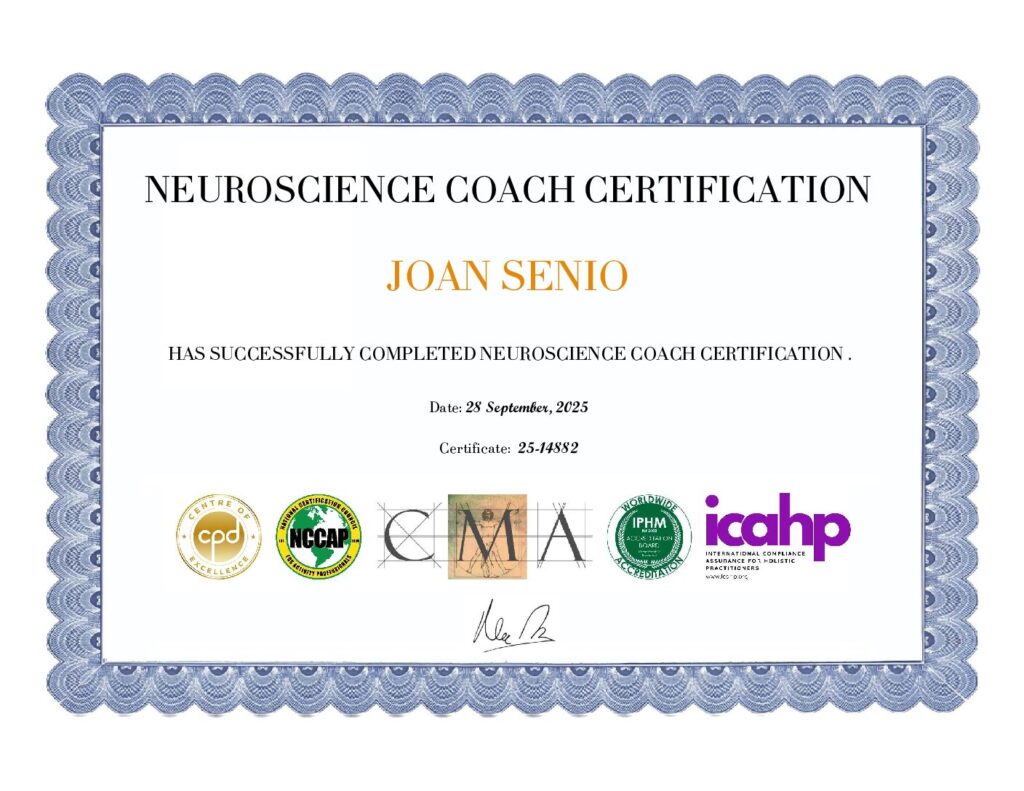
As a certified neuroscience coach and member of the International Organization of Life Coaches, Joan blends science‑based insight with heart‑centered guidance to help others rise above old patterns and step into their most authentic selves. She is committed to supporting those ready to grow, take ownership of their next chapter, and transform their lives from the inside out.
*Some links in this post are affiliate links. That means that we may receive a small commission at no cost to you when you purchase anything via one of these links. These commissions help us keep Kindness-Compassion-and-Coaching.com a free resource, as they help to cover website expenses. Thank you for your support.

No Responses