
When emotions rise quickly, it’s often because our thoughts are driving the intensity of what we feel. Fortunately, with a bit of effort and awareness, we can influence the direction and pace of our thinking through a practice known as cognitive emotional regulation.
Cognitive emotional regulation isn’t about forcing positivity or controlling your mind, and it’s not about attempting to silence your emotions. It’s about creating space inside your thoughts, so emotions have room to settle and return to balance. It’s also about learning to understand the stories behind your emotions: the assumptions, prediction and internal narratives that can create confusion, ambiguity, false conclusions or fog.
This kind of inner work asks you to slow down enough to hear your own thinking and to soften rigid interpretations. When you give your mind the leeway to explore other than your immediate reactions, you begin to find a wider range of possibilities and opportunities. This is the beginning of transforming yourself from a reactive mode to a mindset that allows you to manage your emotions more effectively and respond more thoughtfully and appropriately.
Many find it helpful to pair this practice with a basic cognitive support, like a thought‑journal notebook to capture patterns and reframe moments in real time. A structured option designed for daily reflection and subtle cognitive reframing can make this process feel more accessible and grounded.

How Thoughts Shape Your Emotional Experience
Cognitive emotional regulation begins with understanding how quickly your mind interprets what is happening around you. Long before your body reacts, your thoughts assign meaning to a moment – deciding whether something feels safe, uncertain, overwhelming, or threatening. These interpretations often happen so fast that you don’t notice them, yet they shape the entire emotional landscape that follows.
When a situation feels intense, it is often the story your mind tells about the moment that amplifies the feeling, not the moment itself.
This is why thought awareness matters. When you begin to notice the assumptions, predictions, and internal narratives that rise automatically, you create a brief but powerful pause between stimulus and response.
That pause is where you can begin to soften a harsh interpretation, question an old belief, or reframe a moment so your emotions have room to process. Cognitive emotional regulation doesn’t require you to think differently on command, but it invites you to see your thoughts more clearly and to begin to understand how they influence your emotions.
Creating Space Through Cognitive Reframing
Cognitive reframing is the practice of adjusting your thinking so that your thoughts become more accurate, more compassionate, and less reactive. It’s not about forcing positivity or pretending everything is fine. It’s about choosing a perspective that reduces emotional intensity and helps you respond with intention rather than urgency.
Reframing works best when it feels simple and grounded. You might recognize that a situation is uncertain rather than catastrophic, or that someone’s tone reflects their stress rather than your worth. You might remind yourself that you don’t have all the information yet, or that your nervous system is reacting to an old pattern rather than the present moment.
Many people find it helpful to have a devoted place to write down thoughts that appear, the emotions they create, and potential milder interpretations. A structured thought‑journal can make this practice feel more accessible, especially when you’re working to unlearn long‑standing mental habits.
Cognitive reframing doesn’t erase difficult emotions. It gives them a more supportive environment to move through, allowing you to stay present and connected to yourself even when life feels complicated.
Mental Anchoring: Returning to What You Know Is True
As you begin to see your thoughts more clearly, you may notice how quickly your mind can drift into old interpretations or familiar patterns of worry. Mental anchoring is the practice of returning to what you know is true, even when your emotions feel loud or insistent.
These anchors are not affirmations or forced positivity. They are reminders that help you stay connected when your thoughts begin to spiral. An anchor might be a simple truth about your own capacity, a neutral observation about the moment you’re in, or a recognition that you do not need to solve everything immediately.
When you return to these truths, your nervous system often follows, settling into a calmer, more regulated state.
Anchoring works best when it feels personal and believable. It’s a way of reminding yourself that your thoughts are interpretations, not certainties, and that you have the ability to choose which interpretations you hold onto.
Softening the Inner Narrative
Cognitive emotional regulation becomes even more powerful when you learn to revise the stories you tell yourself. These stories often form over time, shaped by past experiences, old fears, or moments when you didn’t have the support you needed. When a situation feels overwhelming, your mind may return to these familiar narratives, interpreting the present through the lens of the past.
Softening the narrative means recognizing when an old story is influencing your current emotional response and doing what is necessary to loosen its grip.
This is not about erasing your history or pretending your experiences didn’t shape you. It’s about acknowledging that your inner narrative is one version of the truth, not the only one.
When you soften that narrative, you create space for interpretations that are more compassionate, more accurate, and more aligned with who you are now. Over time, this practice helps you respond to life with steadiness and less urgency. It allows your emotions to move through you without becoming overwhelming, and it helps you stay connected to yourself even when the moment feels complicated.
Supportive Cognitive Tools
Cognitive emotional regulation becomes easier when you have supports that help you slow down, observe your thoughts, and reshape the interpretations that influence your emotional experience. These tools don’t replace inner work, but they can make it more impactful.
Having a dedicated space for reflection – whether it’s a guided journal, a cognitive‑behavioral workbook, or a set of grounding cards – can help you when thoughts begin to accelerate. When paired with the practices in this guide, these cognitive supports create a clearer path toward emotional steadiness.
Cognitive tools work best when they feel simple and supportive rather than clinical or demanding. A CBT workbook can help you understand the patterns behind your reactions, while a set of cognitive‑reflection cards can offer quick reminders that help you return to calm during moments of overwhelm.
Even a journal can make reframing easier by giving you a place to explore your interpretations without judgment. These tools help you to create space for your thoughts to soften, so your emotions can follow.
Cognitive‑Support Product Comparison Table
| Product | Best For | Why It Helps | Price Range | Notes |
|---|---|---|---|---|
| CBT Thought‑Journal Notebook | Cognitive reflection | Provides structured prompts for awareness, reframing, and anchoring | $10-$20 | Ideal for beginners learning cognitive emotional regulation |
| Cognitive Behavioral Therapy Made Simple | Understanding cognitive patterns | Offers clear explanations and gentle exercises for reshaping interpretations | $15-$25 | Great for readers who want practical cognitive tools |
| The CBT Toolbox | Deepening cognitive skills | Includes worksheets and guided practices for identifying and shifting thought patterns | $20-$35 | Helpful for people who prefer structured guidance |
| Guided Cognitive Reframing Workbook | Softening inner narratives | Helps explore interpretations and create supportive mental stories | $15-$30 | Ideal for readers working through recurring thought patterns |
Cognitive Rituals: Creating Mental Space Before Emotion Takes Over
Cognitive emotional regulation becomes more accessible when you build rituals that help your mind settle before emotions begin to rise. These rituals are not about controlling your thoughts or forcing yourself into calm. They are practices that create a space to pause inside your thinking.
A ritual might be as simple as pausing before you interpret a moment, noticing the first thought that appears, and giving yourself permission to question whether it reflects the present or an old pattern. It might involve sitting with a journal for a few minutes each morning, allowing your mind to release the interpretations that feel repetitive or out of date.
Over time, these rituals help you recognize your cognitive patterns more quickly, making it easier to soften them before they shape your emotional experience.
What matters most is the steadiness these rituals create. When your mind has a familiar way to return to calm, measured thought, your emotions often follow. You begin to trust your ability to interpret moments more accurately, and you feel less pulled into the spirals that once felt automatic.
Cognitive clarity rituals are consistent practices that help you stay connected to yourself, especially when life feels uncertain or emotionally charged.
Integrating Cognitive and Somatic Regulation for Whole‑Body Steadiness
Your thoughts and your body are constantly communicating with each other, shaping how you interpret and respond to the world around you. So, cognitive emotional regulation becomes even more powerful when it is paired with somatic grounding.
When your mind begins to soften an interpretation, your body often relaxes in response. When your body settles through breath or gentle movement, your thoughts often become clearer and less reactive. This interplay creates a kind of whole‑body steadiness that supports you in moments when either your thoughts or your emotions feel overwhelming.
Integrating these approaches does not require complex coordination. It just means noticing how your cognitive reframing and somatic grounding naturally support each other. You might begin with a cognitive anchor that helps you reinterpret a moment, then allow your breath to settle your nervous system. Or you might start with a somatic practice that calms your body enough for your thoughts to become more compassionate and accurate.
Over time, this integration helps you respond to life with more balance and connection to yourself. It allows both your mind and your body to participate in your emotional regulation, creating a steadiness that feels sustainable and deeply supportive.
Cognitive Regulation in Relationships
Cognitive emotional regulation becomes especially meaningful in relationships, where misunderstandings, assumptions, and old patterns can quickly shape how you interpret another person’s words or behavior.
When emotions rise in connection with someone else, your thoughts often move faster than the moment itself, creating stories about what the other person meant, what might happen next, or what you are responsible for.
These interpretations can intensify your emotional response long before you have a chance to understand what is actually unfolding. Cognitive regulation helps you pause long enough to question those interpretations and consider whether they reflect the present moment or a familiar narrative from the past.
This pause allows you to listen more fully, respond more gently, and stay connected to yourself even when the conversation feels charged. It also supports compassionate detachment – the ability to care deeply without becoming entangled in someone else’s emotional experience.
When you can soften your interpretations, you often find that the moment is less overwhelming than it first appeared. You begin to respond rather than react, and your relationships benefit.
Building Trust in Your Inner Dialogue
As you continue practicing cognitive emotional regulation, you may notice a gradual shift in how you relate to your own thoughts. Instead of treating them as unquestionable truths, you begin to see them as interpretations that can be reshaped, challenged, or reframed. This shift builds trust in your inner dialogue – a sense that your mind can become a supportive companion rather than a source of pressure or overwhelm.
Over time, you learn to recognize which thoughts help you stay steady and which ones pull you into old patterns. You begin to choose interpretations that reflect ccompassion, and grounded awareness. This trust is not built through force or discipline. It grows through:
- Repeated moments of noticing your thoughts, questioning their accuracy, and returning to what you know is true;
- The practice of mental anchoring and the softening of inner narratives;
- Rituals that help you create space inside your thinking before emotions take over;
- Tools that support your cognitive work, such as a structured thought‑journal or a guided cognitive workbook.
These supports help you stay connected, especially when life feels complicated or emotionally demanding.
Returning to Clarity with Compassion
Cognitive emotional regulation is not about controlling your mind or forcing yourself into calm. It is a compassionate practice of understanding how your thoughts shape your emotional experience and choosing interpretations that support steadiness.
When you soften your inner narratives, anchor yourself in what is true, and create space inside your thinking, your emotions often follow. You begin to respond rather than react, and you stay connected to yourself even when the moment feels uncertain. And you build a relationship with your own mind that feels more respectful and balanced.
Thank you as always for reading.

Joan Morabito Senio is a coach and former clinical and executive leader with over 35 years of experience helping people overcome challenges, grow, and achieve their full potential. She created Kindness‑Compassion‑and‑Coaching.com to provide free coaching resources to individuals and coaches and anyone interested in pursuing personal growth.
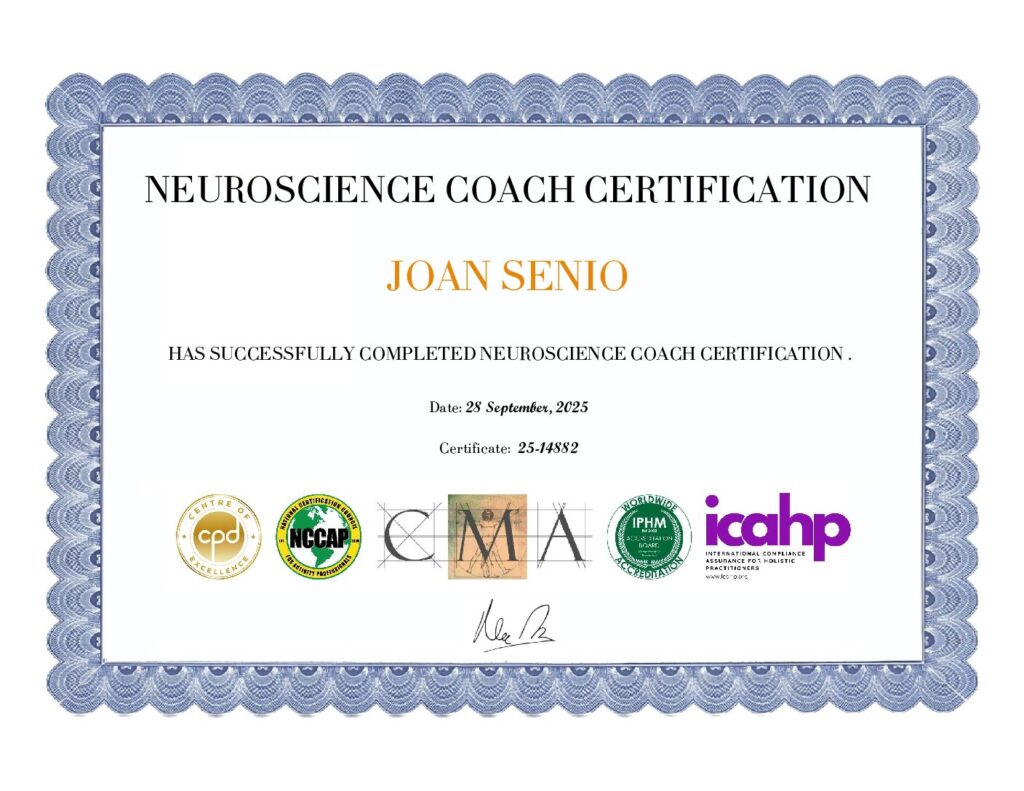
As a certified neuroscience coach and member of the International Organization of Life Coaches, Joan blends science‑based insight with heart‑centered guidance to help others rise above old patterns and step into their most authentic selves. She is committed to supporting those ready to grow, take ownership of their next chapter, and transform their lives from the inside out.
*Some links in this post are affiliate links. That means that we may receive a small commission at no cost to you when you purchase anything via one of these links. These commissions help us keep Kindness-Compassion-and-Coaching.com a free resource, as they help to cover website expenses. Thank you for your support.









No Responses