
Feeling lonely in your marriage can be one of life’s most confusing and painful experiences. When you share a home, responsibilities, history, and perhaps children with someone, it is easy to assume emotional connection should naturally follow. Yet many people find themselves asking a heartbreaking question: How can I feel so alone when I am married?
If you are married to an emotionally unavailable husband or wife, you may feel as though you are carrying the emotional weight of the relationship alone. You may have repeatedly tried to communicate your needs, initiate meaningful conversations, or create greater intimacy, only to find your efforts met with distance, avoidance, defensiveness, or silence.
Over time, the loneliness of an emotionally unavailable marriage can become its own form of emotional erosion. You may begin questioning yourself, suppressing your needs, or wondering whether you are simply asking for too much. In reality, many in this situation are seeking something entirely reasonable: emotional connection, responsiveness, and a sense of security in their closest relationship.
Understanding emotional unavailability in marriage can help you stop blaming yourself and start making healthier decisions. Whether your spouse is capable of change or not, you deserve emotional well-being, support, and the opportunity to build a life that feels emotionally safe.
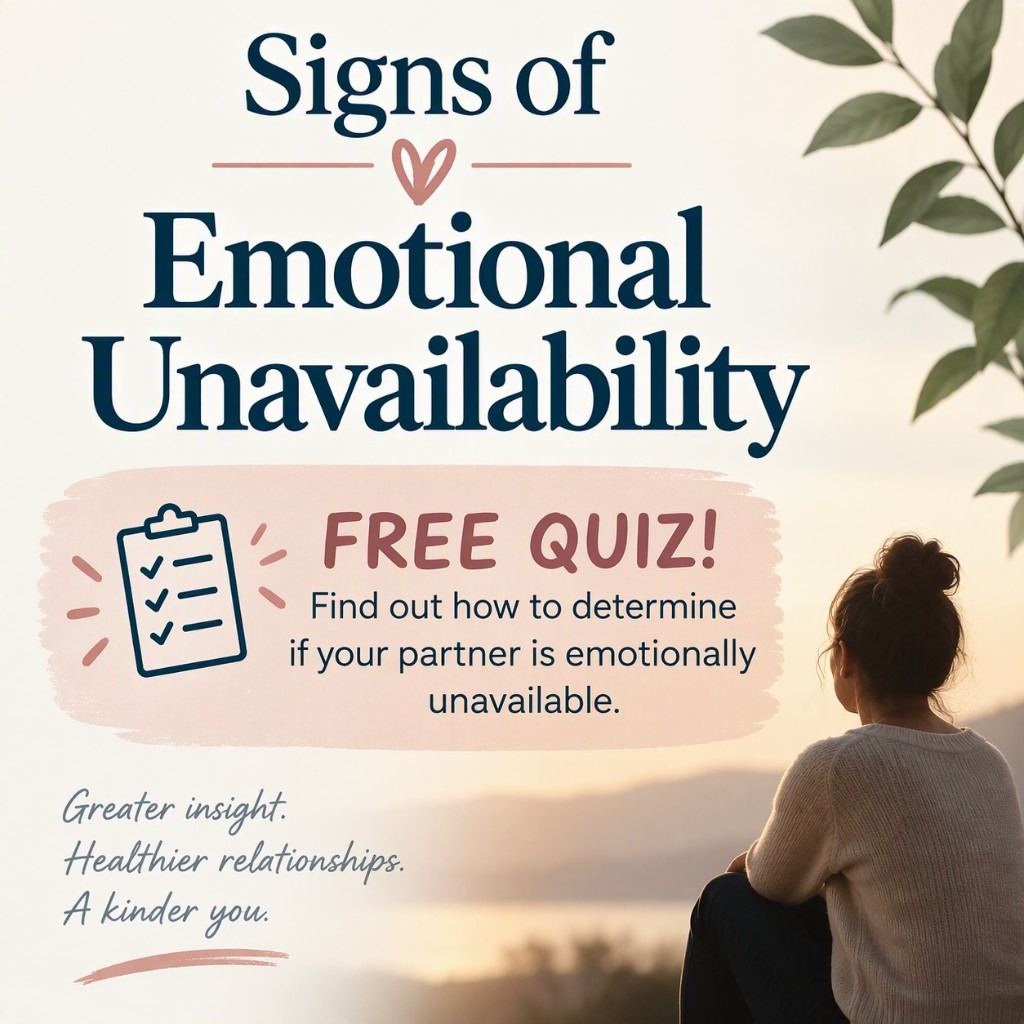
Is Your Partner Emotionally Unavailable? Take the Quiz

What Emotional Unavailability Looks Like in Marriage
Emotional unavailability is often misunderstood. Many people imagine a cold, indifferent spouse who openly rejects affection. In reality, emotionally unavailable partners can be loving in some ways while remaining emotionally absent in the areas that matter most.
A spouse may be dependable, hardworking, loyal, and present physically while still struggling to engage emotionally. Common signs of an emotionally unavailable spouse include:
- Avoiding vulnerable conversations.
- Dismissing emotional concerns.
- Becoming defensive when feelings are discussed.
- Withdrawing during conflict.
- Struggling to express feelings.
- Keeping conversations on a surface level.
- Showing little curiosity about your emotional experience.
- Failing to provide emotional support during difficult times.
People married to an emotionally unavailable spouse often describe feeling unseen, unheard, or emotionally alone despite being in a committed relationship.
The problem is not always a lack of love. More often, the problem is a lack of emotional capacity, emotional awareness, or emotional safety.
Why Some People Become Emotionally Unavailable
Emotional unavailability rarely develops without a reason.
Many emotionally unavailable adults learned early in life that emotions were unsafe, unwelcome, or unimportant. Growing up in environments marked by childhood emotional neglect, criticism, inconsistent caregiving, or emotional invalidation can teach children to disconnect from their feelings as a means of self-protection.
Some individuals developed mother wounds or father wounds that left them struggling to trust intimacy. Others learned to survive by becoming highly independent and emotionally self-contained.
In some cases, emotional unavailability can be linked to:
- Childhood Emotional Neglect. When emotions were ignored or minimized during childhood, adults may struggle to identify and express feelings.
- Attachment Wounds. People who experienced abandonment, inconsistency, or rejection may fear vulnerability and closeness.
- Fear of Intimacy. Some individuals unconsciously associate emotional closeness with danger, loss, shame, or disappointment.
- Nervous System Protection. Emotional withdrawal is sometimes less about a lack of caring and more about a learned survival response.
Understanding these origins does not excuse hurtful behavior. However, it can help explain why an emotionally unavailable spouse may seem resistant to the very connection they also claim to want.
The Unique Pain of Being Married to an Emotionally Unavailable Husband or Wife
The pain of emotional neglect in marriage is difficult to explain to others. Because your spouse may not be openly abusive or intentionally cruel, friends and family may struggle to understand why you feel unhappy. From the outside, the marriage may appear stable.
Inside the relationship, however, you may be experiencing chronic emotional deprivation. Many people in emotionally unavailable marriages report feeling:
- Lonely beside their partner.
- Unimportant or invisible.
- Emotionally exhausted.
- Rejected.
- Unworthy of love.
- Increasingly disconnected from themselves.
The loneliness of emotional disconnection in marriage can be especially painful because it creates a form of ambiguous loss. Your partner is physically present, but emotionally inaccessible.
You may continually hope for greater connection while receiving just enough affection or engagement to keep believing things might change. Over time, this cycle can create profound grief.
You are not only grieving what is happening in the relationship. You may also be grieving the relationship you hoped to have.
Signs You May Be Overfunctioning in an Emotionally Unavailable Marriage
When emotional needs consistently go unmet, many people unconsciously adapt by working harder. Instead of creating more intimacy, however, this often creates an unhealthy dynamic in which one partner carries most of the emotional labor.
You may be overfunctioning in your marriage if you:
- Always Initiate Difficult Conversations. You become responsible for every discussion about feelings, needs, and relationship concerns.
- Monitor Your Spouse’s Mood. You spend significant energy trying to anticipate reactions or avoid conflict.
- Suppress Your Own Needs. You tell yourself your expectations are unreasonable even when they are completely healthy.
- Make Excuses for Their Behavior. You minimize emotional neglect because you understand their wounds or difficult childhood.
- Carry the Relationship Alone. You feel responsible for maintaining closeness, communication, and connection.
Many people trapped in this pattern eventually find themselves struggling with people-pleasing, self-betrayal, anxiety, and emotional burnout.
How Emotional Unavailability Affects the Nervous System
One of the most overlooked aspects of surviving an emotionally unavailable marriage is the impact on the nervous system.
Human beings are wired for connection. Secure relationships help regulate stress, support resilience, and create a sense of emotional safety. When connection is inconsistent or unavailable, the nervous system often responds accordingly. You may experience:
- Increased anxiety.
- Hypervigilance.
- Difficulty relaxing.
- Sleep disturbances.
- Emotional exhaustion.
- Feelings of insecurity.
- Heightened sensitivity to rejection.
Your nervous system may become preoccupied with monitoring the relationship for signs of connection or disconnection.
A delayed text response, a withdrawn mood, or an emotionally distant interaction can begin triggering disproportionate distress because your system has learned to interpret distance as a potential threat.
This is one reason emotional unavailability can feel so destabilizing. It is not simply a relationship problem. It often becomes a nervous system problem as well.
What You Can and Cannot Control
One of the most important shifts in surviving an emotionally unavailable spouse is learning the difference between influence and control.
Many people spend years trying to say the perfect thing, find the perfect book, make the perfect request, or create the perfect conditions for change. Unfortunately, emotional growth cannot be forced.
What You Cannot Control
You cannot control your spouse’s level of self-awareness, willingness to heal, emotional maturity, commitment to change or ability to engage vulnerably. No amount of love, sacrifice, patience, or understanding can do another person’s emotional work for them.
What You Can Control
You can control your own boundaries, expectations, self-care, support system, emotional health and relationship decisions.
This distinction is often freeing. When you stop trying to control what belongs to someone else, you gain more energy to invest in yourself.

Why Are Some People Drawn to Emotionally Unavailable Partners?
If you find yourself repeatedly attracted to emotionally unavailable people, the reason may have less to do with the other person and more to do with patterns learned long before the relationship began.
For many people, emotional distance feels strangely familiar. Those who grew up with emotionally unavailable parents, inconsistent caregiving, criticism, or conditional affection may unconsciously associate love with longing, pursuit, or earning approval.
As a result, a partner’s emotional distance can feel compelling rather than concerning. The relationship may activate a deep hope that this time, love, patience, sacrifice, or understanding will finally lead to the connection that was missing in earlier relationships.
Unfortunately, this dynamic often leaves people working harder and harder for emotional closeness while neglecting their own needs.
This attraction is not a sign of weakness or poor judgment. It is often an understandable attempt to resolve old wounds through present-day relationships. The good news is that awareness can help break the cycle.
When you understand why emotional unavailability feels familiar, you can begin choosing relationships based on genuine compatibility, emotional safety, and mutual connection rather than old patterns.
For a deeper look at the psychology behind this pattern, including the roles of attachment style, childhood experiences, and unresolved emotional needs, see our guide: Why Am I Always Attracted to Emotionally Unavailable People?

Practical Strategies for Surviving an Emotionally Unavailable Marriage
If you are coping with an emotionally unavailable partner, survival begins with protecting your emotional well-being rather than trying to rescue the relationship single-handedly.
Stop Chasing Emotional Availability. Continually pursuing connection from someone who repeatedly withdraws can leave you feeling more depleted. Instead of constantly pursuing, focus on clearly expressing your needs and observing whether your spouse is willing to engage. Their response provides valuable information.
Communicate Directly and Specifically. Rather than assuming your spouse understands what you need, communicate clearly. For example: “I would like us to spend time talking about how we are both feeling.” Or: “I need emotional support right now rather than solutions.” Specific requests often work better than generalized complaints.
Build Support Outside the Marriage. One of the greatest mistakes people make while surviving an emotionally unavailable marriage is allowing their spouse to become their only source of emotional support. Healthy friendships, support groups, coaching, faith communities, and therapy can provide meaningful connection when emotional needs are not being met within the relationship.
Reclaim Your Identity. Many people gradually lose touch with themselves while trying to maintain a disconnected marriage. You can reconnect by restoring your commitments to personal goals, interests, hobbies, friendships, passions and values. Your life is larger than your spouse’s emotional limitations.
Strengthen Emotional Boundaries. Boundary-setting does not mean building walls. It means recognizing where one person’s responsibility ends and another person’s begins. Healthy boundaries help prevent resentment, burnout, and emotional depletion.
Consider Professional Support. A therapist familiar with attachment wounds, emotional neglect, or relationship dynamics can help you gain clarity and strengthen your sense of self. Even if your spouse refuses counseling, individual support can be tremendously valuable.
Can a Marriage Survive Emotional Unavailability?
Many people ask whether an emotionally unavailable spouse can change. The honest answer is yes, but only if they are willing to participate in the process. Lasting change typically requires:
- Self-awareness.
- Accountability.
- Emotional honesty.
- Consistent effort.
- Openness to feedback.
- A willingness to tolerate vulnerability.
Signs positive change may be occurring include:
- Increased empathy.
- Greater emotional engagement.
- Curiosity about your feelings.
- More productive conflict resolution.
- Consistent participation in healing efforts.
Unfortunately, some spouses remain emotionally unavailable despite repeated conversations and opportunities for growth. Understanding this reality can be painful, but it is often healthier than remaining trapped in false hope indefinitely.

When Staying Begins to Cost Too Much
Every marriage experiences challenges. However, there is an important difference between normal relationship difficulties and ongoing emotional neglect in marriage. At some point, it becomes necessary to evaluate the impact the relationship is having on your well-being.
Ask yourself:
- Am I becoming more emotionally healthy or less?
- Can I express my needs safely?
- Am I losing touch with myself?
- Have meaningful efforts toward change occurred?
- Am I staying because things are improving or because I fear what happens if I leave?
These questions are not meant to push you toward any particular decision. They are invitations to honesty. A healthy future cannot be built on denial.
Finding Emotional Security Even When Your Marriage Feels Uncertain
Many people believe emotional security comes entirely from their partner’s behavior. While supportive relationships certainly contribute to emotional security, true emotional security is also something we cultivate within ourselves.
It develops through:
- Self-trust.
- Self-respect.
- Boundaries.
- Emotional awareness.
- Supportive relationships.
- Honest self-reflection.
Ironically, the stronger your emotional foundation becomes, the clearer your relationship choices often become as well. You may recognize areas where growth is possible. You may also recognize patterns that are unlikely to change. Either way, greater emotional security allows you to respond from wisdom rather than fear.
Frequently Asked Questions About Marrying an Emotionally Unavailable Spouse
Can a marriage survive emotional unavailability?
Yes, a marriage can survive emotional unavailability if the emotionally unavailable spouse recognizes the problem and is willing to participate in the healing process. Lasting improvement typically requires self-awareness, emotional honesty, accountability, and consistent effort. However, one person cannot create intimacy alone. Healthy connection requires participation from both partners.
What are the signs of an emotionally unavailable spouse?
Common signs of an emotionally unavailable spouse include:
- Avoiding discussions about feelings.
- Withdrawing during conflict.
- Struggling to express vulnerability.
- Dismissing emotional concerns.
- Keeping conversations surface-level.
- Showing little curiosity about a partner’s inner world.
- Becoming defensive when emotional needs are discussed.
Many people married to an emotionally unavailable husband or wife report feeling lonely, unseen, or emotionally disconnected despite sharing a life together.
Why does my spouse seem emotionally unavailable?
Emotional unavailability often develops as a protective response to earlier life experiences. Childhood emotional neglect, attachment wounds, unresolved trauma, fear of vulnerability, and family environments that discouraged emotional expression can all contribute to emotional distancing in adulthood.
In many cases, emotional unavailability is less about a lack of love and more about a person’s difficulty accessing, understanding, or communicating emotions.
What is the difference between being emotionally unavailable and simply needing space?
Everyone needs occasional time alone to process thoughts, regulate emotions, or recharge. Emotional unavailability, however, is a persistent pattern of avoiding emotional intimacy, vulnerability, and meaningful connection.
A person who needs space can typically reconnect afterward. An emotionally unavailable partner often remains emotionally distant even when the relationship requires closeness and support.
Is emotional unavailability a form of emotional neglect?
It can be. When emotional unavailability consistently results in a spouse’s needs for connection, support, empathy, and responsiveness going unmet, it may create a pattern of emotional neglect in marriage. Emotional neglect is often subtle but can have a significant impact on self-worth, relationship satisfaction, and emotional well-being over time.
How does being married to an emotionally unavailable husband affect mental health?
Many people experience increased anxiety, loneliness, self-doubt, and emotional exhaustion when married to an emotionally unavailable spouse. Some become hypervigilant, constantly monitoring the relationship for signs of rejection or connection.
Over time, chronic emotional disconnection in marriage may contribute to stress, depression, low self-esteem, and feelings of emotional isolation.
Should I stay with an emotionally unavailable spouse?
There is no universal answer to this question. Factors such as the severity of the emotional disconnect, the spouse’s willingness to change, the overall health of the relationship, personal values, and individual circumstances all matter.
A helpful question is not simply, “Should I stay?” but rather, “Is this relationship moving toward greater emotional health, or am I continually sacrificing my well-being in the hope that things will eventually change?” Working with a qualified therapist or coach can provide valuable clarity when facing this decision.
Can therapy help an emotionally unavailable spouse?
Yes. Therapy can help emotionally unavailable individuals identify the origins of their emotional distancing, develop greater self-awareness, improve emotional regulation, and learn healthier ways to connect.
However, therapy is most effective when the individual genuinely wants to engage in the process. No therapist can create motivation that does not already exist.
How do I communicate with an emotionally unavailable partner?
Communication is often more effective when it is clear, specific, and focused on personal experience rather than blame. For example:
- “I feel disconnected when we avoid talking about difficult topics.”
- “I need emotional support right now rather than advice.”
- “I would like us to spend time talking about how we’re both feeling.”
Approaching conversations with honesty and clarity can create opportunities for connection, though the other person’s willingness to engage remains outside your control.
What should I do if I feel lonely in my marriage?
If you feel lonely in your marriage, begin by acknowledging your experience rather than minimizing it. Chronic loneliness often signals an unmet emotional need that deserves attention.
Consider:
- Communicating your needs openly.
- Strengthening friendships and support systems.
- Reconnecting with personal interests and goals.
- Practicing self-care and emotional self-compassion.
- Seeking professional support when needed.
Feeling lonely in marriage is more common than many people realize, and addressing the issue early may help prevent deeper emotional disconnection.
Can emotional availability be learned?
Yes. Emotional availability is a skill that can be developed throughout life. People can learn to identify emotions, tolerate vulnerability, communicate more openly, and build healthier relationship habits.
Growth is possible at any age, but it requires willingness, practice, and consistent effort.
How do I know if I’m losing myself in an emotionally unavailable marriage?
You may be losing yourself if you frequently suppress your needs, make excuses for harmful patterns, walk on eggshells, abandon important relationships or interests, or spend most of your emotional energy trying to earn connection from your spouse.
Healthy relationships support both connection and individuality. If maintaining the marriage requires continually abandoning yourself, it may be time to reassess what you need to feel emotionally safe and fulfilled.
Related Resources
If this article resonates with you, you may also find these resources helpful:
- Emotional Unavailability: Signs, Causes, and Healing
- Emotional Security and Safety: How to Recover & Reclaim Your Emotional Security
- The Hidden Effects of Childhood Emotional Neglect
- What Causes Self-Betrayal and How to Reclaim Self-Trust
- Mother Wounds: Lasting Effects and Healing Strategies
- Father Wounds: Understanding Their Impact on Adult Relationships
These topics can provide additional insight into the relationship patterns, attachment wounds, and nervous system responses that often contribute to emotional disconnection in marriage.
Surviving an Emotionally Unavailable Marriage
Being married to an emotionally unavailable spouse can be one of the loneliest experiences a person endures. The pain is often invisible to others yet deeply felt by the person living it every day.
If you have spent years trying to earn connection, prove your worth, or carry the emotional responsibilities of an entire relationship, it may be time to offer yourself the compassion you have so freely extended to others.
You did not create another person’s emotional limitations, and you cannot heal them on their behalf. What you can do is begin caring for yourself with the same commitment you have shown the relationship.
The most important question may not be whether your spouse eventually becomes emotionally available. The most important question may be whether you can remain emotionally available to yourself.
Because healing often begins the moment you stop abandoning your own needs and start recognizing that your longing for connection was never a weakness. It was evidence of your humanity.
And regardless of what happens next, you deserve relationships that make you feel seen, valued, supported, and emotionally safe. You cannot build intimacy for two people. Connection requires participation from both partners.
Thank you as always for reading.

Joan Morabito Senio is a coach and former executive and consultant with over 35 years of experience helping people overcome challenges, grow, and achieve their full potential. She created Kindness‑Compassion‑and‑Coaching.com to provide free coaching resources to individuals and the compassionate coaching community.
As a certified neuroscience coach and member of the International Organization of Life Coaches, Joan blends science‑based insight with heart‑centered guidance to help others rise above old patterns and step into their most authentic selves. She is committed to supporting those ready to grow, take ownership of their next chapter, and transform their lives from the inside out.
*Some links in this post are affiliate links. That means that we may receive a small commission at no cost to you when you purchase anything via one of these links. These commissions help us keep Kindness-Compassion-and-Coaching.com a free resource, as they help to cover website expenses. Thank you for your support.
No Responses