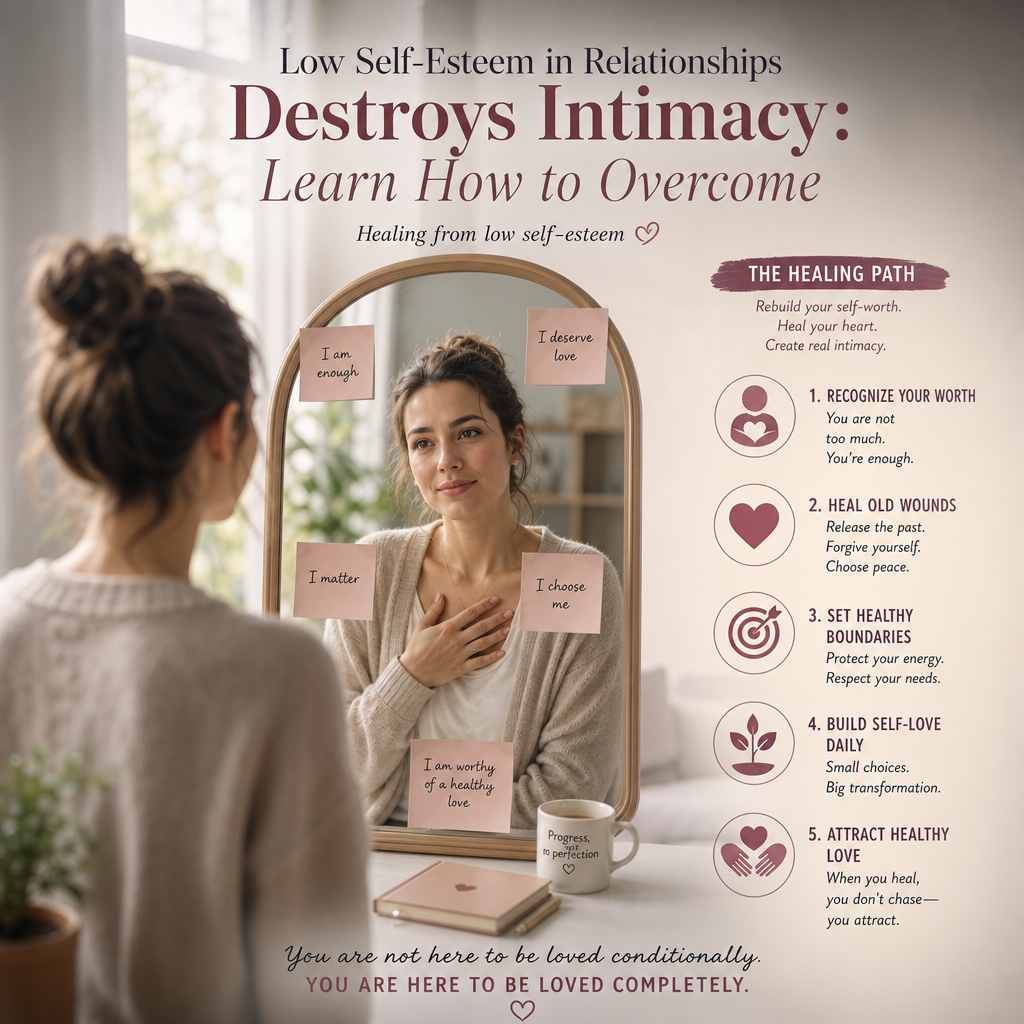
The impact of low self-esteem in relationships is not sudden or dramatic. It usually presents as a pattern of minor choices and repeated reactions that, over time, make deep emotional connection difficult. Women who carry low self-esteem or feel as though they are not good enough may appear capable and kind while still feeling chronically unworthy of consistent love. Understanding how this pattern operates is the first step toward changing it.
Research shows that self-esteem and relationship quality influence each other over time, so shifting your inner story can change your relational outcomes.
If you experience low self-esteem, you may also find the comprehensive Kindness-Compassion-and-Coaching.com Self-Esteem Series helpful.

Low Self-Esteem in Relationships: What it Looks Like
Low self-esteem in relationships often presents with a set of habitual responses. You might find yourself minimizing your needs to avoid conflict, seeking constant reassurance, or taking responsibility for your partner’s mood.
These behaviors are attempts to secure connection when internal confidence is low. Clinicians note that people with low self-esteem tend to be highly sensitive to perceived criticism and may either withdraw or overcompensate to prevent rejection.
When these patterns repeat, they create a relational dynamic where honest self-disclosure and mutual responsiveness are limited. Self-disclosure and partner responsiveness are key pathways to closeness, and low self-esteem can interfere with both. That interference reduces the likelihood that relationships will deepen in healthy ways.
How Low Self-Esteem in Relationships Impacts Intimacy
Emotional intimacy depends on two things: the willingness to be seen and the ability to be seen authentically without collapsing into self‑criticism or withdrawal. Low self-esteem in relationships undermines both. Over time, chronic self-doubt and people pleasing create imbalance.
In relationships where low self-esteem is present, one partner gives more emotional labor while the other may unconsciously take less responsibility for meeting needs. Longitudinal studies have shown that self-esteem predicts relationship outcomes and satisfaction over time.
Unresolved low self-esteem can erode the quality of relationships over time through a series of small betrayals. Missed emotional bids, avoidance of difficult conversations, and a steady shrinking of authentic expression all add up. Partners may feel less safe to share, and the relationship can become transactional rather than intimate.
Signs Low Self-Esteem is Sabotaging Intimacy
Recognizing the signs of damaged intimacy is essential because awareness creates choice. The most common indicators that low self-esteem is affecting your relationships include:
You seek constant reassurance. When you need frequent validation to feel secure, your partner becomes the primary regulator of your worth. This places an unfair burden on the relationship and reduces mutuality.
You minimize your needs. Saying “it is fine” when it is not, or avoiding requests because you fear rejection, prevents honest exchange and builds resentment.
You over-function emotionally. Taking on the role of fixer or caretaker to earn affection creates imbalance and hides your true needs. Over time this leads to exhaustion and bitterness.
You confuse intensity with intimacy. High drama or emotional volatility can feel like passion, but it often masks insecurity and inconsistency. Research on intimacy emphasizes steady responsiveness over intermittent intensity.
You avoid vulnerability. If you fear being seen as flawed, you may withhold parts of yourself. That withholding prevents the reciprocal disclosure that builds trust.
These are all patterns that developed as a means to cope. Fortunately, they can be changed with intentional work.
Why Low Self-Esteem in Relationships Leads to Choosing the Wrong Partner
People tend to seek what feels familiar. If your early attachments were inconsistent or conditional, you may be drawn to partners who replicate that pattern. Emotional unavailability can feel like a challenge to fix, and validation seeking can make you tolerate inconsistency in the hopes of earning love.
Attachment and self-esteem interact to shape partner selection and relationship trajectories, which explains why the same relational script can repeat across different partners.
Choosing differently requires shifting both the internal story about your worth and the external criteria you use when evaluating potential partners.
Practical Steps to Begin Choosing More Wisely
Change begins with small, consistent practices that rebuild self-trust and clarify what you will accept in a relationship. The following steps are practical and grounded in therapeutic approaches used to improve self-esteem and relational functioning.
Start with self observation. Keep a short journal for two weeks and note moments when you minimize your needs, seek reassurance, or accept inconsistent behavior. Tracking these moments helps you see patterns without judgment.
Practice small commitments to yourself. Choose one promise you will keep to yourself for a week, such as saying no to an extra obligation or scheduling time for rest. Keeping promises to yourself strengthens self-trust.
Define values based non negotiables. List three qualities you require in a partner, such as emotional availability, consistent follow through, and respectful communication. Use these as filters rather than relying on chemistry alone.
Slow down new relationships. Allow time to observe behavior across contexts. Consistency over time is the most reliable indicator of character.
Learn to ask for what you need. Practice clear, calm requests in low-stakes situations. Notice how it feels to state a preference and observe the response. Healthy partners respond with curiosity and effort.
Build emotional regulation skills. Techniques such as grounding, breath work, and naming emotions reduce reactivity and make it easier to respond rather than react. These skills support clearer communication and reduce the urge to seek constant reassurance.
Seek professional support when needed. Therapy or coaching can accelerate change by addressing core beliefs, teaching boundary setting, and offering corrective relational experiences. Evidence based approaches like cognitive reframing and skills training are commonly used to raise self-esteem and improve relationship outcomes.
How to Practice Receiving Healthy Attention
If you are used to chasing, receiving attention can feel unfamiliar. Start small.
Let someone offer help and accept it without immediately reciprocating. Notice your internal commentary and practice saying thank you without qualifying it. Over time, receiving becomes less threatening and more nourishing.
Healing Low Self-Esteem in Relationships: Rewriting Your Script
Changing who you attract is not only about external choices. It is about rewriting the internal script that tells you what you deserve. That work includes challenging negative self-talk, practicing self-compassion, and creating relationships with people who model the behaviors you want to internalize.
Research indicates that relationships and self-esteem influence each other in a reciprocal loop, so healthier relationships help build self-esteem while higher self-esteem supports healthier relationships.
When to Seek Help for Low Self-Esteem in Relationships
Consider therapy or coaching if you repeatedly choose unavailable partners, if boundaries feel impossible, or if fear of abandonment drives your decisions.
Professional support is especially important when past trauma or chronic shame underlies low self-esteem. A trained clinician can help you process early wounds and practice new relational skills in a safe environment.
Low Self-Esteem in Relationships: How to Heal
Low self-esteem in relationships is a pattern that developed for understandable reasons that can be changed with awareness, practice, and support.
As you learn to recognize the signs, slow down your choices, and build self-trust, you can begin to choose partners who reflect the respect and consistency you deserve. Steady systematic changes can create lasting shifts in both how you feel about yourself and how your relationships unfold.
Thank you as always for reading.
Some links in this post may be affiliate links. That means that we may receive a small commission at no cost to you when you purchase anything via one of these links. These commissions help us keep Kindness-Compassion-and-Coaching.com a free resource, as they help to cover website expenses. Thank you for your support.




No Responses