Today’s article about solitude and self-discovery is a guest post from my friend, colleague and accountability partner, Lori. You can enjoy more of Lori’s work at Mindfulpicnics.com.
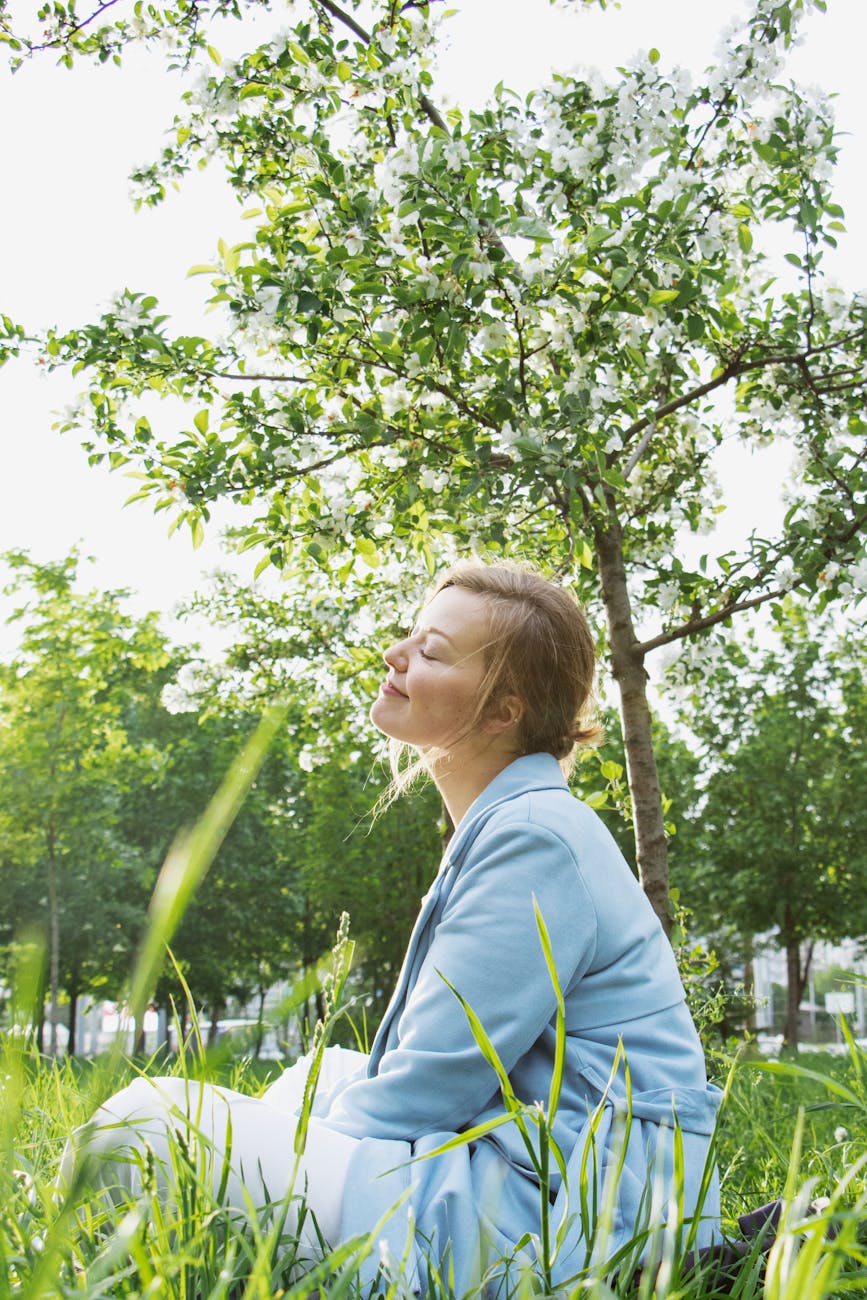
There is a particular kind of quiet that arrives when you step outside alone. No agenda, no one to check in with, no performance of any kind. The world continues its rhythms: a bird moves through branches overhead, the air shifts, light arranges itself across the ground. And something in you, slowly, begins to settle.
We spend a great deal of energy becoming for others. The capable colleague, the attentive friend, the dependable family member. These roles are real and meaningful. But as Joan explores in her foundational series on discovering your true self, beneath every role we learn to perform, there is an essential self, waiting to be remembered.
Solitude, especially in nature, may be one of the gentlest, most direct paths back to that self.
This post doesn’t ask you to meditate for an hour or achieve a particular state of mind. It simply suggests that time alone can become one of the most nourishing forms of self-discovery available to you.

Why Solitude Feels Uncomfortable at First
For many of us, being alone, truly alone, without a task to complete or a phone to scroll on, can feel unfamiliar, even unsettling. That discomfort is worth working through, because what is found beneath that discomfort is often worth getting to know.
We are conditioned to equate aloneness with loneliness, and loneliness with something to be fixed. But solitude and loneliness are not the same experience.
Loneliness is the ache of disconnection; the feeling that something is missing.
Solitude, at its heart, is intentional aloneness. It is chosen not as a retreat but as a return to self.
The discomfort of early solitude often comes from all the noise we carry becoming audible for the first time. Without distraction, we hear our worries, our old stories, the low hum of our unprocessed feelings. That noise isn’t a sign that solitude is wrong for you. It’s a sign that you’ve arrived somewhere real.
This connects beautifully to Joan’s work on clarifying your core values: the idea that our emotional reactions are data, not disturbances. The irritation, the relief, the unexpected surge of sadness that arrives in silence are all evidence of who we are and what matters to us.
What Outdoor Solitude Offers
There is something specific about being alone in a garden, beside a creek, on a blanket under open sky that a quiet room at home doesn’t quite replicate. Nature has a way of receiving our presence without asking anything of us in return.
When you step outside alone, a few things tend to happen:
- Your nervous system begins to regulate. The sounds of wind, birdsong, and rustling leaves activate a quality of attentiveness that is restful rather than vigilant.
- Time softens. Without meetings or notifications, your sense of urgency loosens, and you begin to move at your own pace, which may turn out to be slower and quieter than you might have expected.
- Your inner voice becomes easier to hear. Thoughts that stay submerged during busy days tend to bubble to the surface in unstructured outdoor time.
- You notice what delights you. The mushroom on a mossy log. The rock that forms a perfect heart shape. The way afternoon light moves through leaves. These small, instinctive responses are maps of your authentic self.
Pause on that last one for a moment. When no one is watching and nothing needs to be accomplished, what draws your attention? What makes you pause? The answers are a kind of self-knowledge. They tell you what your unguarded self finds beautiful, interesting, and alive.
The Solo Picnic as a Practice in Presence
At Mindful Picnics, I explore what it means to bring intentionality to time spent outdoors. One practice I return to again and again is the solo picnic as a genuine ritual of self-companionship.
A solo picnic is, at its simplest, an act of tending to yourself. You choose a place that feels good to your body and prepare food with some care (something you actually want, not just what’s convenient). There is no agenda. You stay long enough for restlessness to pass.
What tends to emerge in that space is often surprising. You might find that you’ve been craving silence more than you knew. Or that your mind, given the room to wander, drifts toward something you’ve been avoiding, perhaps a decision unmade, a longing unacknowledged. Sometimes what surfaces is simply contentment: the realization that you enjoy your own company more than you expected.
If you’re curious about how to begin, this guide to mindful solo picnics offers gentle, practical starting points from choosing a location to bringing only what supports presence rather than distraction.
Solitude as a Step in Your Self-Discovery Journey
Joan’s framework for uncovering your authentic self invites you to notice patterns, gather evidence, and experiment gently, compassionately, without pressure. Solitude fits naturally into every step of that process.
In the noticing stage, time alone gives your patterns room to become visible. You might notice how you feel when freed from social performance; relieved, expanded, or maybe more anxious than you expected.
In the evidence-gathering stage, solitude lets you observe what you actually enjoy, need, and gravitate toward when external expectations fall quiet. Your energy patterns, your genuine reactions, your instinctive preferences all emerge more clearly when you aren’t shaping yourself around others.
And in the integration stage, regular solitude (even brief episodes) becomes a practice of returning to yourself. Not a retreat from life, but a rhythm within it.
As Joan writes about your true self: the self beneath conditioning is not lost, it’s waiting. Solitude creates the conditions for that self to speak.
How to Begin
You don’t need a forest or a full afternoon. Solitude is more about quality of attention than quantity of time.
- Sit outside alone for twenty minutes with nothing to accomplish. Bring something warm to drink. Notice what your mind does when you give it nowhere to be.
- Pack yourself a simple lunch and eat it somewhere outside, without your phone. Choose a place that is mildly beautiful such as a park bench, your own back porch, a quiet corner of a garden.
- On your next walk alone, leave the headphones at home. Let the sounds of wherever you are fill the space instead.
- At the end of a solo hour outside, write a few sentences, not a journal entry, just observations. What did you notice? Did anything surprise you? What felt good?
These are small invitations. The practice grows on its own, in its own time.
An Act of Self-Compassion
Choosing to spend time alone intentionally, gently, without guilt is itself an act of self-love. It says:
- I am worth my own company.
- My inner life deserves attention.
- I don’t have to be in motion to have value.
For those of us who have spent years being what others needed us to be, this can feel radical. It isn’t. It’s simply the beginning of the return journey: the one Joan’s work on self-compassion describes with such care. Solitude isn’t loneliness. It is, at its best, a homecoming.
About the Author
Lori is the writer behind Mindful Picnics, a website devoted to the art of intentional outdoor living. She shares a wide variety of practical ways to enjoy nature from the wonders of grounding breathwork in bare feet on summer grass to the quiet ritual of a solo picnic with a thermos and a good view. Her writing explores the intersection of mindfulness, nature, and the sensory pleasures that make ordinary days feel meaningful. Lori believes that stepping outside even briefly is one of the most underrated forms of self-care available to us.
You can explore more of her work at mindfulpicnics.com.





No Responses