

A new year can feel like an invitation to begin again. Though it’s cliché, there’s a reason it still resonates. Turning the calendar provides a natural break. A moment to pause, breathe, reflect, consider who we are, who we’re becoming and if the trajectory we are on aligns well with our true north and ultimate life goals and dreams. This artful exploration is the very first and most important phase of personal development: self-discovery.
The Goal of a Personal Development Process
Stepping into a brand‑new year is the ideal time to recommit to personal development and growth, no matter what efforts you have undertaken in the past. And we are here to encourage you and guide you through what may be a different process than any you have experienced before.
Our personal development approach doesn’t ask you to reinvent yourself or strive toward some polished ideal. Instead, it guides you back to your true self; the part of you that’s always been wise, capable, and worthy. Because that’s where ultimate life success resides. In our ability to fully embrace, accept, and become our true authentic selves.
That’s why personal development begins with self‑discovery.
Today, we walk you through reflective exercises designed to illuminate your core values, signature strengths, challenges, limiting beliefs, and the deeper truths that shape how you move through the world.
These insights will become the compass for your growth in the months ahead, ensuring that your goals, priorities, and strategies feel authentic, aligned, and genuinely yours.
Because reaching your full potential isn’t about perfection or performance. It’s about coming home to the best version of you who has ever been.
What is Personal Development?
Personal development plans are roadmaps to help you become who you were meant to be. The very “you-est” version of you.
They are not about fixing what’s “wrong”; they are intended to nurture what’s within you, and to cultivate your innate strengths and gifts.
By embarking on this journey, you are taking a first giant step that will help you begin to shift out of survival mode and into intentional living.
The outcomes of this process will become the foundation that you need to set goals that resonate with your authentic values, tap into your signature strengths, help you to overcome your limiting beliefs, and build momentum through gentle accountability.
Whether you’re healing, rediscovering passions, or pursuing new dreams, a personal development plan gives your efforts structure without boxing in your spirit. It can also help you begin to translate hope into action, and action into lasting change.
To read more about potential focus areas for growth, visit 13 Personal Development Topics for a Better Life.
Introduction to Self-Discovery
The self-discovery process you are about to undertake illuminates the pathway to becoming the most authentic version of yourself. The inner you that you’ve been longing to meet.
Congratulations on being here and on making your growth a priority.
The process we share is designed to help you compassionately uncover the truth essence of yourself.
There will be no hustle and no harsh self-talk. Just intentional steps rooted in kindness – to launch and inform successful, enlightening and exciting personal growth and development.

Coming Home to Yourself: The Power of Self-Discovery
Self-discovery is all about getting to know yourself, truthfully, and on your own terms. To uncover not only the essence of who you are, but the essence of the best version of you that is waiting to emerge.
It’s about uncovering what’s always been beautiful and present in you, beneath the noise and the influence and the pressures of the world; your ideals, passion, principles, and more, and the combination of all the things that make you uniquely YOU.
Through values mapping, strengths identification, and compassionate acknowledgment of your challenges and limiting beliefs, this self-discovery work will help you reconnect to who you are and who you are meant to be.
When you give this part of the process the attention it deserves, it permits your personal development plan to become much more than a strategy. It becomes a roadmap, anchored in authenticity, that will lead you to becoming your best, true self
Self-Discovery: Unearthing Your Inner Compass
Before you can chart a meaningful path forward, you must understand where you’re starting from. This requires you to uncover and listen deeply to your own truth with compassion, curiosity, and respect.
We encourage you to explore the full spectrum of who you are during this process. We will provide questions, journaling prompts, and exercises to guide you, but there are no rules. You can skip sections or create new ones of your own if that feels right.
The Art of Self-Reflection
Thoughtful self-reflection will help you to unearth and document key components of your identity including:
Core Values, Signature Strengths, Empowering Beliefs. The principles that matter most to you will help you anchor your goals. Similarly, articulating your natural talents, positive attributes and supportive beliefs will help you identify aspects of yourself that should be nurtured.
Challenges, Limiting Beliefs, Triggers. This part will focus on understanding the recurring patterns that hold you back, including emotional wounds or limiting beliefs that need healing.
Your Personal Mission Statement and “Your Life Story”. This is your opportunity to describe your life so far, as well as your desires for the future and your legacy; to describe the impact you feel called to create.

We will guide you through synthesizing your observations into one integrated “Self-Discovery Placemat,” a visual and strategic tool that will become your personal north star; the compass you use to align your goals, habits, and decisions to your values; and the map you use to navigate your personal development now and in the future.
The outcome will be a clear, heart-centered snapshot of your inner landscape.
Recommended Resources
Pairing reflective exercises with guided tools can transform scattered insights into structured breakthroughs.
Whether you’re mapping signature strengths or excavating limiting beliefs, these supportive resources will become trusted companions on your self-discovery journey.
| Product | Review |
|---|---|
| How to Meet Your Self: The Workbook for Self-Discovery | Step-by-step exercises and prompts designed to uncover core values and beliefs. |
| The Road Back to You: An Enneagram Journey to Self-Discovery | Enneagram illuminates motivations and blind spots, fostering deep self-awareness. |
| Your Self-Discovery Journal: A Guided Journey to Identify and Actualize Your Passions, Purpose, and Whole Self | Weekly prompts and exercises to clarify passions, strengths, and goals. Document insights and track progress over time. |
| Self-Love Workbook for Women: Release Self-Doubt, Build Self-Compassion, and Embrace Who You Are | Evidence-based self-compassion techniques, journaling prompts and affirmations to cultivate kindness toward yourself. |
| 365 Questions, One Page Per Day: A One Year Self-Discovery Journal by 21 Exercises | Daily, thought-provoking questions to continue your journey of self-reflection. |
| The Self-Discovery Journal: 52 Weeks of Reflection, Inspiration, and Growth | Quotes, prompts, and reflection space to help you explore inner motivations and track your evolving self-awareness. |
| Shadow Work Workbook for Self Discovery: Journal Prompts for Taking Ownership of Your Life (Self Love Workbooks) | Targeted prompts to explore unconscious patterns and past experiences, empowering you to integrate shadow aspects into conscious growth. |
| Discover Yourself: A Personal Development Workbook: 5 Quick and Easy Steps to Self-Discovery | Practical strategies for mindfulness, emotional intelligence, and goal setting through accessible, bite-sized exercises. |
| Self Discovery Journal: 200 Questions to Find Who You Are and What You Want in All Areas of Life | 200 questions that help uncover desires, priorities, and blockers, laying a foundation for your personal development plan. |
Values Identification
Identifying your core values is essential to building a life rooted in authenticity and purpose. Your core values are your inner compass, your guiding and most sacred principles. They drive your decisions, your actions and behaviors, shape your relationships and influence how you respond to life’s challenges.
Value identification is not about choosing traits you wish you had, or what others expect of you; it’s about uncovering the principles that resonate deeply within you.
Gaining clarity on your core values is critical to align your goals and habits with what matters to you most. Without clarity, it’s easy to drift, chasing goals that don’t fulfill you or adopting habits that you feel obliged to pursue but that don’t necessary align to your true north.
Your core values are often reflected in moments when you feel most alive, proud, or at peace.
They can also be revealed when you feel frustrated or disconnected because those moments signal that something important to you is being compromised.
To begin, reflect on experiences that made you feel fulfilled or frustrated. Identify a few for deeper exploration. Ask yourself:
- What qualities was I tapping into in those moments?
- Were there specific principles that were reinforced or challenged?
- What do I stand for, even when it’s difficult?
You might start with a broad list and gradually narrow it down to 3-5 values that feel non-negotiable. These core values will become your touchstones during the rest of your personal development journey.
These are some common core values, along with brief descriptions to consider:
| Core Value | Description |
|---|---|
| Integrity | Acting in alignment with your principles, even when no one is watching. |
| Compassion | Showing kindness and understanding toward yourself and others. |
| Curiosity | A desire to explore, learn, and grow. |
| Authenticity | Expressing your true self without pretense. |
| Courage | Facing fear and uncertainty with strength. |
| Accountability | Taking responsibility for your actions and their impact. |
| Optimism | Maintaining hope and positivity, even in adversity. |
| Creativity | Thinking outside the box and expressing yourself in unique ways. |
| Resilience | Bouncing back from setbacks with strength and adaptability. |
| Mindfulness | Being present and aware of your thoughts, feelings, and surroundings. |
| Generosity | Giving freely of your time, energy, or resources. |
| Vision | Seeing and striving toward a meaningful future. |
| Emotional Intelligence | Understanding and managing your emotions and those of others. |
| Self-Compassion | Treating yourself with the same kindness you offer others. |
| Leadership | Inspiring and guiding others toward shared goals. |
Source: Adapted from Brené Brown’s values list in Dare to Lead: Brave Work. Tough Conversations. Whole Hearts.
After you have identified your top 3-5 values, reflect on how they currently show up (or don’t) in your daily life.
Your Signature Strengths
Signature strengths are defined as those positive attributes that are essential to a person’s identity, enacted frequently and naturally, and which generate a sense of fulfillment when used.
These are the personal qualities and character traits that define you at your best. They are innate qualities that energize you, especially when they’re aligned with your values and goals. These inner gifts that are yours alone can be nurtured, celebrated, and used as tools for your own growth.
Seligman and Peterson, pioneering figures in positive psychology, distinguish signature strengths from skills or talents by their deep-rooted, trait-like quality. Unlike acquired skills, they are perceived as core facets of “who we are.”
Signature strengths are effortless and empowering.

Demonstrating signature strengths brings authenticity and confidence, supports relationship-building, and buffers against stress.
Positive psychology research repeatedly shows that those who intentionally use their signature strengths report decreased symptoms of depression. Additional studies confirm that the use of signature strengths correlates with increased well-being, resilience, engagement, and life satisfaction.
Broad Virtues and Common Signature Strengths
The Values in Action (VIA) Institute’s framework is the most widely adopted taxonomy for identifying and discussing character strengths. The classification identifies 24 universal character strengths, grouped under six broad virtues.
Signature strengths represent our most essential qualities and serve as indicators of how we can live a more authentic and purposeful life. By recognizing and demonstrating these strengths in our daily life, we amplify our resilience, deepen our connections, and cultivate lasting fulfillment.
The table below shows how the 24 VIA signature strengths align to one of the six broad virtues:
| Broad Virtue | Strength | Definition | Example |
|---|---|---|---|
| Wisdom & Knowledge | Creativity | Thinking of novel and productive ways to do things. | Brainstorm a fresh marketing campaign. |
| Curiosity | Interest in ongoing experience for its own sake. | Explore a new language. | |
| Open-mindedness | Thinking things through, examining them from all sides. | Seek out and consider alternative viewpoints. | |
| Love of learning | Mastering new skills, topics, knowledge. | Enroll in a workshop. | |
| Perspective | Providing wise counsel to others. | Mentor a colleague. | |
| Courage | Bravery | Not shrinking from threat, challenge, difficulty, or pain. | Speak up to address injustice. |
| Honesty | Speaking the truth; presenting oneself genuinely. | Admit a mistake in a team meeting. | |
| Perseverance | Finishing what one starts, persisting. | Complete marathon training despite setbacks. | |
| Zest | Approaching life with excitement and energy. | Lead a team meeting with enthusiasm. | |
| Humanity | Kindness | Doing favors and good deeds. | Volunteer to help a neighbor move. |
| Love | Valuing relationships and being close to people. | Schedule video calls with family. | |
| Social intelligence | Being aware of the motives and feelings of oneself and others. | Mediate a disagreement. | |
| Justice | Teamwork | Working well as a member of a group. | Collaborate on a cross-departmental project. |
| Fairness | Treating all people in a just manner. | Ensure all team member’s ideas are heard. | |
| Leadership | Fostering a sense of shared achievement. | Organize a fundraiser, delegate effectively. | |
| Temperance | Forgiveness | Forgiving those who have done wrong; accepting the shortcomings of others. | Lett go of resentment after a conflict. |
| Humility | Letting accomplishments speak for themselves. | Highlight team success rather than your own. | |
| Prudence | Being careful about one’s choices; not taking undue risks. | Create a detailed budget before launching a side business. | |
| Self-regulation | Regulating what one feels and does; being disciplined. | Sett boundaries on work hours to maintain work-life balance. | |
| Transcendence | Appreciation of beauty and excellence | Noticing beauty or skilled performance. | Admire architecture on a walk. |
| Gratitude | Being aware of and thankful for good things that happen. | Write thank-you cards to mentors. | |
| Hope | Expecting the best and working to achieve it. | Set and track progress on development plan. | |
| Humor | Liking to laugh and bring smiles to others. | Lighten a tense meeting with a well-timed, tasteful joke. | |
| Spirituality | Having coherent beliefs about the higher purpose and meaning of life. | Meditation or reflection. |
For more information, check out this video that describes how to identify your own signature strengths.
Self-Awareness
Awareness of your signature strengths paves the way for greater self-confidence, authenticity, and purpose.
Choose the strengths that resonate with you; of those, circle the ones you use most often. Also mark the ones you aspire to grow into. If this part doesn’t come easily, think about moments when you have felt proud, energized, or truly yourself. What qualities were you demonstrating at those times?
This exercise not only boosts awareness; it builds a foundation for meaningful personal development rooted in authentic self-expression.
For more ideas, visit How to Inform Self-Discovery: Best Journaling Prompts Ever.
Challenges
Discovery of challenges and repeated patterns that hold you back is essential as well. By pausing to name the obstacles you may need to anticipate, you create a compassionate space to explore their root causes.
To deepen your self-discovery and surface insights that support healing and growth, do your best to proceed through this process without judgment.
See the table below for examples of challenges, the possible emotional impact of each, and how they may show up in your day-to-day experience.
Highlight patterns you recognize. Journal about the ones that resonate most. Begin to think about which challenges you may want to focus on in your personal development plan.
These will be a key part of your roadmap for future growth and personal development.
| Challenge | Description | Potential Emotional Impact | Manifestation |
|---|---|---|---|
| Uncertainty about where to begin | Feeling lost on which first step to take | Frustration and anxiety | Want to start journaling but can’t pick a prompt |
| Self-doubt | Questioning your abilities and worth, undermining confidence | Low self-esteem and insecurity | Opting out of sharing ideas in a workshop |
| Fear of failure | Anxiety about making mistakes, avoiding new challenges | Worry and avoidance | Never submitting a draft for feedback, convinced it isn’t “good enough” |
| Perfectionism | Needing every insight or exercise to be flawless | Chronic stress and dissatisfaction | Deleting journal entries because they “aren’t polished” |
| Imposter syndrome | Feeling like a fraud despite evidence of competence | Shame and persistent anxiety | Hesitating to present a project |
| Negative self-talk | Persistent inner critic that frames self-discovery as pointless | Sadness and hopelessness | Telling yourself “This reflection is a waste of time” |
| Overwhelm | Feeling flooded by too many insights or emotions at once | Panic and helplessness | Starting multiple self-help books and never integrating any of their lessons |
| Resistance to change | Clinging to familiar patterns even when they no longer serve your growth | Comfort-seeking anxiety and frustration | Sticking to the same morning routine despite craving more meaningful rituals |
| Cognitive distortions | Distorted thinking (all-or-nothing, catastrophizing) that derails insight | Despair and intense self-criticism | Believing one slip-up ruins the entire journey |
| Decision paralysis | Overanalyzing options | Frustration and regret | Researching courses but never enrolling |
| People-pleasing | Prioritizing others’ needs over your own | Anxiety and suppressed resentment | Agreeing to social plans instead of honoring your needs |
Self-Discovery: Defining Your Why
The next step in the self-discovery process requires you to clarify your personal mission and purpose.
Defining your “why”, in alignment with your core values and signature strengths identified above, anchors your journey in intentional growth and ensures each decision you make and action you take contributes to your progress.
This part of the process starts with honest reflection on the experiences that ignite genuine excitement and fulfillment for you.
Revisit those moments (a creative breakthrough, a meaningful conversation, or an act of service?). Journal about each. Note the common threads that emerge. Consider how they map to your natural strengths and values.
Articulating the impact you hope to make in life makes it easier to set goals and align your daily actions to your innate values. As you distill insights, ask yourself how you could better harness your energy and utilize your strengths to impact your world.
Refine your why until it feels authentic and compelling. This distilled purpose will reside at the very center of your personal development journey. Every goal and action you pursue from here on should flow directly from it, and as a result, will resonate deeply with who you really are.
Self-Discovery: Drafting Your Personal Mission Statement
Reflect on insights from your life experience to date. Pinpoint moments when your values and strengths felt most alive. Include personal life roles, professional achievement, community activities, relationship highlights; anything that has brought you true joy, and a feeling of authenticity.
Use this template to structure your statement: “My mission is to [contribution] by [key action] so that [impact].”
Draft several versions until your statement feels genuine, empowering and motivating. Display your mission statement somewhere visible to keep your purpose top of mind.
Hypothetical Mission Statements
See below for a collection of mission statements that may inspire you. Use these as food for thought, then tailor your own statement to reflect your passions, strengths, and the impact you wish to make.
| Personal | Professional |
|---|---|
| Create a home where intentional presence, heartfelt communication, and playful discovery so that my children recognize their worth, embrace challenges, and grow into compassionate, confident people. | Empower others to express their authentic voice by facilitating creative workshops so that communities can cultivate confidence and self-discovery. |
| Honor self-compassion by treating myself with kindness and forgiveness in every challenge so that I build inner peace and strength. | Nurture curiosity and critical thinking by creating engaging educational resources so that learners of all ages unlock their potential and embark on meaningful self-discovery. |
| Simplify my environment by decluttering one space at a time each month so that I create a home of calm focus and clarity. | Guide busy professionals toward holistic well-being by developing mindfulness-based programs so that they can balance ambition with inner peace. |
| Coordinate support initiatives such as care packages or volunteer drives for those in need so that no one in my community feels alone. | Support new parents by offering compassionate coaching and practical tools so that families build strong foundations of love, resilience, and self-awareness. |
| Support mental health awareness by sharing my journey and resources with my network so that stigma gives way to open, compassionate dialogue. | Innovate accessible mental health solutions by leveraging technology and human-centered design so that everyone can access personalized pathways to self-discovery and healing. |
Self-Discovery: Core & Limiting Beliefs
Discovering your core and limiting beliefs is another critical step in self-discovery.
Core beliefs are the deep-seated convictions you hold about yourself, others, and the world.
Limiting beliefs are those narratives that confine you (often unconsciously) and keep you from reaching your fullest potential.
- Define three core beliefs you hold about yourself (for example, “I am creative,” “I am unworthy,” “I am resilient”).
- Notice which of these beliefs lift you up and which hold you back.
- Recognize that limiting beliefs often stem from past experiences or external messages you’ve internalized.
Self-Discovery: How to Surface Empowering Beliefs vs. Self-Sabotaging Narratives
Compare the thoughts that fuel your growth against those that trigger self-doubt. Use this table as a mirror to help reveal opportunities for focus in your personal development.
| Empowering Beliefs | Self-Sabotaging Narratives |
|---|---|
| I learn and grow from every challenge | I’m not smart enough to succeed |
| I deserve love and respect | I always get left out |
| My ideas matter and deserve to be heard | My opinions are unworthy or boring |
| I can adapt when plans change | I’ll never recover if things go wrong |
Journal Prompts to Identify and Reframe Limiting Beliefs
Use these prompts to help surface observations at a frequency that works for you. Write freely and honestly to unearth the narratives that operate beneath the surface.
- What belief about myself showed up strongly this week/this month? Where did it come from?
- When I felt stuck or anxious, what story was I telling myself in that moment?
- How would my life change if I replaced that story with an empowering belief?
- What evidence do I have that contradicts my limiting belief? List three real examples.
- Craft a new, positive belief statement and repeat it aloud for five consecutive days.
For more ideas visit Self-Discovery Journal Prompts: Find Your Authentic Self Now.
Self-Discovery: Your Emotional Landscape
Mapping your emotions helps you see patterns and prepare healthier responses. Your emotional landscape consists of the highs that lift you up and the lows that challenge your resilience.
- Identify two regular emotional highs (for instance, excitement when starting a project, calm after a meditation).
- Note two common emotional lows (such as frustration during deadlines, sadness when plans change).
- Acknowledge that each feeling is information and more data to inform your future personal development plan.
Identify Your Triggers and Potential Coping Responses
Understanding triggers is also critical information. By acknowledging what tends to derail you, you open the door to considering helpful, new responses. This gives you power over forces that may have made your feel powerless in the past.
List your top three triggers alongside your typical reaction, then brainstorm a healthier alternative. Examples are shown below.
| Situation | Typical Response | New Response |
|---|---|---|
| Tight deadlines | Procrastination and panic | Break tasks into 15-minute sprints with short rewards |
| Harsh feedback | Self-criticism and avoidance | Ask clarifying questions and focus on two actionable takeaways |
| Feeling unheard in a conversation | Withdrawing or lashing out | Practice a calm assertion script: “I feel … when … I need …” |
Self-Discovery: Your Personal “Life Story”
Crafting your personal story is a powerful self-discovery tool that integrates together your past, present, and vision for the future. It helps you identify the themes, strengths, and turning points that have shaped who you are so you can chart a clearer path forward and see key previous experiences with greater context. Drafting your own life story:
- Anchors your vision by providing a narrative that connects past learnings to future goals and keeps your self-discovery grounded in real growth.
- Boosts self-compassion. Seeing how you’ve navigated hardships reminds you of your inner resilience.
- Acts as a guide for decision-making. When choices arise, you can test them against the trajectory you’ve defined.
You can use whatever process you like to craft your life story. Here is one suggested approach:
- Gather Your Moments. List 5-7 pivotal experiences: successes, challenges, epiphanies. For each, note the key emotions, lessons, and strengths you exercised.
- Identify Recurring Themes. Look for patterns: creativity in adversity, service to others, resilience after setbacks. Highlight three themes that resonate most with your core values.
- Draft a Concise Narrative. Open with your background or earliest defining moment. Show how each theme propelled you to grow or pivot.
- Refine for Clarity and Impact. Keep it to 3-5 sentences: enough to capture essence without fluff. Use vivid but simple language: focus on what you learned and how you changed.
Sample Personal Life Story
“Born in a family of storytellers, I first found my voice by writing poems in the margins of my schoolbooks. When self-doubt threatened my confidence, I volunteered at a community open-mic night and discovered that sharing my struggles sparked hope in others. Today, I use writing workshops and coaching to help people confront their vulnerabilities, develop powerful life narratives, and achieve their full potential.”
Synthesizing Your Self-Discovery Insights
It’s time to create your personal Self-Discovery Placemat that visually maps your values, strengths, beliefs, patterns, etc. (See the format below).
Refine your notes from all of the activities you have completed so far. Identify your top 3-5 items for each of the categories and enter them into your template.
Reflect on the big picture and how each piece of your self-discovery findings intersects with others.
Your goal in viewing this information in its entirety is to look for patterns or emerging themes that will help you to prioritize areas for personal development. Look for connections, opportunities, conflicts. The themes that you identify will be critical to your future development.

Examples of Self-Discovery Placemat Themes
It may take a while for connections to emerge, so take the time you need. There are no right or wrong answers. Some examples to illustrate potential themes for future focus include:
- Boundary-setting may stand out as a focus area if potential challenges repeatedly involve overcommitment or difficulty saying no, and if your life story includes evidence that you may not prioritize your own needs over the needs of others.
- Authenticity may emerge as an important focus area if you notice that your values and strengths do not show up in the life story you wrote. If this is the case, your personal development plan should have a goal specific to aligning your life more closely to what is truly important to you.
- A need to focus on self-compassion may surface if you notice limiting beliefs that you harbor that clearly demonstrate low self-esteem or self-worth, while simultaneously having a long list of signature strengths.
- Focusing on developing a growth-mindset may be appropriate if you notice empowering beliefs about learning from failure paired with emotional triggers that prompt self-doubt.
Interpreting the findings of your self-discovery placemat is somewhat of an art.
If you struggle to see the patterns, it may be useful to share your findings with a mentor, close friend, accountability partner, or a coach, if you have one.
Eventually, themes will emerge to inform your subsequent phases of personal development.
You may also enjoy How to Ace Your Personal Development: 13 Foolproof Tips.
Self-Discovery: Closing and Next Steps
Congratulations on completing the self-discovery phase of your personal development journey.
You’ve courageously unpacked your core values, signature strengths, challenges, empowering beliefs, limiting beliefs, your own personal mission statement and more. You’ve written your “life story” and created a rock-solid foundation for your unique personal development journey.
Every insight you’ve uncovered will fuel your future personal development, where you will ultimately translate your self-discovery findings into clear priorities and actionable goals aligned with who you truly are.
Take some time to savor these learnings and outcomes. And be sure to subscribe so you don’t miss the next steps in the personal development process that will enable you to discover and become the single, truest, most fulfilled version of you.
Thank you as always for reading.
*The links in this post are affiliate links. That means that we may receive a small commission at no cost to you when you purchase anything via one of these links. These commissions help us keep Kindness-Compassion-and-Coaching.com a free resource, as they help to cover website expenses. Thank you for your support.

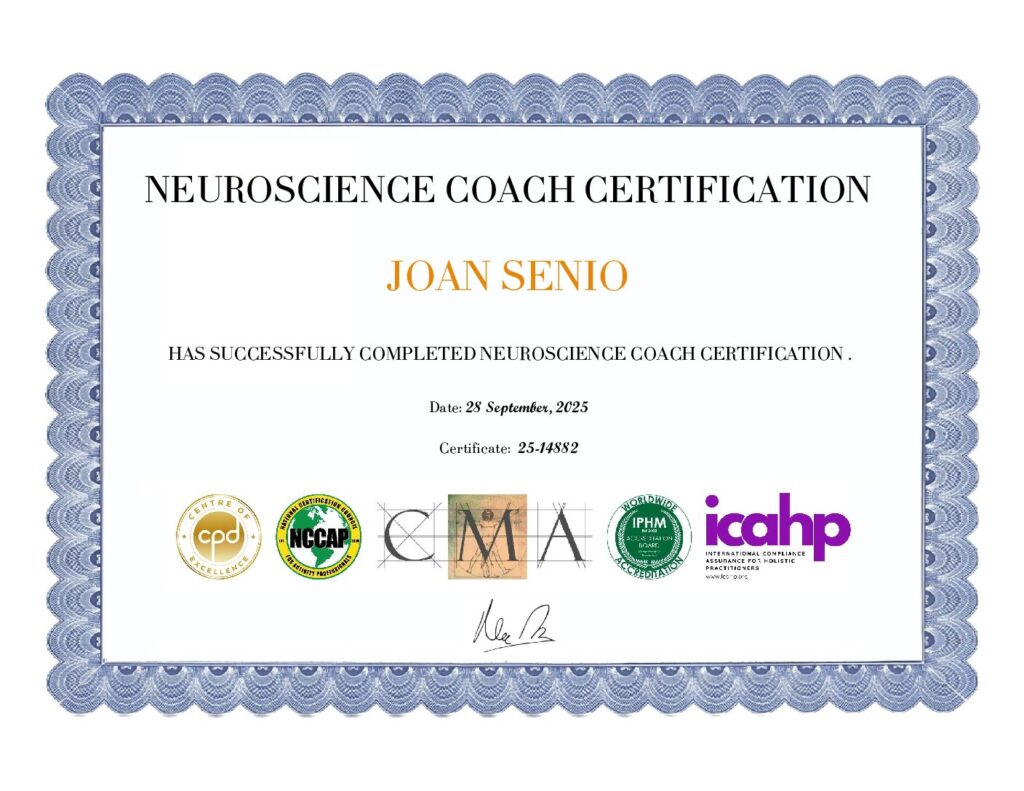
Joan Morabito Senio is the founder of Kindness-Compassion-and-Coaching.com. Joan’s career includes clinical healthcare plus 20+ years as an executive in a nationwide health care system and 15 years as a consultant. The common threads throughout Joan’s personal and professional life are a commitment to non-profit organizations, mental health, compassionate coaching, professional development and servant leadership. She is a certified Neuroscience Coach, member of the International Organization of Life Coaches, serves as a thought-leader for KuelLife.com and is also a regular contributor to PsychReg and Sixty and Me. You can read more about Joan here: Joan Senio.


No Responses