
Practicing self-compassion when you’re behind isn’t about ignoring responsibilities or sugarcoating reality. It’s about choosing kindness over criticism, especially when your nervous system is already overwhelmed. It’s about creating emotional safety in moments that feel like failure.
The Gentle Power of Self-Compassion When You’re Behind
There’s a quiet ache that comes with feeling behind: behind on goals, behind others, behind where you thought you’d be. It’s a feeling that often invites shame, comparison, and a harsh inner monologue that says, “You should’ve done more.” But the antidote isn’t pushing harder. It’s speaking to yourself kindly, and with love.
Today, we’ll explore how to treat yourself with self-compassion when you feel behind, offer trauma-informed scripts, grounding practices, and reframes that help you reconnect with your worth, no matter your pace.
Because healing doesn’t happen on a timeline. And you’re not late to your own life.
For more like this, visit 25+ Self-Compassion Exercises: How to Discover Self-Love.
Understanding the Inner Critic: Why Self-Compassion When You’re Behind Feels so Hard
When you feel behind, whether it’s in your healing, your goals, or simply keeping up with daily life, it’s common for your inner critic to grow louder. That voice may sound like urgency, disappointment, or even shame.
It might say, “You’re not doing enough,” or “Everyone else is ahead of you.” And in moments like these, self-compassion can feel out of reach.
But feeling behind doesn’t mean you’ve failed. It means you’re human. And often, the harshness of your inner voice is not a reflection of laziness or lack; it’s a protective response shaped by past experiences, trauma, or perfectionism. It’s your nervous system trying to make sense of discomfort by reaching for control.

Practicing self-compassion when you’re behind begins with recognizing that your inner critic isn’t the enemy; it’s a part of you that’s scared. And the most healing thing you can do is meet that fear with kindness, not judgment.
At Kindness-Compassion-and-Coaching.com, we believe that emotional safety starts with how you speak to yourself. So instead of asking, “Why am I so far behind?” try asking, “What do I need right now to feel supported?”
You may also wish to explore How to Overcome Regret and Turn Mistakes into Life Lessons.
The Healing Power of Self-Compassion When You’re Behind
When you feel behind, it’s tempting to believe that criticism will motivate you. That if you just push harder, speak harsher, or tell yourself to just “get it together,” you’ll catch up. But research and lived experience tell a different story. Shame doesn’t create momentum. It creates paralysis.
Self-compassion when you’re behind is restorative. It’s the quiet strength that says, “I’m allowed to be human. I’m allowed to move at my own pace.” And when your nervous system is dysregulated by pressure or comparison, kind self-talk becomes a lifeline.
Here’s what self-compassion might sound like in practice:
- “I’m doing the best I can with what I have today.”
- “It’s okay to rest. My worth isn’t measured by productivity.”
- “I’m allowed to take up space, even when I’m not ‘on track.’”
These affirmations are emotional anchors. They help you regulate, reframe, and reconnect with your inner safety. They build trust. Trust that you’ll meet yourself with kindness, even when the world feels fast and unforgiving.
At Kindness-Compassion-and-Coaching.com, we believe that healing begins with how you speak to yourself. So, if you’re feeling behind today, let this be your reminder: you’re not broken. You’re becoming. And that process deserves tenderness. To learn more, explore the self-compassion practices outlined in our comprehensive Self-Compassion Starter Kit.
Scripts for Practicing Self-Compassion When You’re Behind
When you’re feeling behind, your inner dialogue can become a battleground. Thoughts like “I should’ve done more” or “I’m failing” can echo louder than any external pressure. But here’s the truth: the way you speak to yourself in these moments matters deeply. It can either reinforce shame or invite healing.
At Kindness-Compassion-and-Coaching.com, we believe that self-compassion when you’re behind begins with affirming words that soothe rather than scold.
Below are trauma-informed scripts and reframes you can use when your inner critic starts to spiral:
- When you feel overwhelmed by comparison: “Their path isn’t mine. I’m allowed to move at the pace that honors my healing.”
- If you’re stuck in guilt or regret: “I made the best choices I could with the awareness I had. Growth is still possible.”
- When you’re tempted to push through exhaustion: “Rest is not weakness. It’s how I rebuild. I’m allowed to pause.”
- If you feel like you’ve missed your moment: “I’m not late. I’m arriving exactly when I’m ready.”
These comforting phrases can help interrupt cycles of self-judgment and create space for grace. And the more consistently you use them, the more your nervous system begins to trust that kindness is safe.
You might even try writing your favorite script on a sticky note, saving it as your phone wallpaper, or saying it to yourself before bed. These small acts of self-compassion when you’re behind are healing and the beginning of finding your way back to self-love.
You may also wish to read 100+ Self-Care Journal Prompts: How to Find Self-Love Now.
Trauma-Informed Practices to Support Self-Compassion When You’re Behind
When you feel behind, your body often knows before your mind does. Tight shoulders, racing thoughts, a sense of urgency that feels like it’s pressing against your chest. Responding to these signals with trauma-informed care is one of the most powerful ways to practice self-compassion when you’re behind.
At Kindness-Compassion-and-Coaching.com, we believe emotional safety starts in the nervous system. Here are practices to help you regulate and reconnect when your inner critic is loud and your energy is low:
Grounding Through Breath. Try this: inhale slowly for four counts, hold for seven, exhale for eight. Repeat three times. This simple breathwork pattern helps calm the fight-or-flight response and creates space for gentler thoughts to emerge.
Journaling for Emotional Clarity. Prompt: “What am I afraid will happen if I don’t catch up?” This question helps surface the deeper fears beneath the urgency and allows you to meet them with compassion instead of avoidance.
Somatic Soothing. Place one hand on your heart and one on your belly. Say aloud: “I am safe. I am allowed to move at my own pace.” This physical gesture reinforces safety and helps anchor kind self-talk in the body.
Moments of Kindness. Self-compassion when you’re behind doesn’t have to be grand. It can be choosing a kind tone with yourself, stepping outside for five minutes, or letting yourself cry without rushing to “fix” it. These small acts are cumulative, and they build emotional resilience over time.
These practices are about coming home to yourself. And when you meet your body and mind with kindness, you begin to rewrite your story. You begin to trust that healing can happen.
Learn more about How to Use Self-Love Affirmations to Change Your Life.
Rebuilding Trust with Yourself Through Self-Compassion When You’re Behind
One of the quietest losses that comes with feeling behind is the erosion of self-trust. You may start to question your instincts, your timing, even your worth. And yet, this is exactly where self-compassion becomes most powerful; not as a quick fix, but as a constant opportunity to reconnect with yourself.
Rebuilding trust doesn’t happen overnight. It happens in moments: when you choose rest without guilt, when you speak gently to yourself after a missed deadline, when you honor your emotional needs even when the world says “hustle.”
These moments are small, but they’re sacred. They signal to your nervous system that you are safe with yourself again.
Here are a few ways to practice self-compassion when you’re behind and begin rebuilding that trust:
Create a Self-Compassion Ritual. Choose a phrase, a breath, or a gesture that you return to when you feel off-track. Something like, “I’m allowed to begin again,” or placing a hand on your heart. Ritual creates rhythm and rhythm builds safety.
Track Progress Without Pressure. Instead of measuring productivity, track moments of kindness. Did you pause before self-criticism? Did you let yourself rest? These are wins. This is healing.
Write a Letter to Your Future Self. Affirm that you’re doing your best, even now. Remind your future self that falling behind didn’t mean giving up, it meant learning to move with compassion.
At Kindness-Compassion-and-Coaching.com, we believe that every time you choose self-compassion when you’re behind, you’re not just catching up. You’re coming home.
You’re Not Late to Your Own Life
Healing doesn’t follow a schedule, and every moment you choose self-compassion when you’re behind is a step toward rewriting your story. Those gentle breaths, kind reframes, and trauma-informed practices are the foundation of lasting emotional safety.
As you learn to hold yourself with the same warmth you’d offer a dear friend, changes ripple into every aspect of your days.
You’re not late to your own life; you’re exactly where you need to be.
Learning, growing, and unfolding at your unique pace. Keep speaking to yourself with compassion and watch how everything begins to fall into place, with self-love and kindness providing your foundation for self-worth.
Ready to deepen your practice?
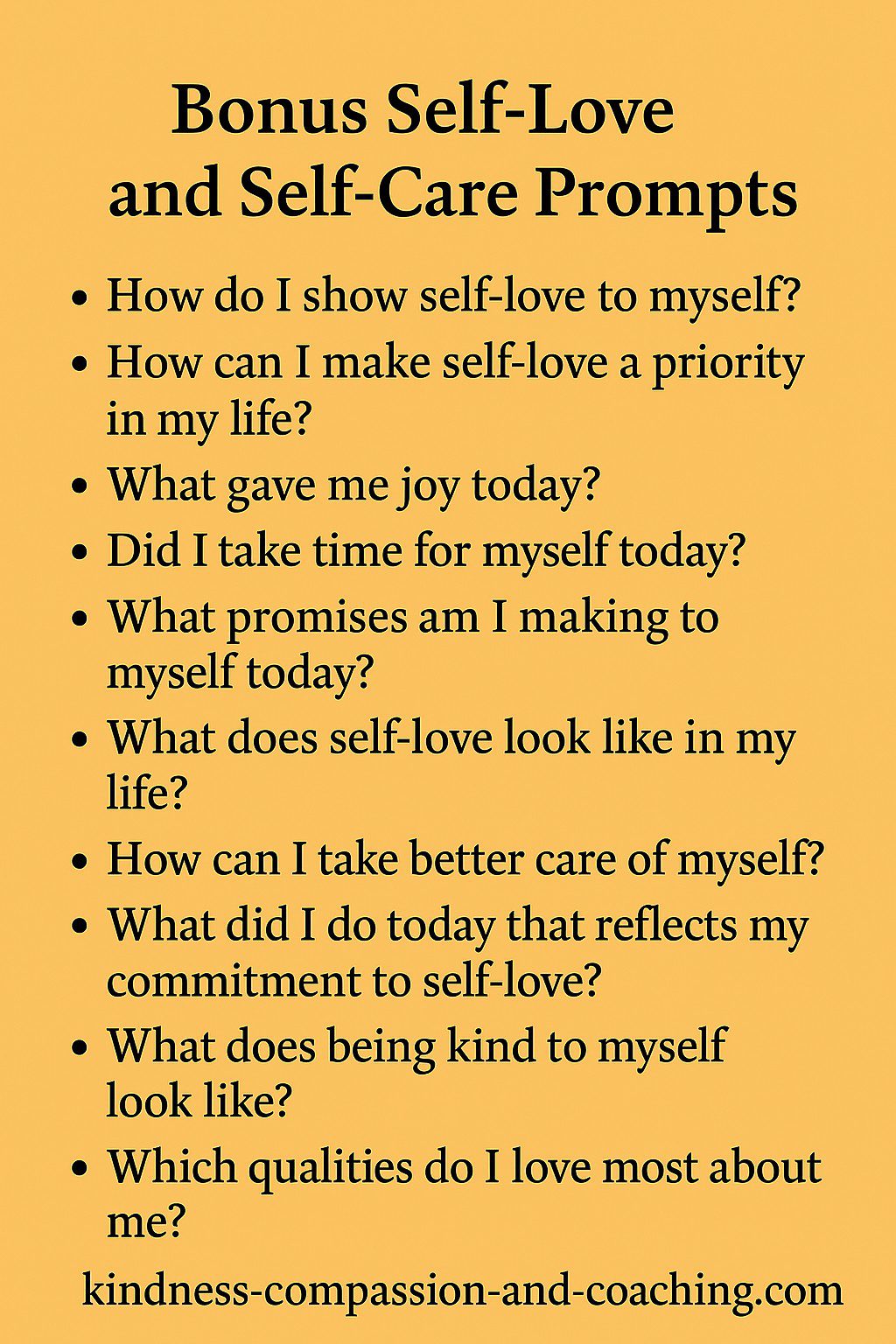
- Download your free Printable Self-Love and Self-Care Prompts to encourage you to be kind to yourself often and in the moment.

Thank you as always for reading.
Affiliate Disclosure: Some links in this post are affiliate links. As an Amazon Associate, we earn from qualifying purchases. Thank you for supporting Kindness-Compassion-and-Coaching.com at no extra cost to you.






No Responses