

Anxiety around the unknown can feel like it takes over your whole inner world. When the future feels blurry or unpredictable, your mind may start working overtime trying to plan for every possibility, searching for something you can be sure of, or bracing for what might go wrong. Intolerance of uncertainty is a common human response to feeling unsafe or unprepared.
Understanding Intolerance of Uncertainty
Intolerance of uncertainty describes the deep discomfort that arises when outcomes are unclear, plans feel unstable, or the future can’t be predicted.
For many people, uncertainty activates a sense of internal threat. Anxiety rises. The mind starts scanning for danger. The body prepares for something it can’t quite name.
This response is a protective pattern shaped by past experiences, temperament, and the nervous system’s need for safety.
When uncertainty feels intolerable, everyday situations like waiting for a response, navigating change, or making decisions without full information can trigger worry, overthinking, or avoidance.
Understanding this pattern is the first step toward building a more compassionate, grounded relationship with the unknown.

How Intolerance of Uncertainty Affects Daily Life
When uncertainty takes hold, even simple choices can feel overwhelming because no option seems reliable or “safe enough.”
That same discomfort often pushes people into over‑planning, seeking repeated reassurance, or trying to control every possible outcome to feel steadier. For others, the fear of the unknown leads to avoiding new situations altogether, especially when they can’t predict how things will unfold.
These patterns can spill into relationships too, where even small moments of ambiguity may be misread as rejection, instability, or a sign that something is wrong, creating tension where none was intended.
Early experiences often shape how someone responds to the unknown, especially if they grew up in environments that felt unpredictable or emotionally inconsistent.
People who are naturally sensitive or highly conscientious may also feel uncertainty more intensely, simply because their nervous systems register ambiguity as a bigger emotional event.
For many, past situations where “not knowing” led to real emotional or physical consequences taught the body to treat uncertainty as a threat rather than a neutral state.
Cultural or family systems can reinforce this pattern too, especially when control, perfection, or constant preparedness are equated with safety, worthiness, or being “good.”
Together, these influences create an expectation that uncertainty is dangerous, making it harder to relax into the parts of life that can’t be predicted.
Grounding Techniques: How to Stay Centered in Uncertain Times
The Psychology Behind Intolerance of Uncertainty
Intolerance of uncertainty is rooted in how the brain and nervous system interpret ambiguity.
The human brain is wired to prefer predictability because it reduces cognitive load and helps conserve energy.
When something is uncertain, the brain fills in the gaps (often with worst‑case scenarios) because anticipating danger once kept us alive.
For people with heightened sensitivity or past experiences of instability, this threat response becomes stronger and more easily triggered.
How the Brain Responds to the Unknown
- The amygdala activates when outcomes are unclear, signaling potential danger even when none exists.
- Our prefrontal cortex struggles to problem‑solve when anxiety is high, making uncertainty feel even more overwhelming.
- The nervous system shifts into hypervigilance, scanning for clues or patterns to regain a sense of control.
Learned Patterns and Emotional Conditioning
The brain learns to associate uncertainty with discomfort.
If someone grew up in an environment where unpredictability meant emotional volatility, criticism, or instability, the body may respond to even mild uncertainty as if it’s a threat. This conditioning can persist into adulthood, shaping how someone approaches relationships, work, and decision‑making.
The Role of Control and Perfectionism
People who struggle with uncertainty often rely on control as a coping strategy.
Perfectionism can develop as a way to avoid mistakes, surprises, or negative outcomes. While these strategies offer temporary relief, they reinforce the belief that uncertainty is dangerous, making the cycle stronger.
Beyond Burnout: How to Overcome Chronic Fatigue and More
How Intolerance of Uncertainty Shows Up in Daily Life
Intolerance of uncertainty often weaves itself into everyday moments in ways that feel subtle at first but deeply affect emotional well‑being.
Decision‑making can become unusually stressful because no option feels safe, and the mind keeps searching for the “right” choice that will eliminate all risk. This discomfort can lead to patterns like over‑planning, repeatedly seeking reassurance, or trying to control every detail to avoid surprises.
For some, the fear of the unknown makes new experiences feel too overwhelming, especially when the outcome can’t be predicted.
These reactions can also spill into relationships, where even small moments of ambiguity (like a delayed text or a shift in tone) may be interpreted as rejection or instability, creating tension that wasn’t intended.
Common Emotional and Behavioral Patterns
- Worry or rumination when outcomes aren’t clear.
- Difficulty relaxing without answers or closure.
- Avoiding situations that feel unpredictable.
- Reassurance‑seeking to reduce anxiety.
- Over‑preparing or over‑researching before making decisions.
Relational Effects
- Reading too much into ambiguous cues.
- Feeling unsafe when communication is inconsistent.
- Needing clarity or certainty to feel secure.
- Struggling with partners who are more flexible or spontaneous.
Why Some People Struggle with Intolerance of Uncertainty More Than Others
Some individuals experience uncertainty as mildly uncomfortable, while others feel it as a genuine threat. This difference often traces back to a combination of temperament, life experiences, and learned emotional patterns.
People who grew up in unpredictable or emotionally inconsistent environments may have learned early on that “not knowing” meant danger, conflict, or instability.
Highly sensitive or conscientious individuals may also feel uncertainty more intensely because their nervous systems register ambiguity as a bigger emotional event.
Past experiences where uncertainty led to real emotional or physical consequences can reinforce the belief that the unknown is unsafe. Cultural or family systems can deepen this pattern, especially when control, preparedness, or perfection were equated with safety, worthiness, or being “good.”
Contributing Factors
- Childhood environments marked by inconsistency or volatility.
- High sensitivity or strong conscientiousness.
- Trauma or past experiences where uncertainty had real consequences.
- Family or cultural norms that equate control with safety.
- Personality traits that favor structure, predictability, or planning.
How These Factors Shape the Nervous System
- The body may respond to uncertainty with heightened vigilance.
- The mind may default to worst‑case scenarios to prepare for danger.
- Emotional regulation becomes harder when ambiguity feels threatening.
- Control becomes a coping strategy rather than a preference.
Find the Best Weighted Blankets for Anxiety
Intolerance of Uncertainty: Coping Strategies
Coping with uncertainty begins with learning how to soothe the nervous system so the unknown doesn’t feel like an immediate threat.
- Grounding practices such as slow breathing, orienting to your surroundings, or placing a hand on your chest help signal safety to the body. This makes it easier to think clearly rather than react from fear.
- Exposure to minor uncertainty can help expand tolerance. Choosing not to check your phone right away. Leaving a minor decision unresolved for a few hours. Allowing plans to stay flexible instead of fixed. These small experiments teach the brain that uncertainty is uncomfortable but survivable.
- Rewriting internal narratives is another powerful tool. When the mind jumps to worst‑case scenarios, pausing to ask, “What else might be true?” or “Is this fear or fact?” it helps interrupt catastrophic thinking. In time, this creates space for more balanced interpretations.
- Strengthening self‑trust also plays a central role. Following through on commitments, honoring your limits, and making values‑aligned choices (even when the outcome isn’t guaranteed) builds confidence in your ability to handle whatever comes.
- Creating a sense of stability without relying on rigid control can also ease the pressure. Routines, predictable self‑care practices, and boundaries around information consumption (especially news or social media) help create internal steadiness.
These strategies don’t eliminate uncertainty, but they make it feel less like a threat and more like a natural part of life that can be navigated with compassion and resilience.
Intolerance of Uncertainty: How to Support Someone Who Struggles
Supporting someone who feels overwhelmed by uncertainty begins with offering emotional steadiness rather than solutions.
People who struggle with the unknown often carry a heightened sense of vulnerability.
Validation, such as simple acknowledgments like “I can see this feels really hard” can help calm the nervous system and reduces shame.
Predictability also matters. Following through on commitments. Communicating clearly. Being consistent in tone and timing. All these behaviors create a sense of safety that counterbalances their internal discomfort.
Reassurance can help, but it’s most effective when paired with curiosity. For example, asking what part of the situation feels uncertain, what they fear might happen, or what would help them feel more grounded.
Encouraging steps toward tolerating uncertainty without pushing or minimizing their experience can also help them build confidence at a pace that feels manageable. Patience is essential. It’s impossible to eliminate uncertainty; the goal is to help them feel less alone in navigating it.
Intolerance of Uncertainty: When Professional Support Can Help
There are times when intolerance of uncertainty becomes so intense that it interferes with daily functioning, relationships, or decision‑making.
Professional support can offer relief and structure when someone feels constantly on edge, avoids important situations, or becomes overwhelmed by worry whenever outcomes aren’t clear.
Therapists trained in cognitive‑behavioral approaches can help identify the beliefs and patterns that make uncertainty feel threatening. Exposure‑based strategies build tolerance in a safe, supported way.
For individuals whose reactions stem from trauma or chronic instability, trauma‑informed therapy can help the nervous system relearn what safety feels like.
Professional support doesn’t remove uncertainty. But it can give people the tools, insight, and emotional grounding they need to navigate it with more confidence and less fear.
Childhood Trauma: What You Need to Know About 7 Forms of Abuse and Neglect
Intolerance of Uncertainty: Closing
Intolerance of uncertainty is a human response to feeling unprepared, unsafe, or overwhelmed by the unknown.
It shapes how people think, feel, and relate, but it is also something that can soften with awareness, compassion, and practice.
By understanding where this pattern comes from and how it shows up in daily life, individuals can begin to build a more trusting relationship with themselves and the world around them.
Steps toward emotional tolerance, supportive relationships, and (when needed) professional guidance can gradually transform uncertainty from a source of fear into a space where growth, possibility, and resilience can take root.
Thank you as always for reading.
Affiliate Disclosure: Some links in this post are affiliate links. As an Amazon Associate, we earn from qualifying purchases. Thank you for supporting Kindness-Compassion-and-Coaching.com at no extra cost to you.

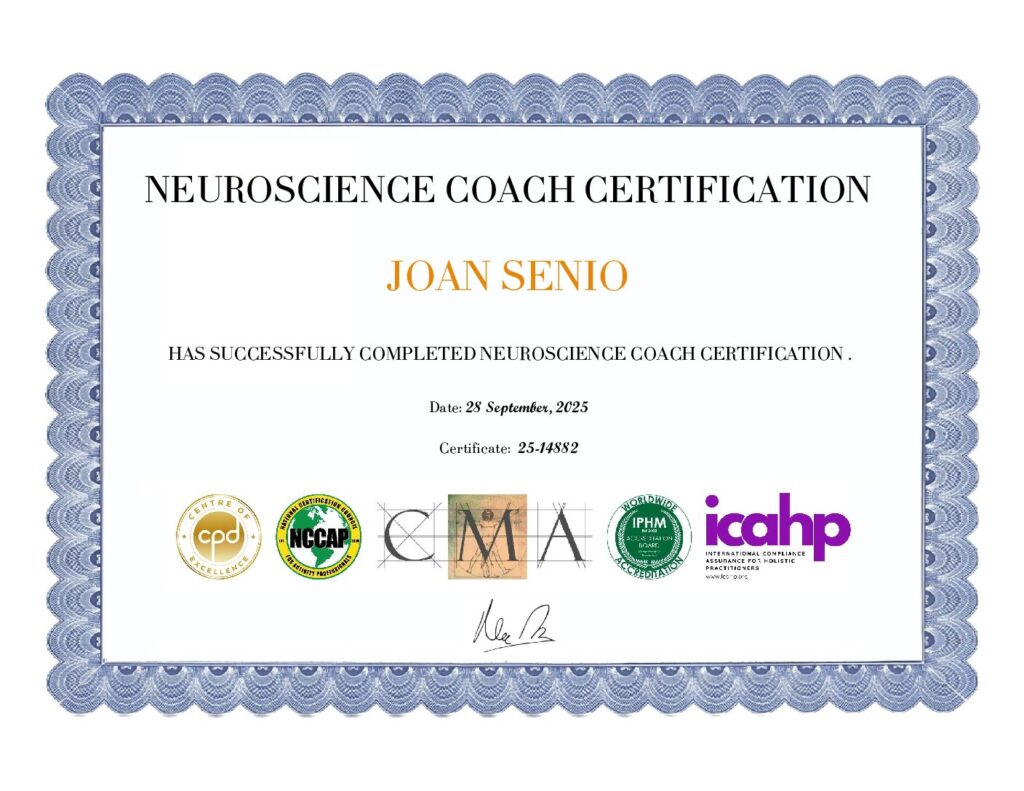
Joan Morabito Senio is the founder of Kindness-Compassion-and-Coaching.com. Joan’s career includes clinical healthcare plus 20+ years as an executive in a nationwide health care system and 15 years as a consultant. The common threads throughout Joan’s personal and professional life are a commitment to non-profit organizations, mental health, compassionate coaching, professional development and servant leadership. She is a certified Neuroscience Coach, member of the International Organization of Life Coaches, serves as a thought-leader for KuelLife.com and is also a regular contributor to PsychReg and Sixty and Me. You can read more about Joan here: Joan Senio.



No Responses