Do you ever ask yourself: “Why do I feel anxious all the time?” Many people suffer from anxiety that is shaped and even triggered by the environments they live, work, and interact in every day. The world around us influences our nervous system constantly, sending signals about safety, threat, belonging, and stability. And when those signals are overwhelming, unpredictable, or chronically stressful, anxiety becomes a natural response. This is why understanding environmental causes of anxiety is essential.
Anxiety doesn’t just appear out of nowhere. It grows in context. And when we understand that context, we can finally stop blaming ourselves and start creating environments that support healing.
Review the 5 Best Tools for Calming Anxiety Now and choose one that best suits your circumstances.

The Nervous System Is Always Listening
One of the most important truths about anxiety is this: your nervous system is constantly scanning your environment for cues of safety or danger.
This process happens automatically, long before you have conscious thoughts about what’s going on. If your surroundings feel chaotic, unpredictable, overstimulating, or emotionally unsafe, your body responds as if you’re under threat, even when nothing “dangerous” is happening.
This is why two people can experience the same environment differently. Someone who grew up in a calm, supportive home may feel only mild discomfort in a noisy or stressful setting. But someone who grew up with conflict, instability, or emotional neglect may experience that same environment as overwhelming or even frightening.
Environmental anxiety is the result of a nervous system doing its best to protect you.
Environmental Causes of Anxiety: The Home
Home is supposed to be a place of rest, grounding, and emotional safety. But for many people, it’s the opposite.
Some homes are filled with noise, clutter, or constant activity. Others are emotionally unpredictable, tense, quiet, or filled with unspoken conflict or cultural pressure. Some homes are physically unsafe. Others are simply overstimulating, with bright lights, loud televisions, or a lack of private space as a result of environmental or lifestyle factors.
When your home environment doesn’t support your nervous system, anxiety becomes a daily companion. You may feel on edge without knowing why or struggle to relax, even when you’re exhausted. You may feel like you’re always “waiting for something to happen,” even when nothing is wrong.
And if you grew up in a home where emotional safety was inconsistent, your body may still respond to your environment as if you’re living in that past reality.
This is why healing often begins with creating a home environment that feels soothing, predictable, and supportive.
Environmental Causes of Anxiety: The Workplace
Workplaces are one of the most common environmental causes of anxiety. Many adults spend more waking hours at work than anywhere else, and the emotional tone of that environment matters.
A workplace can trigger anxiety when:
- Expectations are unclear.
- Workloads are unrealistic.
- Leadership is unpredictable or critical.
- Coworkers are competitive or dismissive.
- The culture rewards burnout.
- There is no space for rest, quiet, or autonomy.
Even physical environment factors such as fluorescent lighting, constant noise, lack of natural light, or crowded spaces can activate the nervous system.
For people with trauma histories or arrested development, these environments can feel especially destabilizing. A demanding boss may feel like a parent who was impossible to please. A chaotic office may echo the unpredictability of childhood. A lack of boundaries may feel like a familiar but painful pattern.
Understanding these connections can help you see that your anxiety at work isn’t a personal failure. It’s your nervous system responding to an environment that doesn’t support your well‑being.
Community, Culture, and the Pace of Modern Life
Beyond home and work, there are broader environmental causes of anxiety. Many people live in communities that are overstimulating, disconnected, or chronically stressful.
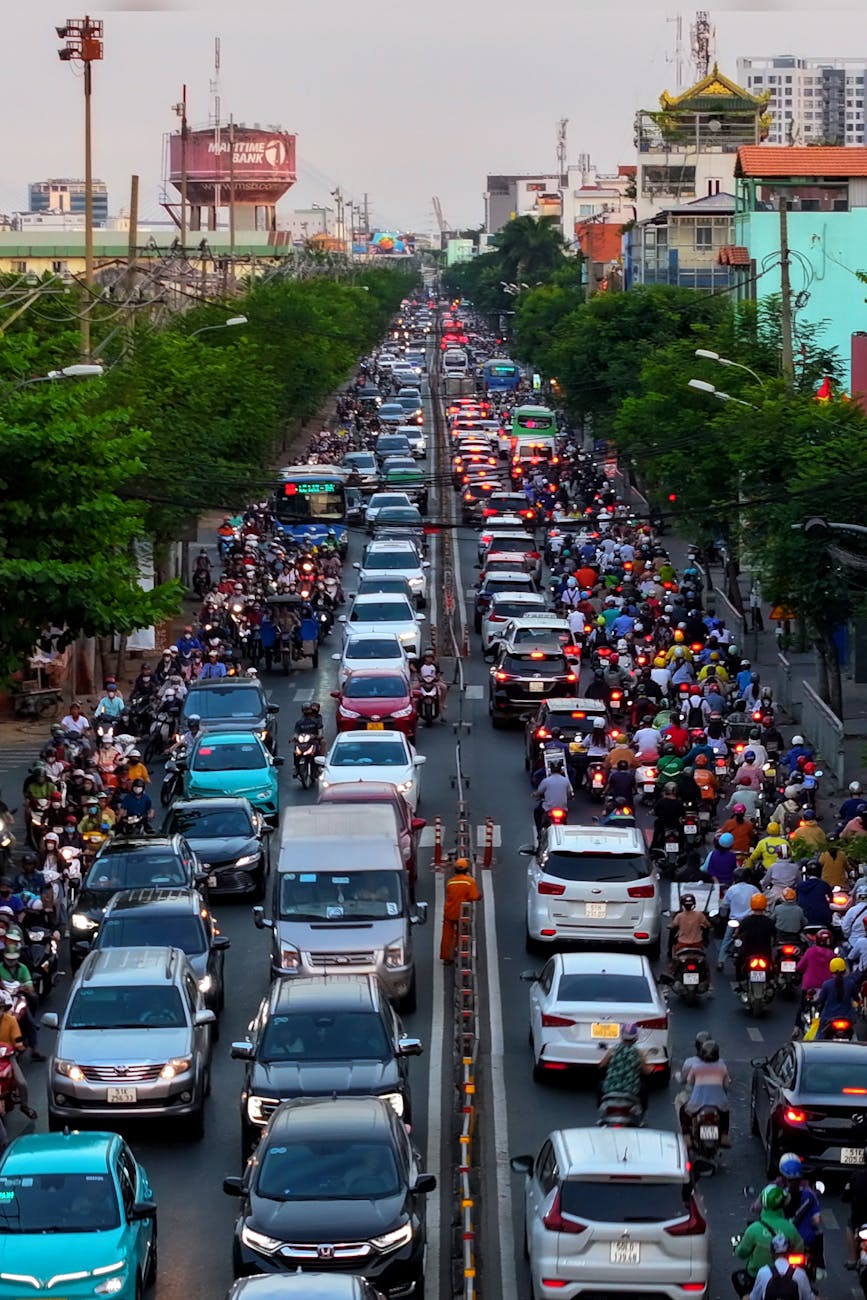
Fast‑paced cities, long commutes, financial pressure, and constant noise all contribute to a sense of internal tension. Even suburban or rural environments can create anxiety when they lack social connection, safety, or access to supportive resources.
And then there’s the cultural environment, including the expectations, norms, and pressures that shape how we see ourselves. Many people live in cultures that reward productivity over rest, perfection over authenticity, and independence over community. These cultural messages can create chronic anxiety, especially for those who already feel behind, overwhelmed, or emotionally unsupported.
When the world feels too fast, loud, or demanding, your nervous system responds accordingly.
Environmental Causes of Anxiety: The Digital World
We often forget that our digital world can also be one of the most powerful environmental causes of anxiety. And for many people, it’s one of the most difficult to manage.
Social media, news cycles, and constant notifications create a sense of urgency and comparison that keeps the nervous system activated. Even when you’re physically safe, your digital environment may be telling your brain that you’re not enough, doing enough, or keeping up.
This is especially true for people who grew up without emotional validation. The digital world can become a place where you seek approval, reassurance, or connection and where you’re constantly reminded that you’re falling short.
Understanding the emotional impact of your digital environment is essential for reducing anxiety and reclaiming your sense of inner stability.
Environmental Causes of Anxiety: Trauma and Its Lasting Impact
Some environments don’t just contribute to anxiety. They create it. Environmental trauma includes experiences such as:
- Growing up in a home with conflict, addiction, or emotional neglect.
- Living in unsafe neighborhoods.
- Experiencing natural disasters.
- Being exposed to chronic instability or unpredictability.
- Navigating poverty or housing insecurity.
These experiences shape the nervous system in profound ways. They teach the body to stay alert, to anticipate danger, and to distrust calm moments. Even long after the environment has changed, the body may continue responding as if the threat is still present.
This is one of the core reasons environmental causes of anxiety are so important to understand. You may be living in a safe environment now, but your nervous system may still be responding to the environments of your past.
Healing requires compassion, patience, and a willingness to understand the roots of your anxiety.
How Awareness of Environmental Causes of Anxiety Supports Healing
When you understand the environmental causes of anxiety, something powerful happens. You stop blaming yourself.
You begin to see that your anxiety is not a personal flaw, but a natural response to environments that overwhelmed your nervous system. And once you understand that you can begin to make changes that support your healing.
This might look like:
- Creating a calmer, more predictable home environment.
- Setting boundaries at work.
- Reducing digital overwhelm.
- Seeking out supportive relationships.
- Choosing environments that feel safe, warm, and grounding.
Healing doesn’t always require changing everything at once. Sometimes it begins with noticing what your body responds to and giving yourself permission to choose environments that feel better.
Why This Matters for Long‑Term Anxiety Recovery
Environmental causes of anxiety are often overlooked because they’re not as obvious as biological or lifestyle factors. But they are just as important and sometimes even more influential.
When you understand how your surroundings shape your emotional experience, you gain clarity about what your nervous system needs. You begin to see patterns that once felt confusing. You start to understand why certain places, people, or situations feel overwhelming. And you learn how to create environments that support your healing rather than undermine it.
This awareness becomes the foundation for long‑term recovery. Because healing anxiety isn’t just about calming the mind. It’s about creating a life that feels safe enough for your nervous system to relax.
A Final Word on Environmental Causes of Anxiety
If you’ve ever felt like your anxiety “comes out of nowhere,” or like you’re constantly on edge without understanding why, environmental factors may be playing a larger role than you realize. Your nervous system is wise. It remembers, responds and protects you.
And when you begin to understand the environments that shaped your anxiety (past and present) you open the door to a new kind of healing. One rooted in compassion, awareness, and the belief that you deserve to feel safe in your own life.
Future posts will explore biological and lifestyle causes of anxiety, giving you a complete, holistic understanding of what shapes your emotional world. But for now, simply knowing that your environment matters is a powerful first step.
Your anxiety is a reflection of the world around you. With the right support, you can create an environment where your nervous system finally feels at home.
Thank you as always for reading.
Affiliate Disclosure: Some links in this post are affiliate links. As an Amazon Associate, we earn from qualifying purchases. Thank you for supporting Kindness-Compassion-and-Coaching.com at no extra cost to you.
No Responses