

You want to grow. You want to follow through on your commitments, honor your values, and keep moving forward. But you also want to treat yourself with the kindness and care that we each deserve. Part of you worries that if you’re too gentle with yourself, you’ll lose momentum or let yourself off the hook. That tension often comes from a history of hard lessons, where discipline was confused with self-punishment and compassion was mistaken for weakness. This is why it is essential to learn how to balance self-compassion and accountability – and to unlearn those unhealthy beliefs.
Kindness and responsibility can and must co-exist in order for us to maintain healthy well-being and balance in life. Achieving this balance allows us to create the optimal conditions for sustainable growth, compassionate accountability, and value aligned goal setting.
Today, we explore why this balance is essential, what makes it so difficult to achieve, and how to manage it with care. Whether you’re navigating burnout, rebuilding trust with yourself, or simply trying to achieve more balance in your daily life, this is a good place to begin.
If you want a guided starting point, take the Wholehearted Living Quiz to determine if you are living from your own true north, and to clarify where to focus next: values alignment, boundary strength, or nervous-system readiness. And download the companion Wholehearted Living one‑page playbook to translate insight into practice.
How to be Authentic: Learning to Balance Safety and Openness
Why It’s Essential to Learn How to Balance Self-Compassion and Accountability
When we talk about how to balance self-compassion and accountability, we’re addressing a key means to both accelerate our personal growth, and to keep that growth sustainable. Without this balance, we risk swinging between extremes: harsh self-discipline that leads to burnout, or unchecked leniency that erodes trust within ourselves and with others.
The Psychological Cost of Imbalance
When accountability is emphasized without compassion, it often becomes punitive. We internalize failure as personal deficiency. This can lead to chronic self-criticism and emotional fatigue, avoidance of goals due to fear of imperfection, and a fractured sense of self-worth tied to achievement.
On the other hand, when compassion is present without accountability, we may struggle to follow through on commitments. This can create a loss of self-trust and personal credibility. It may also result in unmet goals that reinforce shame or stagnation, and difficulty maintaining boundaries in relationships.
Neither extreme supports wholehearted living. A balance of self-kindness and discipline is necessary to achieve healthy growth and thrive.

Compassionate Accountability Builds Trust
Compassionate accountability is strong. It says, “I care about you, and I believe in your capacity to follow through.” When we apply this to ourselves, we begin to repair the rupture between effort and empathy.
We stop using shame as a motivator and hold ourselves responsible in ways that honor our emotional safety and long-term wellbeing.
Why Self-Compassion and Responsibility Must Coexist
Self-compassion and responsibility are complementary values. Compassion gives us the emotional bandwidth to reflect, recalibrate, and recover. Responsibility gives us the structure to act, follow through, and grow. Together, they create a rhythm of progress that is both honest and humane.
This balance is especially important in times of transition, healing, or creative work, when the stakes feel high and our inner critic is loud. Maintaining it allows us to stay committed without collapsing or burning out under pressure.
Take our Inner Critic Quiz: How Harsh Is Your Self-Talk?
Why It’s Difficult to Balance Self-Compassion and Accountability
Many people struggle to balance self-compassion and accountability because they’ve inherited distorted messages about what these concepts mean. In many families, workplaces, and cultures compassion is framed as indulgence, and accountability as punishment. These beliefs prevent us to maintain well-being and achieve sustainable growth.
Internalized Beliefs and Emotional Conditioning
If you grew up in an environment where mistakes were met with criticism or withdrawal, you may have learned to equate accountability with shame. If kindness was rare or conditional, self-compassion may feel unfamiliar or even unsafe. These feelings will not just disappear because we want change. They live in the nervous system, shaping how we respond to effort, failure, and growth.
This is why compassionate accountability can feel confusing. It asks us to reframe those beliefs and hold ourselves responsible without replicating harm.
The Pendulum Between Harshness and Avoidance
Without a clear model for balancing kindness and discipline, many people swing between extremes. On one end: rigid self-monitoring, harsh inner dialogue, and burnout. On the other: avoidance, rationalization, and guilt. Neither side feels good, and neither supports sustainable progress.
The challenge to achieve balance is both behavioral and emotional. It requires us to stay present with discomfort, to resist the urge to self-punish or self-abandon, and to build a new internal rhythm that honors both self-compassion and responsibility.

The Absence of Appropriate Modeling
Most of us were not taught accountability without shame. We were taught that compliance, perfectionism, or people-pleasing were a necessary component of our behavior in order to avoid shame.
Few of us saw what it looks like to be treated consistently regardless of our achievements or lack thereof. Without that modeling, it’s hard to know how to give ourselves that unconditional support and kindness.
This is why we may need support to find language and structure for a balance we’ve never been shown.
How to Balance Self-Compassion and Accountability in Everyday Life
So, how do we achieve this elusive balance? And how do we sustain it, especially in the face of stress, setbacks, or relational pressure? Everyday life is full of moments that test our ability to stay kind without collapsing boundaries, and to stay committed without turning against ourselves.
The Emotional Rhythm of Real Life
Life doesn’t operate on a perfect schedule. Some days you’ll feel clear and capable; other days you’ll feel foggy, discouraged, or overwhelmed. Maintaining self-compassion and responsibility means allowing for that rhythm without using it as evidence of failure. It means recognizing that emotional bandwidth fluctuates and that your worth doesn’t.
Accountability Without Shame in Daily Choices
In everyday life, accountability without shame looks like naming what matters and staying in relationship with it, even when you fall short. It means acknowledging missed steps without collapsing into self-blame. Recommitting to your values without needing perfection. And offering yourself the same care and kindness you’d offer someone you love.
This kind of compassionate accountability builds trust over time and understanding that we will all falter from time to time, but that we can and do ultimately return to what matters, regardless.
Balancing Kindness and Discipline in Relationships, Work, and Care
As you navigate deadlines, caregiving, personal healing, or some other challenge, you may feel pulled to overextend, overperform, or overcorrect. Maintaining the balance means pausing long enough to ask:
- Am I consistently honoring my needs and my commitments?
- Do I show up with care, for myself as well as others?
- What is driving my choices? Is it fear or obligation or is it alignment to my personal values?
These questions are touchstones that can help you maintain the balance between self-compassion and accountability over time.

Frequently Asked Questions: How to Balance Self-Compassion and Accountability
Isn’t self-compassion just an excuse to avoid responsibility? No. Self-compassion and responsibility are complementary. Self-compassion helps regulate shame and fear, which makes it easier to reflect, repair, and recommit. When we remove harsh self-judgment, we create space for compassionate accountability; the kind that builds trust rather than fear.
How do I know if I’m being too lenient with myself as I learn how to balance self-compassion with accountability? If you notice patterns of avoidance, chronic guilt, or unfinished commitments, it may be a sign that your internal structure needs more support. Balancing kindness and discipline involves reconnecting with your values and choosing follow-through that feels both emotionally safe and aligned.
What’s the difference between accountability and shame? Accountability without shame is rooted in self-compassion, self-kindness and commitment. Shame undermines growth by attacking identity rather than behavior. When we hold ourselves accountable with compassion, we’re more likely to reflect honestly, repair thoughtfully, and stay engaged with our goals.
Can I still set ambitious goals as I learn how to balance self-compassion and accountability? Yes. Compassionate goal setting is not about lowering your standards; it’s about pursuing meaningful goals without self-punishment. It allows for flexibility, emotional safety, and revision. You can be ambitious and kind at the same time.
How to Balance Self-Compassion and Accountability: Closing Reflections
When you learn how to balance self-compassion and accountability, you honor both your tenderness and your strength. It may feel like a new kind of courage – the courage of showing up for yourself, even if it is not in alignment with your former beliefs and the expectations of others.
It’s the ongoing choice to both care for yourself deeply and follow through, even when the path feels uncertain.
This balance will never be a fixed state. It’s a living relationship among your values, your emotional capacity, and your desire to grow. Picture a woman walking a tightrope, making subtle changes in her position, left to right, in order to keep moving forward with safety.
Some days you may tilt toward rest, others toward action. What matters is that you keep returning to your center, and what matters, without turning against yourself in the process.
You don’t have to choose between kindness and responsibility. You just have to choose both, again and again, with love.
If you found this post helpful, you may also want to visit How to Heal a Broken Heart: Self-Compassionate Recovery.
Thank you as always for reading.
Affiliate Disclosure: Some links in this post are affiliate links. As an Amazon Associate, we earn from qualifying purchases. Thank you for supporting Kindness-Compassion-and-Coaching.com at no extra cost to you.

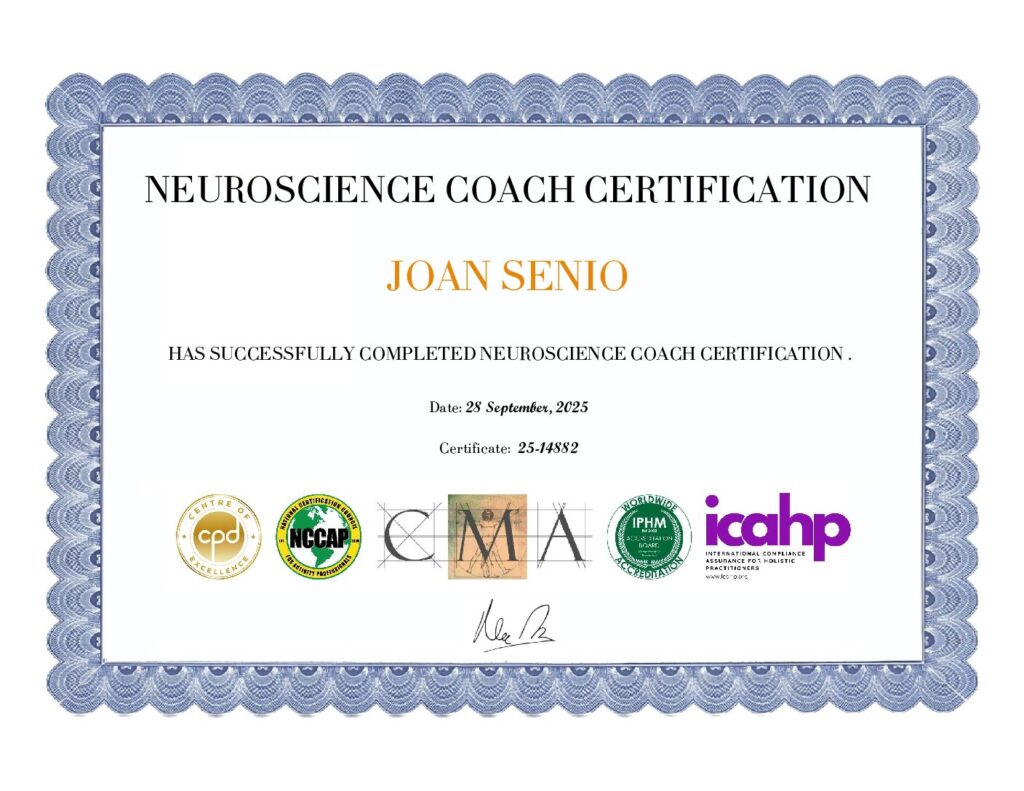
Joan Morabito Senio is the founder of Kindness-Compassion-and-Coaching.com. Joan’s career includes clinical healthcare plus 20+ years as an executive in a nationwide health care system and 15 years as a consultant. The common threads throughout Joan’s personal and professional life are a commitment to non-profit organizations, mental health, compassionate coaching, professional development and servant leadership. She is a certified Neuroscience Coach, member of the International Organization of Life Coaches, serves as a thought-leader for KuelLife.com and is also a regular contributor to PsychReg and Sixty and Me. You can read more about Joan here: Joan Senio.






No Responses