

Today’s article is the last in a series that discusses the attachment styles that shape how people perceive closeness, manage uncertainty, and behave when they fear losing connection. This last installment focus on the disorganized attachment style.
Attachment styles develop as protective responses to early caregiving that felt unavailable, overwhelming or inconsistent. They shape how people perceive closeness, manage uncertainty, and behave when they fear losing connection.
To read the series from the beginning, visit What are Attachment Styles? How to Understand Yours & Build Stronger Connections.
How to Recognize a Disorganized Attachment Style
Today, we’re discussing the disorganized attachment style, including its developmental roots, everyday patterns, and how to restore more secure attachment behaviors.
Disorganized attachment style is the most complex attachment pattern, marked by a push-pull between craving closeness and fearing it.
This post offers a roadmap to help you create safety, reduce reactivity, and build trust with yourself and others. You’ll find clear definitions, real‑life examples, coaching scripts, and practical steps you can apply immediately.
How to Use this Disorganized Attachment Style Resource
The purpose of this post is twofold: first, to provide a comprehensive account of disorganized attachment style that builds understanding without judgment or shame. Second, to guide you toward vetted resources that support meaningful change for you or your clients.
We will present developmental mechanisms, typical emotional and behavioral patterns, and the evidence base for different change pathways. These tools can help you to make informed decisions about the resources that will help you or your clients most.
Treat this guide like a modular toolkit. You can read it end‑to‑end or jump straight to the sections you need most. Because disorganized attachment style often involves rapid shifts in emotion and behavior, prioritize pacing, grounding, and boundaries as you work.
- Start small. Choose one regulation skill and one trust‑building habit; practice daily for two weeks.
- Safety first. If strong trauma responses arise, pause, ground, and consider professional support.
- Apply in real life. Use the scripts and checklists during actual conversations, not just reflection.
- Track patterns. Map push-pull cycle (cues/emotions/meanings/actions) to spot intervention points.
- Measure progress. Look for fewer extreme swings, clearer boundaries, and more predictable repair.
What Does it Mean to Have a Disorganized Attachment Style?
Disorganized attachment style describes a paradoxical pattern where the drive for closeness collides with fear, leading to rapid shifts between pursuit and withdrawal.
People often experience mixed internal signals (wanting care while bracing for harm) which can make relationships feel confusing and unsafe.
This style blends anxious strategies (hypervigilance, urgent reassurance) with avoidant strategies (emotional numbing, distancing), so behavior can look contradictory even to the person themselves.
Over time, the result is fragmented self‑trust: it becomes hard to predict one’s reactions, organize needs into clear requests, or maintain consistent boundaries. Naming disorganized attachment style provides a compassionate lens for understanding these swings as adaptive responses.
What Causes Disorganized Attachment Style to Develop?
Disorganized attachment style commonly develops when early caregivers are both a source of comfort and fear, such as in contexts of trauma, neglect, or unpredictable caregiving.
The nervous system learns that approaching care might also cue danger, so proximity triggers push-pull responses that persist into adulthood.
Without consistency including reliable soothing and clear signals, children cobble together protective strategies that make sense in chaos but become costly later.
These origins don’t imply fault; they reflect survival learning that can be reshaped through safety, predictability, and trusted relationships. Understanding the cause helps shift focus from self‑blame to building the conditions where new patterns can take root.
Childhood Trauma: What You Need to Know about 7 Forms of Abuse and Neglect.
Disorganized Attachment Style: The Emotional State
The emotional state of disorganized attachment style is marked by intense, rapidly shifting feelings such as fear, shame, grief, and anger, often followed by collapse or numbness. Threat detection is high, so benign ambiguity can be misread as danger, and internal narratives swing between “I must cling to stay safe” and “I must flee to stay safe.”
Physiologically, the body may ping‑pong between hyperarousal and shutdown, making it hard to return to baseline or trust one’s signals.
This volatility can erode confidence and coherence. Even when insight is strong, emotions can outrun intentions. Healing focuses on stabilizing the nervous system first through grounding, paced breathing, and orienting so that consistent choices become possible.
What Disorganized Attachment Style Looks Like
Disorganized attachment style often shows up as unpredictable, contradictory behavior in relationships such as sudden pursuit followed by abrupt withdrawal, intense expressions of need that flip into anger or shutdown, and moments of dissociation or blankness when stressed.
People with this attachment style may test partners with confusing cues such as provoking closeness to see if it’s safe, then punishing or abandoning when vulnerability is met.
This is because their original caregiver was both a source of comfort and threat.
You’ll also see boundary whiplash. This may include promises to change that collapse under stress, oscillation between caretaking and demanding care, and difficulty sustaining steady, calibrated emotional responses.
Externally this can read as “hot‑cold” reliability; internally it feels chaotic, shaming, and exhausting.
Real Life Example: Disorganized Attachment Style
Imagine someone named Mia whose partner, James, makes plans to spend a weekend together. When James cancels last minute, Mia immediately sends a flurry of anxious texts asking what happened. When James replies with a short apology, Mia feels abandoned and later lashes out with accusations and threats to leave.
After an intense fight, Mia withdraws for days, giving James the silent treatment while replaying every perceived slight. Then, filled with shame and fear of real loss, she returns with grand gestures and apologies, begging for reassurance.
This push-pull cycle leaves both people exhausted: James confused by the intensity and inconsistency; Mia trapped between urgent attachment needs and a terror that closeness equals harm.
A coaching move here is to slow the loop: name the cycle, teach one immediate regulation skill, and choose one repair script to use before re‑engaging.
Costs of Disorganized Attachment Style
The costs of disorganized attachment style may impact personal life, professional life and relationships.
- Personally, it creates chronic fatigue, shame, and a fragmented sense of self that undermines long‑term goals and self‑care.
- Professionally, volatile emotional signaling can appear as inconsistent leadership, boundary confusion, or reactive decision‑making that damages credibility and team stability.
- In relationships, it erodes trust: partners and friends learn they can’t predict responses, which leads to withdrawal, frequent disruption, and shorter relationship lifespans.
Left unaddressed, these costs compound. Repeated break points reinforce the original survival patterns, making change harder.
The hopeful counterpoint is that targeted stabilization, predictable repair practices, and trauma‑informed support reduce risk and create durable recovery pathways.

Disorganized Attachment Style: How Change Happens
Insight into disorganized attachment style, such as understanding the paradox of craving closeness while fearing it can be illuminating. But awareness alone rarely produces lasting change. Without embodied practice, insight risks remaining intellectual, leaving the old cycles intact.
Healing requires structured exercises and corrective experiences, stabilizing practices, and trauma‑informed care that rewire both the nervous system and relational patterns:
1. Stabilizing practices for safety and integration
- Trauma‑informed psychotherapy, EMDR, and somatic approaches help regulate the nervous system and integrate fragmented experiences.
- These modalities prioritize safety, pacing, and containment, ensuring that healing unfolds without traumatization.
- The goal is to create a physiological baseline of calm from which relational work can proceed.
2. Skills and structured practice
- Workbooks, guided courses, and psychoeducational resources provide step‑by‑step coping tools.
- Structured exercises like grounding, boundary scripts, and repair routines translate theory into daily habits.
- Repetition builds predictability, replacing chaotic responses with steady, reliable skills.
3. Supported change in safe contexts
- Coaching, group programs, or monitored clinical work offer relational laboratories where new responses can be practiced.
- These settings provide feedback, accountability, and scaffolding so individuals can experiment with vulnerability and repair in real time.
- Supported practice ensures that change is not only internal but also relationally embodied.
Healing disorganized attachment style is not linear, but these pathways create a useful recovery progression: from safety, to skill, to supported relational change.
Disorganized Attachment Style: Resource Modalities
Support for people with a disorganized attachment style often blends different kinds of help:
- Body‑based approaches (like somatic therapies) focus on calming the nervous system and learning to feel safe with others.
- Attachment‑focused counseling and parts‑work (IFS) help bring together the “split‑off” parts of yourself and gently renegotiate the protective habits you’ve built over time.
- Practical skills training such as grounding exercises, quick self‑soothing routines, and simple scripts for repairing conflicts turn therapy insights into everyday habits.
- Trauma‑specific methods (like EMDR or trauma‑focused CBT) can target painful memories that still trigger confusion or fear.
- Peer and coaching support (secure‑base mentors, accountability partners) give you safe practice in building predictable, healthy relationship patterns.
- Books and workbooks provide models, exercises, and guidance you can use between sessions to keep progress moving.
Where to Start Your Work
Begin with the simplest, safest steps you can sustain: a brief daily regulation ritual, a clear map of your push-pull cycle, and one low‑risk relational experiment. Start a 5 to10-minute morning grounding practice (orient to environment, 4-6 paced breaths, gentle movement) to lower baseline reactivity.
Next, track one recent push–pull episode: note the cue, the felt emotion, the story you told yourself, and the action you took. Choose one interrupt skill to try the next time the cycle starts (for example, a two‑minute grounding exercise or a pre‑written pause message to a partner).
Finally, design a single predictable habit with a close other such as a weekly 15‑minute check‑in with a short agenda to practice repair and consistency. Small, repeatable wins build coherence faster than dramatic, unstable attempts to “fix” everything at once.
Books and Workbooks for Disorganized Attachment Style
| Resource type | Focus | Best for |
|---|---|---|
| The Adverse Childhood Experiences Recovery Workbook | Practical exercises to help you heal from adverse childhood experiences and trauma | Healing wounds of unresolved trauma |
| Attachment Recovery Workbook The Attachment Theory Workbook | Attachment models and relational patterns | Understanding paradox and language |
| The Ultimate Somatic Therapy and IFS workbook | Parts work and self‑leadership | Fragmented self‑states |
| Attachment Focused EMDR | Learn to address the damage sustained from poor parenting | Trauma‑linked triggers and healing attachment deficits |
| The Psychologist’s Attachment Solution | Shame reduction and self‑soothing | Mend childhood wounds and develop loving relationships with self-compassion and care |
Choose editions and authors that match trauma sensitivity and client readiness, pair clinical methods with daily practices for safety and integration.
Disorganized Attachment Style: Frequently Asked Questions
Is disorganized attachment style the same as trauma?
Disorganized attachment style is frequently linked to early relational trauma but is not identical to trauma diagnosis; it describes relational strategies that developed when care and fear were entangled.
Can people have mixed attachment styles?
Yes. Disorganized attachment style commonly includes anxious and avoidant patterns; individuals may shift between styles depending on context and stress level.
How long does healing take for disorganized attachment style?
There is no fixed timeline. Change depends on safety, consistency, access to trauma‑informed support, and practice of regulation and repair skills; measurable shifts often appear after months of steady practice.
Should I get therapy before doing workbook or skills work?
If you have a history of complex trauma or dissociation, clinician‑guided work is advisable; self‑help can complement therapy but is not a substitute when trauma symptoms are severe.
Is it safe to date while working on disorganized attachment style?
Paced, transparent dating with clear boundaries and negotiated repair agreements can be safe; favor short, structured experiments rather than high‑risk vulnerability without support.
What’s one immediate skill to try if I feel pulled to both cling and flee?
Try a two‑minute orienting and breath sequence: name five things you can see, three things you can feel, and take six slow diaphragmatic breaths. Delay action until you can describe one clear need.
Closing and Next Steps
Disorganized attachment style is a coherent survival strategy born from unpredictable safety.
The path forward emphasizes nervous system stabilization, predictable relational patterns, and graded practice of vulnerability paired with reliable repair.
It involves building predictable relational patterns: small, consistent experiences of trust that gradually replace chaos with steadiness. And it requires graded practice of vulnerability, paired with reliable repair, so that risk and connection can coexist without overwhelming fear.
Healing disorganized attachment is not about erasing the past; it’s about rewiring the present. With compassionate support, practical skills, and safe relationships, the survival strategy that once kept you alive can evolve into a foundation for resilience, intimacy, and genuine belonging.
Thank you as always for reading.
Affiliate Disclosure: Some links in this post are affiliate links. As an Amazon Associate, we earn from qualifying purchases. Thank you for supporting Kindness-Compassion-and-Coaching.com at no extra cost to you.

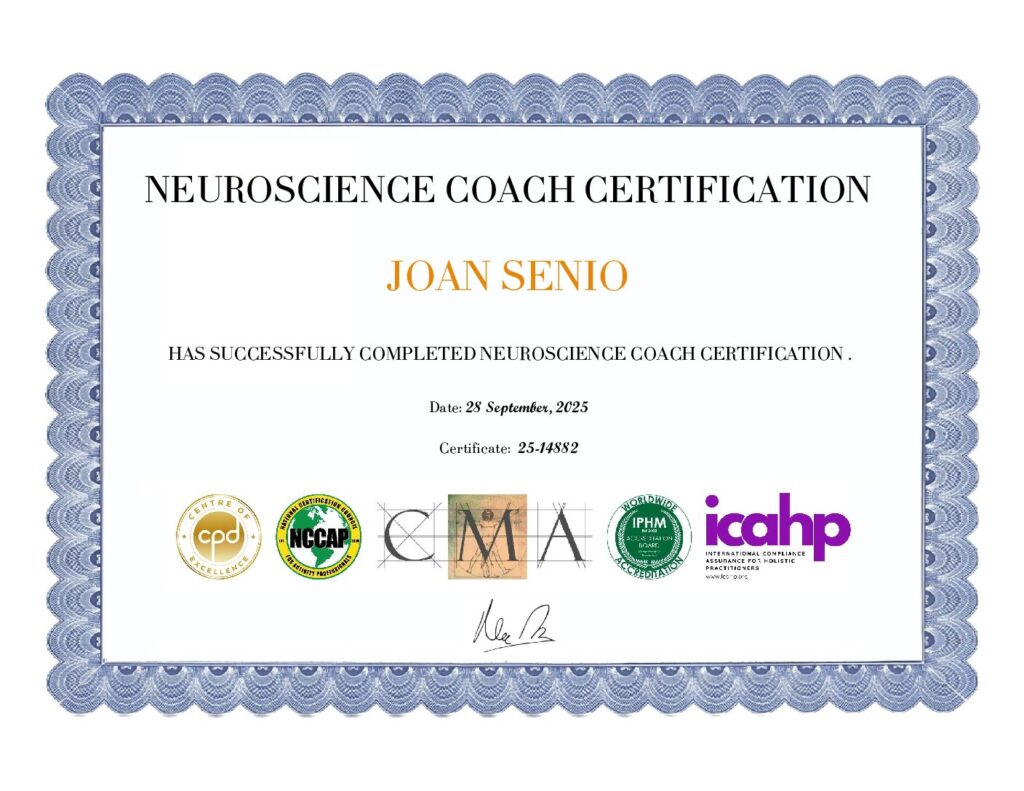
Joan Morabito Senio is the founder of Kindness-Compassion-and-Coaching.com. Joan’s career includes clinical healthcare plus 20+ years as an executive in a nationwide health care system and 15 years as a consultant. The common threads throughout Joan’s personal and professional life are a commitment to non-profit organizations, mental health, compassionate coaching, professional development and servant leadership. She is a certified Neuroscience Coach, member of the International Organization of Life Coaches, serves as a thought-leader for KuelLife.com and is also a regular contributor to PsychReg and Sixty and Me. You can read more about Joan here: Joan Senio.






One Response
Enjoyable post.