

Today’s article is one in a series devoted to attachment styles in relationships, including the anxious attachment style. Attachment styles shape how people perceive closeness, manage uncertainty, and behave when they fear losing connection.
Our personal attachment style develops as a protective response to early caregiving that felt unavailable, overwhelming or inconsistent. Attachment styles shape how people perceive closeness, manage uncertainty, and behave when they fear losing connection.
To read the series from the beginning, visit What are Attachment Styles? How to Understand Yours & Build Stronger Connections.
How to Recognize an Anxious Attachment Style
Today, we’re discussing the anxious attachment style, its developmental roots, everyday behavior patterns, and how targeted supports can help restore more secure attachment.
If you recognize a pattern of intense reassurance‑seeking, sensitivity, or cycles of escalation and relief in yourself or someone you know, this guide will help you name those dynamics and choose the best remedy to recommend or pursue.
Options include reading and workbooks, online courses, coaching, therapy or a combination of these.
Take the Anxious Attachment Style Quiz
How to Use This Anxious Attachment Style Resource
The purpose of this post is twofold: first, to provide a comprehensive account of anxious attachment style that builds understanding without judgment or shame. Second, to guide you toward vetted resources that support meaningful change for you or your clients.
We will present developmental mechanisms, typical emotional and behavioral patterns, and the evidence base for different change pathways. These tools can help you to make informed decisions about the resources that will help you or your clients most.
What Does it Mean to Have an Anxious Attachment Style?
Anxious attachment style often develops as a result of early caregiving where responsiveness was inconsistent, unpredictable, or emotionally volatile.
Caregivers who were sometimes available and attuned but other times distant, preoccupied, or intrusive teach a child that closeness is uncertain and must be actively secured.
With repeated experiences like this, a child learns that other people can be a source of comfort, but only if the child tries hard, monitors signals closely, and constantly checks for signs of withdrawal.
That pattern organizes expectations, attention, and coping long after the childhood context has changed.
At a neurobiological and psychological level, anxious attachment style is sustained by three interacting mechanisms:
- Threat detection systems become hyperresponsive. The amygdala and salience networks flag ambiguous social cues as potential rejection, increasing vigilance and arousal.
- Reward sensitivity amplifies the motivational pull toward closeness. Social contact and reassurance become strongly reinforcing. Bids for connection are repeated even when they produce mixed results.
- Enduring negative self‑models (such as “I am unlovable; others will leave”) bias interpretation toward threat and instability. This fuels future cycles of worry and trying harder.
These mechanisms create a pattern that feels automatic: intense attention to partner cues, quick escalation when distance is perceived, and relief only after reassurance is received.
What Causes Anxious Attachment Style to Develop?
Developmental pathways to adult tendencies are shaped by timing, severity, and later experience.
Early intermittent responsiveness creates the anxious pattern, but trauma, attachment disruptions, and cultural norms can amplify or modify it.
Protective later experiences such as consistent support from a teacher, friend, or partner can soften hypervigilance and increase regulatory capacity; conversely, repeated adult rejections or affairs of trust can entrench the pattern.
In adulthood, the anxious attachment style shows up as a set of expectations and habits. These may include heightened sensitivity to small shifts in tone or availability, a readiness to interpret uncertainty as abandonment risk, and a tendency to bring intensity to attempts to secure closeness.
Anxious Attachment Style: The Emotional State
The emotional landscape of someone with an anxious attachment style is characterized by hypervigilance, shame loops, and a persistent need for reassurance.
- Hypervigilance means scanning conversations and interactions for cues of withdrawal.
- Shame loops occur when perceived shortcomings trigger self‑criticism that then fuels more doubt and discomfort.
- There is short‑lived calm after reassurance, but soon, it is followed by renewed worry.
This pattern can make emotional life feel like a repeated cycle of alarm and temporary calm rather than a steady sense of safety.
What Anxious Attachment Style Looks Like
Behaviorally, anxious attachment style often produces frequent checking, message monitoring, rapid bids for closeness, and escalation under stress.
People may re‑read texts, refresh inboxes, or call repeatedly when anxious.
They may misinterpret a longer than usual response as proof of loss of interest and then intensify contact or emotional displays to regain proximity.
Under conflict or perceived distance, escalation is common. This may include pressing for explanations, offering urgent vulnerability, or turning on intense affection to reduce perceived risk of separation.
These patterns spill into decision making, sexual intimacy, parenting, and work life. Examples include:
- Decision making may skew toward short‑term certainty, choosing options that quickly reduce ambiguity rather than those aligned with long‑term goals.
- In sexual intimacy, anxiety can produce a push‑pull dynamic: seeking closeness through sex, then worrying about rejection or misreading cues afterward.
- As a parent, an anxious style can show as overinvolvement, excessive worry about the child’s responses, or inconsistent boundary setting driven by fear of losing the parent‑child bond.
- At work, heightened sensitivity to feedback can look like people‑pleasing, excessive reassurance seeking from supervisors, or stress under ambiguous performance signals.
Real Life Example of Anxious Attachment Style
Maya notices her partner takes longer to reply to texts after work. Her chest tightens; she re‑reads the last message looking for a hint of displeasure. She sends a follow‑up: “Are you okay? Did I do something?” When he replies that he’s just busy, she feels momentary relief but continues to worry through the evening and wakes at 3 a.m. to check his social feed.
The next day, still uneasy, she brings up the pause with ferocity; he responds with surprise and defensiveness, which validates her fear and leads her to escalate. More messages, more emotional disclosure. Until he withdraws.
That withdrawal then confirms her negative expectation and strengthens her urge to monitor and seek reassurance in the future, perpetuating the anxious cycle.

Costs of Anxious Attachment Style
Living with an anxious attachment style exacts a steady toll across mind, body, and life decisions.
- Mentally, chronic worry becomes a baseline state: persistent rumination about availability and abandonment elevates arousal, fragments focus, and erodes sleep.
- Insomnia or disrupted sleep cycles are common as the mind cycles through worst‑case scenarios at night.
- Physiologically, this sustained vigilance activates stress systems including higher cortisol production, an increased heart rate, and lower heart‑rate variability.
- What begins as emotional unease can translate into headaches, digestive problems, and longer‑term wear on immune and cardiovascular systems.
The cost to close relationships is substantial.
Partners and friends can become exhausted by repeated reassurance‑seeking, frequent checking, and high emotional intensity.
That burnout often produces a cycle: the other person withdraws to protect themselves, which confirms the anxious person’s fears and prompts even more pursuit.
Repeated small incidents that spiral into major arguments or chronic overdependence can push otherwise well‑meaning partners toward emotional distance or avoidant patterns, reducing the availability of steady support and increasing isolation.
There are also concrete opportunity costs of anxious attachment style:
- Career decisions may favor immediate certainty over strategic risk, limiting advancement or meaningful change.
- Creative risks are less likely when internal alarms prioritize safety over novelty.
- Emotional growth stalls because energy is repeatedly diverted into short‑term repair rather than long‑term self‑reflection and skill building.
Over time, these lost chances compound. Relationships that might have deepened remain superficial, professional doors stay closed, and personal development is deferred while cycles of anxiety continue to rerun.
Anxious Attachment Style: How Change Happens
Shifting an anxious attachment style requires more than intellectual insight. It requires new experiences of safety that rewire threat and reward systems.
Heightening awareness by naming patterns helps, as it reduces shame and creates a platform for change. But insight alone rarely produces durable shifts. This is because the brain’s habitual threat detection and reward sensitivity were shaped by repeated interpersonal experience.
To move toward greater security, people need corrective experiences. They also need repeated practice that strengthens regulation circuits.
Three evidence‑aligned pathways reliably support change:
Corrective relationships. Consistent, predictable, and attuned interactions, whether with a therapist, a skilled coach, or a trustworthy partner, provide new data that people are reliably available and responsive. These relationships help update negative expectations and reduce hypervigilance through lived experience rather than explanation alone.
Skills training. Structured programs, workbooks, and courses teach concrete regulation skills (emotion labeling, slowing escalation, tolerating uncertainty) and behavioral experiments that build new habits. Repetition strengthens prefrontal regulatory pathways and reduces amygdala reactivity over time.
Targeted trauma‑informed approaches. When anxious attachment is intertwined with early trauma or high dysregulation, trauma‑informed therapies (e.g., trauma‑focused CBT, EMDR, somatic modalities) and clinician‑led interventions stabilize physiology, integrate fragmented expectations, and create readiness for learning.
Download Your Free 7-Day Anxious Attachment Style Recovery Plan
Anxious Attachment Style: Resource Modalities
Choosing the right pathway depends on readiness, symptom severity, and resources. Options include:
Books and workbooks. Best for motivated self‑learners who need an affordable, structured path to understanding and initial practice. Books provide conceptual framing; workbooks add stepwise exercises that can build measurable change if completed consistently.
Online courses and group programs. These offer a middle path of structure plus community accountability. Courses can scale skills training, and group formats provide safe practice with peers, which itself can be corrective. Effect sizes tend to be larger than self‑study when programs include guided practice and feedback.
Coaching and therapy. One‑on‑one support is ideal for personalized, intensive change. Coaches can help with behavioral experiments and accountability. Therapists, especially those trained in attachment and trauma, are essential when anxiety is deep, tied to trauma, or producing severe distress. Clinical work combines corrective relationship experience with targeted interventions for durable transformation.
Many people benefit from a stepped approach: begin with accessible books or a short course, add targeted coaching for practice and accountability, and move to trauma‑informed therapy when early caregiving wounds or high dysregulation require clinical expertise.
Anxious Attachment Style: Where to Start Your Work
There are many outstanding books available that can help you better understand anxious attachment style and options for recovery.
We recommend beginning with a concise theory book that builds insight and vocabulary and then adding a workbook for practice and habit building. Our favorites:
Attached by Amir Levine and Rachel Heller. Clear, research‑informed primer that names attachment patterns and why they matter; great for readers who want accessible theory and relationship framing.
Insecure in Love by Leslie Becker‑Phelps. Practical clinical lens on anxious dynamics with compassionate tone; useful for readers wanting psychological insight into jealousy and worry.
The Attachment Theory Workbook by Annie Chen. Actionable workbook that pairs psychoeducation with exercises; a solid bridge from understanding to practice.
Don’t Send That Text: Anxious Attachment Recovery Workbook (Kendall Royce). Short, behavior‑focused exercises aimed at interrupting checking and escalation cycles.
The Practical Anxious Attachment Recovery Workbook. DBT‑informed skills to reduce reactivity and build distress tolerance.
Comparison Table: Top Starter Books and Workbooks for Anxious Attachment Style Recovery
| Title | Best for | Why to Buy |
|---|---|---|
| Attached by Amir Levine and Rachel Heller. | Identifying patterns | Clear, research‑informed primer that names attachment styles and offers practical framing for anxious attachment style |
| The Attachment Theory Workbook by Annie Chen. | Guided practice | Structured exercises and weekly checkpoints to translate insight into practice for anxious attachment style |
| Insecure in Love by Leslie Becker‑Phelps. | Clinical insight | Compassionate clinical explanations of jealousy and neediness with practical strategies to calm anxiety |
| Don’t Send That Text: Anxious Attachment Recovery Workbook (Kendall Royce). | Behavior interrupts | Short, focused 5‑week plan with scripts and exercises to stop checking and escalation |
| The Practical Anxious Attachment Recovery Workbook. | Intensive self‑help | Large set of exercises for consistent, measurable practice aimed specifically at anxious attachment style |
Anxious Attachment Style: Frequently Asked Questions
Will a book help with anxious attachment style?
Books can change mindset and teach core skills; paired with a structured workbook or short course they produce measurable improvements for many readers. Choose a workbook‑paired option for best practical outcomes.
How fast will I change if I invest in resources?
Small gains (better awareness, fewer impulsive texts) often appear in weeks with consistent practice; more durable shifts in threat sensitivity and reward patterns typically take months of repeated corrective experience.
Is coaching worth the cost for anxious attachment style?
Yes, when you need personalized behavior experiments, accountability, and real‑time feedback. Coaching accelerates practice application and helps translate workbook insights into everyday habit changes. To spot trustworthy providers, search for licensed clinicians or coaches with attachment and trauma training.
What if my partner won’t join a course or therapy?
You can use self‑guided resources and coaching to change your own responses; shifts in your behavior often alter the interaction pattern and can invite partners to change without direct participation.
How do I know whether to pick a workbook, course, or therapist?
Use this quick rule: workbook for learning and daily practice; course for structure plus community; therapist for trauma, severe distress, or when habitual patterns block learning.
Will online programs actually reduce my anxiety?
High‑quality programs that include exposure to uncertainty, regulation skills, and behavioral experiments show the strongest effects. Look for programs with clear progress markers and facilitator access as well as clear curricula, refunds or trials, and independent reviews.
How long do these resources remain useful?
When integrated into ongoing practice, books and workbooks provide long‑term reference. Courses and coaching are time‑limited intensives; their value multiplies when followed by regular review of workbook exercises.
Anxious Attachment Style: Closing and Next Steps
An anxious attachment style develops as an adaptive response to early uncertainty. With targeted supports, change is possible, and it can be reshaped into steadier confidence and calmer connection.
Practical learning, backed by corrective experiences, repeated practice, and trauma‑informed care when needed, creates new neural pathways that make less reactive choices feel natural.
If you found this guide useful, choose one clear next step that fits your readiness. Start with a book or workbook, join a short course for structure, or book a discovery call with a coach to design a personalized pathway.
Investing in this work is an investment in long‑term emotional safety, richer relationships, and clearer decision making; all benefits that compound over time.
Thank you as always for reading.
Affiliate Disclosure: Some links in this post are affiliate links. As an Amazon Associate, we earn from qualifying purchases. Thank you for supporting Kindness-Compassion-and-Coaching.com at no extra cost to you.

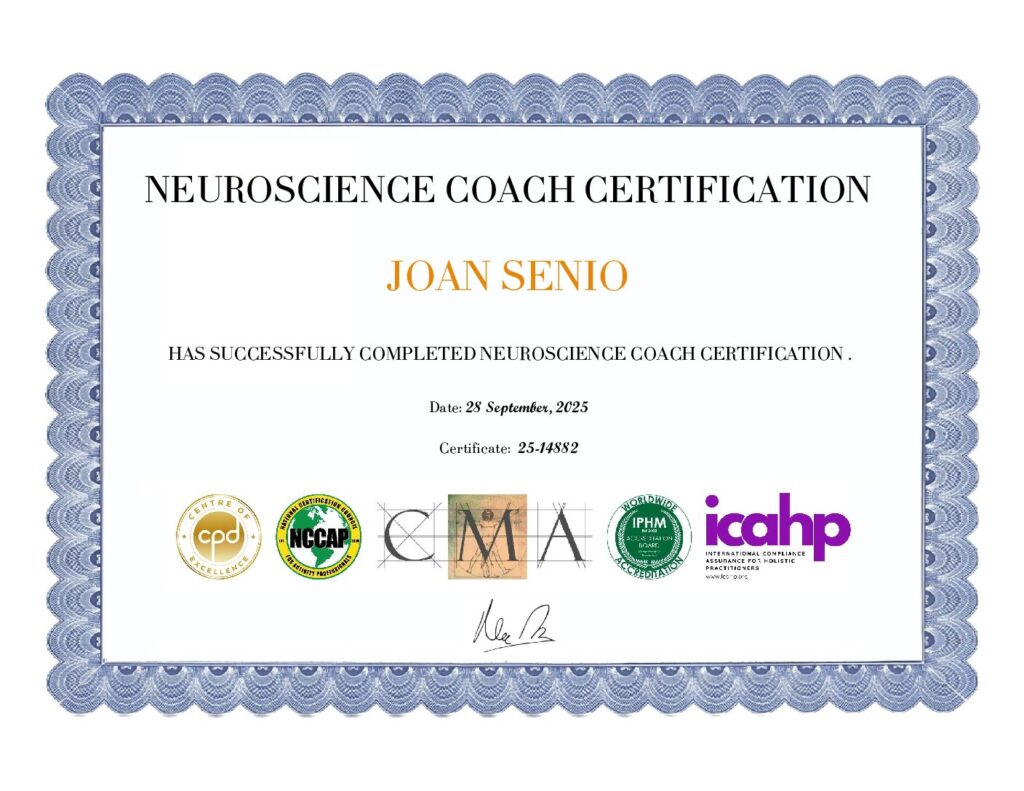
Joan Morabito Senio is the founder of Kindness-Compassion-and-Coaching.com. Joan’s career includes clinical healthcare plus 20+ years as an executive in a nationwide health care system and 15 years as a consultant. The common threads throughout Joan’s personal and professional life are a commitment to non-profit organizations, mental health, compassionate coaching, professional development and servant leadership. She is a certified Neuroscience Coach, member of the International Organization of Life Coaches, serves as a thought-leader for KuelLife.com and is also a regular contributor to PsychReg and Sixty and Me. You can read more about Joan here: Joan Senio.





No Responses