

Spiritual awakening is often described as a single, dramatic moment. A sudden flash of insight that changes everything. But for most people, awakening is a process rather than an event, a series of inner shifts that reveal new layers of truth and self‑understanding over time. When you begin to explore the stages of spiritual awakening, you start to see that what feels confusing, overwhelming, or even disorienting is often part of a natural, deeply human transformation.
Awakening is about remembering who you’ve always been beneath the conditioning, expectations, and survival patterns that shaped your early life.
Each of the stages of spiritual awakening brings its own gifts and challenges. Moments of expansion, periods of contraction, and stretches of quiet integration. Understanding these stages can help you to enjoy the experience.
If you are in the early stages of awakening, you will soon fully experience a meaningful, purposeful unfolding that has been brewing within you all along.
Learn More about the 8 Signs of Spiritual Awakening
Stages of Spiritual Awakening: What it Means
Spiritual awakening is often misunderstood as a dramatic, mystical event reserved for a select few. In reality, awakening is a somewhat common human process; a gradual shift in how we see ourselves, others, and the world.
Awakening is occurring in the moment you begin to doubt old patterns, beliefs, and identities that once felt unquestionable.
It does not require enlightenment to experience spiritual awakening; it just happens when we are ready to become more aware, present, and aligned with our inner truth. When we realize that some elements of our lives or beliefs or relationships are simply not consistent with who we are inside.
When we explore the stages of spiritual awakening, we begin to see that awakening is about remembering who we’ve always been beneath the layers of conditioning.
It’s a return to authenticity and inner connection.
The process can feel exhilarating, confusing, or even destabilizing at times, especially when long‑held assumptions start to fall away. But awakening is not a crisis. It’s a reorientation and the slow unfolding of a deeper self that has been waiting patiently to re-emerge. Understanding what awakening is helps you enjoy the journey with compassion and curiosity.
Learn More about the Best Products for Spiritual Self-Care

1. The Restlessness and Disillusionment Stages of Spiritual Awakening
The first stage of spiritual awakening feels like a subtle restlessness, a sense that your life no longer fits in the way it once did.
You might notice a growing discomfort with routines, relationships, or roles that used to feel familiar. This is a nudge from your deeper self, suggesting you seek greater alignment.
This stage often brings feelings of disorientation. You may question your purpose, your identity, or the path you’ve been following.
Old coping strategies stop working. Activities that once brought comfort feel flat or meaningless. This can be confusing, especially if nothing external has changed.
Restlessness is a sign that your inner world is preparing for change. This phase requires patience and self‑compassion. Instead of trying to “fix” the discomfort, you must try to listen to it.
Restlessness is a call to explore what your soul has been trying to tell you for years.
2. The Activation Stages of Spiritual Awakening
The second stage of spiritual awakening often arrives with a sense of sudden clarity or inner recognition. It may feel like a moment of profound insight; an inner click that shifts your understanding of yourself and the world.
For some, this activation is dramatic, sparked by a crisis, loss or a deeply emotional experience. For others, it’s subtle, like waking up one morning with a quiet realization that something inside has changed.
During this phase, people often describe feeling more connected, intuitive, or aware.
Colors may seem brighter, emotions more vivid, and everyday experiences more meaningful. You might sense a new level of presence or feel guided by something larger than yourself.
But this expansion can also feel destabilizing. Old beliefs begin to loosen, and the familiar structures of your life may no longer feel aligned.
This activation moment is the spark that sets the entire journey in motion.
3. The Purification and Shadow Work Stage
After the initial activation, many enter a phase of purification, a stage where old wounds, patterns, and emotional residue rise to the surface.
This is often the most challenging part of the stages of spiritual awakening, because it asks you to face the parts of yourself you’ve avoided, suppressed, or forgotten.
Shadow work is about bringing awareness to the aspects of your inner world that have been operating beneath the surface.
During this stage, you may experience intense emotions, unexpected memories, or a sense of unraveling.
Relationships may shift as you become more aware of unhealthy dynamics. Habits that once numbed or distracted you may lose their effectiveness.
This can feel overwhelming, but it’s actually a sign of deep healing. Your system is clearing space for a more authentic version of you to emerge.
Instead of pushing through or trying to “fix” yourself, the opportunity here is to witness your inner landscape with compassion. Shadow work is liberating.
It’s the process of reclaiming the parts of yourself that were left behind, allowing you to move forward with greater wholeness.
4. The Surrender and Release Stage
As you move through purification, you eventually reach a point where holding on becomes too heavy.
This is the stage of surrender, where you begin to soften into what is, rather than resisting what you cannot control.
Surrender is often misunderstood as giving up, but in the stages of spiritual awakening, it’s one of the most empowering shifts you can make.
It’s the moment you stop fighting your inner experience and begin trusting the deeper intelligence guiding your transformation.
In this stage, you may feel a sense of relief as old identities, expectations, and attachments begin to fall away.
You might notice that you no longer have the energy to maintain roles or patterns that don’t align with your truth.
5. The Integration Stage
After the intensity of surrender, the integration stage arrives with a quieter, steadier energy.
This is where the insights, releases, and inner shifts from earlier phases begin to settle into your daily life. Integration is subtle.
You may find yourself making different choices, not because you’re forcing change, but because your inner landscape has shifted.
Old habits lose their pull. New values begin to guide your decisions. You might feel more grounded, more present, and more aligned with what truly matters to you.
In the broader stages of spiritual awakening, integration is where change becomes sustainable. It’s the bridge between awareness and action.
This stage often involves reevaluating relationships, work, boundaries, and priorities. You may feel called to simplify your life or create more space for rest, creativity, or reflection.
Integration asks you to honor your pace, trust your inner wisdom, and allow your new awareness to take root in a way that feels authentic and nourishing.
6. The Expansion Stage
As integration deepens, many people naturally enter a phase of expansion. They experience a sense of opening, connection, and spaciousness that feels both peaceful and energizing.
Expansion is about inhabiting your humanity more fully. You may feel more connected to others, more attuned to nature, or more aware of synchronicities and subtle guidance. Creativity often flows more freely. Compassion becomes easier. Your intuition feels clearer and more trustworthy.
This stage can feel like a breath of fresh air after the emotional intensity of earlier phases.
But expansion is not a permanent state. It ebbs and flows, just like everything else in the stages of spiritual awakening. The key is not to cling to expansion or chase it, but to allow it to happen at its own pace.
Expansion teaches you that awakening is not about reaching a peak experience; it’s about widening your capacity to hold life with openness and presence.
This stage invites you to explore your gifts, share your insights, and express your authentic self with greater confidence and ease.
7. The Embodiment Stage
Embodiment is the stage where awakening becomes a lived reality rather than an idea or experience.
It’s about aligning your actions, choices, and relationships with the truth you’ve discovered within yourself.
In the embodiment stage, your values become the natural expression of who you are. You respond to life with more compassion and steadiness. You begin to trust yourself deeply.
This stage is often misunderstood as the “end” of the journey, but in the stages of spiritual awakening, embodiment is simply another beginning.
It’s the point where awakening becomes integrated into your everyday life: how you speak, how you listen, how you love, how you set boundaries, and how you show up for yourself and others.
It evolves as you evolve and invites you to live with intention, authenticity, and presence, knowing that awakening is something will continually deepen.
How to Support Yourself Through the Stages of Spiritual Awakening
Moving through the stages of spiritual awakening can feel disorienting, especially when old patterns fall away faster than new patterns form.
Supporting yourself through this process requires patience, and a willingness to honor your own pace.
One of the most powerful tools to support you through this process is emotional regulation. Simple practices like deep breathing, grounding exercises, or mindful movement help your nervous system stay steady as your inner world shifts.
Mindfulness for Beginners: All You Need to Get Started Now
Journaling can also be a lifeline, giving you a safe space to explore your thoughts, track your growth, and make sense of the changes unfolding within you. It’s equally important to create moments of stillness.
Awakening often brings a flood of insights, and without rest, it’s easy to become overwhelmed. Give yourself permission to pause, to integrate, and to simply be.
Supportive relationships also matter. Whether it’s a trusted friend, a coach, or a therapist, having someone who can hold space for your experience can make the journey feel less isolating.
Above all, remember that awakening is not a race. You don’t need to rush through any stage. Your inner wisdom knows the way, and your only job is to listen.
Common Misconceptions About the Stages of Spiritual Awakening
There are many misconceptions about the stages of spiritual awakening, and these misunderstandings can create unnecessary fear or pressure.
One common belief is that awakening must be dramatic or mystical to be “real.” In truth, most awakenings are subtle, gradual, and deeply personal.
Another misconception is that awakening requires abandoning your life, relationships, or responsibilities. This is not necessarily true. Awakening provides an invitation to live with more presence and authenticity, sometimes within the life you already have.
Some people worry that awakening means losing their identity or becoming someone unrecognizable. But awakening doesn’t erase who you are; it reveals the deeper layers beneath the conditioning.
Others fear that awakening will make them overly emotional or unstable. While certain stages can feel intense, emotional waves are a natural part of healing and integration. Awakening is not a sign of instability; it’s a sign of inner growth.
Finally, many believe that awakening has a clear endpoint, a moment when everything becomes perfect or effortless. But awakening is cyclical. You revisit stages, deepen insights, and continue evolving. It’s a lifelong journey.
Stages of Spiritual Awakening: An Invitation to Wholeness
As you move through the stages of spiritual awakening, you begin to see that this process is about returning to yourself. Each stage, whether expansive or challenging, serves a purpose.
- Restlessness nudges you toward truth.
- Activation opens your awareness.
- Shadow work clears old wounds.
- Surrender softens resistance.
- Integration builds stability.
- Expansion widens your capacity for connection.
- Embodiment anchors your awakening into daily life.
Awakening is an invitation to live with more presence, compassion, and authenticity.
Trust your inner wisdom, even when the path feels uncertain. Every step, no matter how small, moves you closer to wholeness.
Thank you as always for reading.
Affiliate Disclosure: Some links in this post are affiliate links. As an Amazon Associate, we earn from qualifying purchases. Thank you for supporting Kindness-Compassion-and-Coaching.com at no extra cost to you.

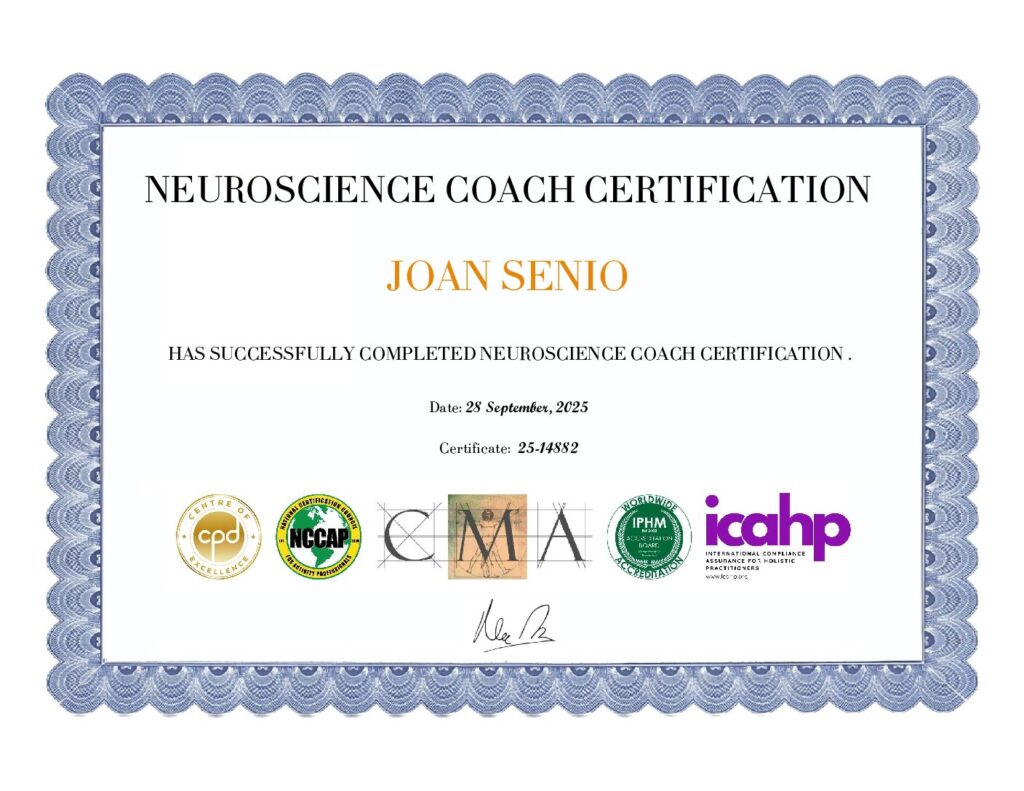
Joan Morabito Senio is the founder of Kindness-Compassion-and-Coaching.com. Joan’s career includes clinical healthcare plus 20+ years as an executive in a nationwide health care system and 15 years as a consultant. The common threads throughout Joan’s personal and professional life are a commitment to non-profit organizations, mental health, compassionate coaching, professional development and servant leadership. She is a certified Neuroscience Coach, member of the International Organization of Life Coaches, serves as a thought-leader for KuelLife.com and is also a regular contributor to PsychReg and Sixty and Me. You can read more about Joan here: Joan Senio.





No Responses