

Restlessness can feel like an annoying, persistent background hum that permeates everything we do. An itch that cannot be soothed by anything in our current day-to-day life. When we experience it, we can be overcome by a sense that our daily roles and routines simply no longer fit us, like they were created with another person in mind.
When we are restless, we can be edgy, easily bored, or oddly disconnected from what used to matter to us. These feelings can arise due to inner shifting that makes our former life, loves, passions, or vocations feel outdated and inadequate.
Restlessness often shows up along with life transitions such as career shifts, relationship changes, parenting seasons, grief, or burnout, and it can also be a sign of a deeper spiritual awakening on the horizon. Sometimes it’s difficult to know what the actual causal relationship is.
But whatever the source, the experience can be useful as it can help us uncover our own unmet needs, shifting values, or parts of life that need attention or reorientation.
Today, we provide information, encouragement and tools to help you meet your own inner restlessness with kindness and curiosity, and to turn what could be an identity crisis into a new and powerful awakening.
What Restlessness and Disillusionment Feel Like
Restlessness often arrives as a low‑grade, persistent agitation: you can’t sit with a task, your attention keeps flicking to something else, and anything that used to feel pleasurable feels muted.
Disillusionment can show up alongside it as a growing sense that familiar meanings, roles, or relationships no longer fit or satisfy.
Together, restlessness and disillusionment can make ordinary days feel heavy, confusing, oddly urgent, or profoundly unfulfilling.
Restlessness: It’s Not a “Mid-Life Crisis”
Many people mis-label feelings of restlessness as a “mid‑life crisis” or other life-stage‑specific breakdown. Those who do may rush to stifle the sensation with quick fixes, such as a dramatic career pivot, a sudden move, an impulse purchase, or a relationship reset meant to silence the unease.
Those quick remedies can feel decisive in the moment but often miss the real signal beneath our inner agitation.
Restlessness is often a sign that we need something much more than a quick fix. It can arise from shifting values, unprocessed loss, hormonal changes, burnout, or the slow widening of curiosity that outgrows old roles.
It’s important that we not treat restlessness as a problem to be eradicated. When we do, we risk trading one form of disconnection for another, ultimately swapping confusion for regret, or impulsive action for temporary relief.
There’s a much more enriching interpretation of inner restlessness. And adopting an alternative mindset around it can help us satisfy that persistent itch in healthy and productive ways.
Embracing Restlessness as a Positive Signal
Seen differently, restlessness is promising: an early indicator that our capacity for growth is waking up.
It can be the first nudge toward deeper appreciation of life, love, and what matters most, if we respond with curiosity and enjoy experimenting vs. investing in grand, quick, irreversible fixes.
Slowing down to ground our body, ask questions, and explore low‑risk changes allows restlessness to do its work. It may ultimately reveal new values, clarify boundaries, and open creative pathways we may never have explored before.

Viewed in this light, the uneasy energy of restlessness becomes a friendly companion rather than an enemy and it offers us an invitation to probe deeper into our authentic selves and to listen to the cues beneath the noise, as opposed to rushing to muffle the sounds of awakening stirring within us.
Life Events that May Trigger Restlessness
Situations that often occur alongside increased restlessness include life changes such as:
Career transitions. Work that once felt meaningful now feels hollow. Promotions or accolades no longer satisfy. Or perhaps you’re navigating the ultimate career transition: entering retirement.
Relationship shifts. Long partnerships or friendships feel stale. You notice unhealthy or unsatisfying patterns you once ignored.
Parenting and caregiving phases. The identity you built around caring for others no longer matches how you spend your days and who you are becoming.
Grief and loss. Bereavement or endings can leave gaps that fuels ongoing restlessness.
Burnout and chronic stress. Exhaustion erodes meaning and increases agitation and a sense that something must change for you to thrive.
Midlife or later reflection. Questions about legacy, purpose, and what’s next can spark persistent restlessness.
Signs of Inner Restlessness and Disillusionment
Restlessness is information from your nervous system and values system telling you something needs attention. It may result in symptoms that include:
- Sleep and appetite changes. Restless nights or disrupted eating that weren’t there before.
- Compulsive searching. Jumping from books to courses to new relationships without feeling satisfied.
- Irritability and low tolerance. Small frustrations feel magnified and harder to tolerate.
- Avoidance or numbing. Leaning into distraction, substances, or busyness to escape the unease.
- Sudden identity shifts. Experimenting with new roles or interests in ways that feel impulsive rather than curious.
When you treat these signals as data rather than verdicts, you can begin to respond with curiosity and take steps to reduce agitation and identify the next steps that will restore your state of mind.
Why Restlessness and Disillusionment Matter
Restlessness is not just an annoying feeling to be endured; it’s a signal that something in your inner or outer life is asking for attention.
Disillusionment names the gap between what you expected and what is true now.
When restlessness surfaces alongside disillusionment, it often points to a mismatch between your current circumstances and your deeper needs, values, or capacities.
That mismatch can show up as a slow erosion of meaning: work that once felt purposeful now feels hollow, relationships that once fit feel constraining, or daily routines that used to comfort now feel like autopilot.
Because restlessness carries energy, it can push you toward change, but it can also drive impulsive decisions if left unmanaged.
Recognizing restlessness as information helps you slow down long enough to ask useful questions: What is this restlessness trying to protect or reveal? Which part of my life is asking for more honesty, boundary, or creativity?
More Causes of Restlessness
Restlessness can also be rooted in practical causes: chronic stress, sleep disruption, hormonal shifts, or unresolved grief.
Sometimes it’s a developmental signal that invites you to allow a new identity to emerge. Examples include getting married, becoming a parent, or ending a long-term relationship and returning to a solo lifestyle.
Other times it’s a nervous‑system response that needs somatic regulation before any big decisions are wise.
Because the causes are varied, responses to it must be tailored. Short grounding practices can calm the nervous system. Inquiry and journaling can help you to clarify values. Minor experiments can help us test new directions without high risk.
Treating restlessness with curiosity, practical tools, and compassionate pacing can turn it from a source of panic into a doorway for clearer, more aligned living.
Important note: If your restlessness is accompanied by persistent hopelessness, severe sleep loss, or thoughts of harming yourself, it’s essential to seek professional support promptly.
How to Use Grounding to Reduce Agitation
When restlessness spikes, the most useful first move is to calm the nervous system so you can think and feel with more clarity.
Simple, repeatable grounding practices work because they interrupt the loop of agitation and give your body a different signal: you are safe enough to notice.
- Start with breath: slow, measured inhales and longer exhales for three to five cycles will lower the physiological arousal that fuels restlessness. Pair breath with a brief body scan; bring attention to your body, beginning with your feet, notice tension, and intentionally soften one area.
- Movement helps too; even two minutes of walking, stretching, or shaking out your arms can shift stuck energy and reduce the urge to act impulsively on the restless impulse.
- Sensory grounding is another effective option: name five things you see, four you can touch, three you hear, two you smell, and one you taste.
These practices don’t erase the deeper questions behind restlessness, but they create a steadier baseline from which you can inquire rather than react.
Keep a short list of two or three of these tools on your phone or a sticky note so they’re easy to access when restlessness arrives. Practicing them when you’re calm makes them far more effective in moments of high agitation.
Inquiry Practices to Soothe Restlessness
Once restlessness has been eased enough to think clearly, inquiry helps you discover what the feeling is pointing toward. Treat it as a messenger. Ask what it wants you to notice rather than trying to silence it immediately.
Short, structured journaling sessions of ten to fifteen minutes can reveal patterns: when did the restlessness begin, what situations amplify it, and which values feel compromised?
Use curiosity prompts like “What used to feel meaningful that no longer does?” or “What small change would make today feel more aligned?” and answer without editing; the goal is exploration, not problem-solving or immediate solutions.
Time‑limited actions that test a hypothesis about what might help can be especially useful.
For example, if restlessness seems tied to work meaning, try a one‑week experiment of dedicating two hours to a different kind of task and note how your energy shifts.
If it’s tied to a relationship, practice a single boundary for seven days and observe the ripple effects.
Inquiry paired with low‑risk experiments turns restlessness from a vague discomfort into actionable data, helping you move from agitation to clearer choices without rushing into irreversible decisions.
When restlessness feels loud, a short, structured inquiry practice can turn noise into useful information.
- Try a daily entry: note the time, name the trigger, describe one bodily sensation, write the dominant thought, and list one small next step.
- Use prompts such as “When did this restlessness first appear?” “What used to give me meaning that no longer does?” and “What one tiny experiment could I try this week to test a new value?”
- Spend ten to fifteen minutes answering without editing.
Over a week you’ll begin to see patterns such as times of day when restlessness spikes, people or tasks that amplify it, and recurring longings that point toward unmet needs.
A simple weekly review to summarize what you noticed, one insight, and one next step can help you keep building momentum.
Coaching and Therapeutic Supports
Restlessness often benefits from coaching, therapy or somatic regulation.
- Coaches can help you design low‑risk experiments, clarify values, and translate insights into practical steps; a coach’s role is forward‑focused, helping you test hypotheses and stay accountable.
- Therapy is valuable when restlessness is tangled with grief, trauma, or persistent mood symptoms; a therapist can help process deeper material and provide clinical tools for regulation.
- Somatic practices like breathwork, movement, and grounding, paired with relational supports such as naming the experience to a trusted friend, joining a peer group, or scheduling regular check‑ins, can create a support system that makes exploration feel safer.
Combining inquiry, short experiments, somatic care, and relational support can help you redirect your energy into a stabilizing force for clearer, kinder change.
If you are experiencing severe sleep loss, hopelessness, or thoughts of harming yourself, seek professional help promptly.
Common Pitfalls
When restlessness shows up, it can push us toward choices that feel urgent but are later regrettable.
One common pitfall is making irreversible decisions such as quitting a job, ending a relationship, or relocating while still high on agitation.
- When we’re restless, it amplifies the desire for immediate change. The way to protect ourselves in this situation is simple: introduce a delay and design a small experiment first. Give yourself a set window, such as 30 to 90 days, during which you test a hypothesis with low‑risk steps rather than leaping into something permanent.
- Another potential trap is engaging in numbing behaviors. Reaching for distraction, substances, or even compulsive busyness to silence our uneasy energy is counterproductive. While numbing temporarily quiets restlessness, it deepens disconnection over time. The solution? Replace one numbing habit with a short grounding practice or a five‑minute check‑in and notice the difference across a week.
- Overintellectualizing is also common pitfall. This is when our restlessness leads to endless analysis, but without any resulting care. To overcome this mindset, pair reflection with body‑based practices so insights land in your nervous system rather than only your head.
- Finally, isolation can make restlessness feel catastrophic. Naming the experience to one trusted person or a coach reduces its intensity and brings perspective.
All of these missteps are common, understandable and may be a necessary part of the healing process. To avoid too many setbacks, it can be helpful to treat restlessness as a signal to slow down, experiment, and seek support.
Rituals and Meaning-Making Practices
Rituals help during difficult times because they create intentional pauses and mark psychological transitions that words alone often cannot.
A simple release ritual can be done in ten minutes: write down roles, expectations, or beliefs that feel worn out, fold the paper, and place it in a drawer or compost it as a symbolic letting go. That physical act signals to your nervous system that something has shifted.
A naming ritual such as crafting a short affirmation that acknowledges the loss and invites curiosity can anchor your attention. Say it aloud each morning for a week: “I notice that I’m restless; I will listen with kindness.” Repeating a phrase like this can redirect attention from panic and toward compassionate inquiry.
Weekly practices are especially useful for managing ongoing challenges.
For example, spend ten minutes each Sunday reviewing your weekly experiment, noting one insight and one next step, then light a candle or play a brief song to mark the transition into the week.
Even minor rituals like a consistent five‑minute morning grounding sequence, build predictability that calms agitation over time.
Rituals don’t eliminate restlessness, but they give it shape, meaning, and a pathway for resolution, turning restless energy into a steady companion on the path to clearer choices.
Resources and Next Steps
These books and workbooks offer a mix of somatic regulation, values work, and low‑risk experimentation to help you move towards awakening with renewed hope, energy and motivation. Choose one that feels right to you. *
*The links in the section are affiliate links. That means that we may receive a small commission at no cost to you when you purchase anything via one of these links. These commissions help us keep Kindness-Compassion-and-Coaching.com a free resource, as they help to cover website expenses. Thank you for your support!
The Untethered Soul and the Untethered Soul Guided Journal by Michael A. Singer
Singer’s approachable exploration of inner experience helps you observe restless thoughts and habitual reactions without identifying with them. The book’s emphasis on witnessing and letting go supports the inquiry work that turns restlessness into information rather than a verdict.
Radical Acceptance and the Radical Acceptance Workbook by Tara Brach
Combining mindfulness and self‑compassion, this book gives practical meditations and reflective practices for meeting disillusionment and restlessness with kindness. Its tone models the compassionate stance recommended throughout this post.
Designing Your Life and the Designing Your Life Workbook by Bill Burnett & Dave Evans
Focused on low‑risk experiments and prototyping life changes, this workbook‑style book is ideal for translating restlessness into practical, time‑limited tests. Its frameworks make it easier to try small experiments without rushing into irreversible decisions.
Atomic Habits and the Atomic Habits Workbook by James Clear
When restlessness makes routines feel unstable, this book’s clear strategies for building tiny, consistent habits help create the predictability your nervous system needs. Use its methods to anchor rituals and weekly threshold practices.
Commit to one chapter or practice this week. Combining reading with the short practices in this post will help you to transform insight into steady, compassionate action.
Closing and Call to Action
Restlessness is uncomfortable, but it can be the promise of something great on the horizon: a signal that something inside you is ready to change.
When we treat restlessness as a sign of good things to come, it becomes a doorway to clearer values, wiser choices, and more authentic living.
Give yourself permission to move slowly and to test experiments to identify what changes you may be ready to explore. Treat any setbacks as lessons and helpful data. Maintain self-compassion throughout the process.
How to Measure Progress
- Rate your restlessness daily on a scale of 1-10 and track it. Notice any trends rather than focusing on single days.
- Note frequency and duration. Count how many restless episodes occur and how long they last; shorter, less frequent spikes are signs of movement.
- Track behavioral markers. Counting the number of low‑risk experiments completed, boundaries tried, or grounding practices used each week can be useful.
- Watch functional signs. Improved sleep, steadier appetite, clearer decision‑making, and fewer impulsive choices indicate real change.
- Qualitative check‑ins. Once a week write one sentence about what felt easier and one sentence about what still feels raw.
A simple compassionate script to use when restlessness arrives: “I notice this restlessness, but I don’t have to fix it right now. I will breathe, name one sensation, and choose one small, kind step.”
Repeat it until the urge to act impulsively softens.
If this post helped, share it with someone who might be feeling restless, too. Your openness and thoughtfulness could be the gift they need.
Thank you as always for reading.
Some links in this post may be affiliate links. That means that we may receive a small commission at no cost to you when you purchase anything via one of these links. These commissions help us keep Kindness-Compassion-and-Coaching.com a free resource, as they help to cover website expenses. Thank you for your support.

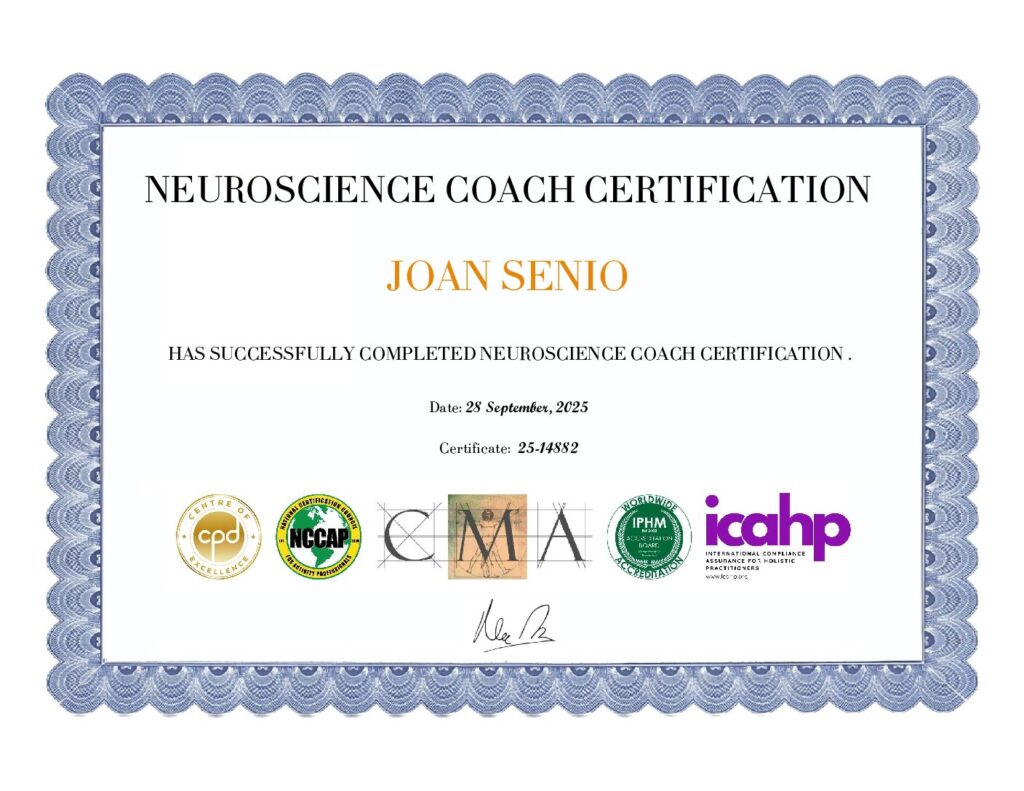
Joan Morabito Senio is the founder of Kindness-Compassion-and-Coaching.com. Joan’s career includes clinical healthcare plus 20+ years as an executive in a nationwide health care system and 15 years as a consultant. The common threads throughout Joan’s personal and professional life are a commitment to non-profit organizations, mental health, compassionate coaching, professional development and servant leadership. She is a certified Neuroscience Coach, member of the International Organization of Life Coaches, serves as a thought-leader for KuelLife.com and is also a regular contributor to PsychReg and Sixty and Me. You can read more about Joan here: Joan Senio.






No Responses