
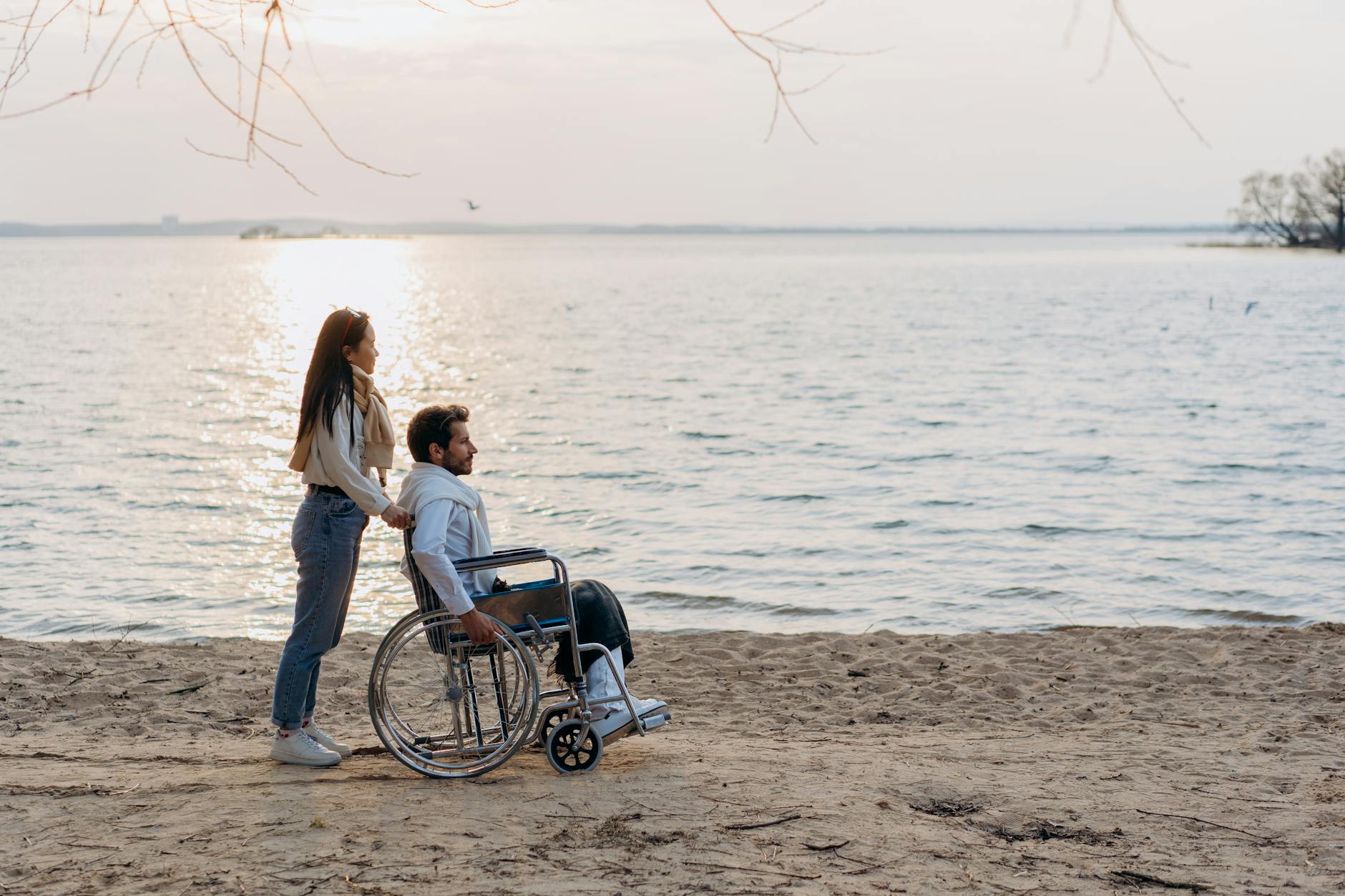
You don’t have to wear scrubs or hold a license to feel the weight of compassion fatigue. Maybe you’re the one who always shows up: for your children, your aging parents, your partner, your community. You hold space, offer comfort, anticipate needs, and carry emotional weight that no one else sees. And you do it quietly, without applause, often without rest. But even the most generous hearts have limits. That’s why compassion fatigue recovery is a real requirement for all of us who give until it literally hurts.
Compassion fatigue recovery isn’t just for nurses or therapists. It’s for the mother who never gets a break, the adult child managing care and grief, the friend who always listens but rarely feels heard. It’s for the helpers who give, give, give; until their own well-being begins to fray.
This guide is for you.
Here, we’ll explore a trauma-informed path to compassion fatigue recovery; one that honors your emotional labor, validates your exhaustion, and offers practical tools to restore your energy without asking you to abandon your role. You deserve care, too. Not someday. Now.
Table of Contents
- Compassion Fatigue Recovery: Key Points
- Compassion Fatigue Recovery: What Is Compassion Fatigue?
- Recognizing the Need for Compassion Fatigue Recovery in Daily Life
- Compassion Fatigue Recovery: Why Traditional Burnout Advice Doesn’t Work
- A Trauma-Informed Framework for Compassion Fatigue Recovery
- Why We Overextend Ourselves: Introspection for Recovery
- Compassion Fatigue Recovery: Reconnecting without Overextending
- Further Reading Related to Compassion Fatigue Recovery
- Frequently Asked Questions about Compassion Fatigue Recovery
- Compassion Fatigue Recovery: Wrap Up and Next Steps
Compassion Fatigue Recovery: Key Points
- Understanding compassion fatigue: Compassion fatigue is emotional and physical exhaustion from caring deeply for others over time, especially when emotional resources are drained, affecting anyone who gives emotionally, such as empaths, as well as many health care and service professionals.
- Signs of compassion fatigue: Signs include numbness, irritability, fatigue, sleep issues, brain fog and emotional disconnection, often slipping in unnoticed as irritability or resentment, especially in those who give generously.
- Limitations of traditional self-care: Basic tips like rest and sleep often aren’t enough since compassion fatigue is rooted in emotional depletion from absorbing others’ pain, requiring trauma-informed care instead.
- Trauma-informed recovery: Recovery involves small, deliberate steps like nervous system regulation, boundary setting, and self-compassion, focusing on safety and restoring emotional reserves without needing to abandon caregiving roles.
- Reflection and self-compassion: Understanding why you overextend, such as identity, trauma, or social pressures, allows for compassionate self-awareness and practical steps like boundary practice and value affirmation to support recovery.
Compassion Fatigue Recovery: What Is Compassion Fatigue?
Compassion fatigue is the emotional and physical exhaustion that comes from caring deeply for others over time, especially when that care is constant, complex, or unreciprocated.
It’s what happens when your empathy becomes overextended, and your inner resources begin to run dry.
Unlike burnout, which is often tied to overwork or stress, compassion fatigue is rooted in emotional labor. It’s the quiet toll of being the one who holds space, absorbs pain, anticipates needs, and keeps showing up, even when you’re depleted.

It doesn’t just affect professionals like nurses, therapists, or first responders. It affects all of us:
- The parent who comforts everyone but rarely feels comforted.
- An adult child managing care for a loved one while grieving in silence.
- A friend who always listens, supports, and uplifts, but feels invisible.
- The partner who carries the emotional weight of the household without acknowledgment.
Compassion fatigue can feel like numbness, irritability, guilt, or a deep sense of emotional disconnection. It can make you question your capacity to care, even though caring is central to who you are.
Feeling compassion fatigue does not mean you are somehow broken or flawed. It means you’re human and have been giving without enough space or grace to recover. And recovery is essential.
Do you feel tired every day? Visit Beyond Burnout: How to Overcome Chronic Fatigue and More.
Recognizing the Need for Compassion Fatigue Recovery in Daily Life
Compassion fatigue doesn’t always announce itself with burnout alarms. Sometimes it slips in disguised as irritability, numbness, or a deep sense of disconnection from the people you love most.
You might find yourself snapping at your partner, avoiding calls from friends, or feeling resentful when someone asks for help. And then, almost immediately, the guilt creeps in.
If you’re someone who gives generously (emotionally, mentally, energetically) this fatigue can feel like a betrayal of your values. You want to keep showing up. You care deeply. But your inner reserves are running low.

This kind of exhaustion is felt by the mother who manages everyone’s emotions while suppressing her own. The adult child who coordinates care for a parent while juggling work and grief. The community volunteer who holds space for others while quietly unraveling.
Compassion fatigue is what happens when your empathy outpaces your recovery. And recognizing it is the first step toward healing.
Compassion Fatigue Recovery: Why Traditional Burnout Advice Doesn’t Work
You’ve probably heard the advice: “Take a break.” “Get more sleep.” “Practice self-care.” And while those things matter, they often miss the mark for people experiencing compassion fatigue.
Because this isn’t just physical exhaustion. It’s emotional depletion. It’s the kind of tired that sleep doesn’t fix. The kind that comes from holding pain that isn’t yours, from absorbing others’ distress, from being the emotional anchor in a storm that never seems to end.
For helpers (especially those who carry invisible burdens at home) rest can feel impossible. You might not have the luxury of stepping away and you might feel guilty for even wanting to. And when you do try to rest, your mind races with everything left undone.
That’s why compassion fatigue recovery requires more than time off.
It calls for trauma-informed care like rituals that restore your nervous system, boundaries that protect your energy, and self-compassion and self-kindness that doesn’t depend on productivity.
You don’t need to abandon your role to recover. You just need a new way to manage it. One that includes meeting your own needs, too.
A Trauma-Informed Framework for Compassion Fatigue Recovery
Recovery begins with safety and small, steady shifts that rebuild your emotional reserves. This trauma-informed framework centers around nervous-system regulation, boundary work, and practical self-kindness so you can recover without abandoning the people you care for.
Safety first: regulate the nervous system.
Start with micro-regulation practices you can use anywhere: paced breathing for 2-3 minutes, grounding through the senses (name 3 things you see, 2 things you feel, 1 thing you hear), and slow, intentional stretches. These aren’t “extra” tasks; they’re resets that reduce reactivity and create space to choose your responses.
Micro-practices for daily restoration.
Use bite-sized rituals that feel doable: a 60‑second self-check-in before bed, a two-minute compassion pause between caregiving tasks, or a once-daily tether to a soothing image or phrase. Small, consistent practices compound into real repair.
Boundaries as self-preservation, not selfishness.
Reframe boundaries as safety measures for both you and others. Use short, scriptable responses: “I can’t help right now, but I can check in at X time,” or “I’m stepping away for 20 minutes to recharge; I’ll be back.” Practice them in low-stakes moments so they’re easier when it matters.
Ritualize renewal, not escapes.
Design tiny rituals that signal restoration: a five-minute tea ritual with a calming breath, a two-song movement break, or a nightly gratitude note limited to one sentence. The goal here is sustainable replenishment.
Gentle pacing and permission to scale down.
Allow projects of healing to be modular. Replace “fix it now” expectations with a permission to progress in measurable steps: one ritual this week, one boundary script next week. Tracking tiny wins builds momentum without pressure.
Community and accountability that feel safe.
Invite one trusted person into a low-risk accountability role: a weekly check-in text or shared practice. Healing in isolation is harder; selected, slow relational repair helps restore the very connections that often feel strained.
Use this framework as a scaffolding for the practical tools that follow.
Why We Overextend Ourselves: Introspection for Recovery
If you’re reading this, you probably already know you give more than you have to give.
Before you add another tip to your toolkit, it helps to look inward with self-compassion as opposed to judgment. Understanding the reasons you overextend creates a clearer path for compassion fatigue recovery and for changing the patterns that keep you drained.
Common underlying causes
- Identity and meaning. You define yourself by being the reliable one; helping affirms who you are.
- Unresolved trauma or attachment patterns. Past wounds can make caretaking feel like survival or a way to earn safety.
- People-pleasing and fear of rejection. Saying yes feels safer than risking conflict or abandonment.
- Practical role overload. Real responsibilities fall disproportionately to you because of family dynamics, logistics, or expectations.
- Beliefs about worth and productivity. Your value feels tied to usefulness, so withdrawing feels impossible.
- Lack of clear boundaries or skills to ask for help. You may want support but not know how to request or receive it.
- Social and cultural expectations. Norms about gender, family duty, or community roles make stepping back socially risky.
Remedial practices matched to causes
- Identity and meaning. Create a values list that separates who you are from what you do; pick one value (not caregiving) to express this week.
- Trauma and attachment patterns. Use nervous-system regulation practices first; pair those with short, compassionate journaling about early messages you received about care.
- People-pleasing. Practice script-based refusals in low-stakes settings and notice the outcome; gradually increase difficulty.
- Practical role overload. Map tasks and delegate one item this week; make requests specific and time bound.
- Beliefs about worth and productivity. Experiment with identity-reframing prompts: “What would I be if I were not defined by what I do?” and name one non-productive pleasure you reclaim.
- Lack of clear boundaries or skills to ask for help. Rehearse 2-3 short boundary scripts from the Helper’s Restoration Kit daily until they feel natural.
- Social and cultural expectations. Seek small allies who validate your choice to protect capacity and practice saying the same compassionate message aloud with them.
A brief journaling exercise may also be useful. Try this one now:
- Set a timer for 8 minutes.
- Ask: “When did I first learn that helping = safety or worth?” Write without editing.
- Ask: “What do I fear will happen if I slow down?” List the fears honestly.
- Ask: “What small boundary or request could I try this week that would signal I value my wellbeing?” Pick one and schedule it.
How to use insights in your compassion fatigue recovery plan
- Turn one insight into a single action for the coming week (delegate, decline, practice a reset, name a non-caregiving value).
- Track how the action feels and what changes in your mood or energy after three repetitions.
- Repeat this process at least monthly to build self-awareness into sustainable habits.
This exercise will help you gather data that informs healing. Compassion fatigue recovery begins when curiosity and self-compassion replace blame, and supportive, informed actions follow.
Compassion Fatigue Recovery: Reconnecting without Overextending
Holding purpose and protecting your limits can coexist. Reconnecting with why you care is an act of nourishment, not a call to exhaust yourself again.
Start by separating mission from method: keep the heart of your intention (compassion, care, service) and experiment with safer, sustainable ways to live it.
- Reframe impact as consistency. Long-term caring is built from many steady choices. Replace “heroic” thinking with “sustainable” thinking: what one habit could you keep doing for a year? Consistency preserves capacity; intensity burns it out.
- Cull your helping roles. List the places where your presence matters most. For optional roles, practice polite decline scripts that preserve relationships while protecting energy: “Thank you for asking, but right now, I can’t take that on.”
- Design limits that nourish relationships. Boundaries are clear designations of where your ability to help ends and your need to care for yourself begins. If you wish, offer alternatives when you choose to say no: “I can’t stay for dinner, but I can call afterward.”
- Reinvest in sources of joy that refill you. Identify 2-3 activities that reliably restore you and schedule them as non-negotiables. Take a walk, listen to your favorite music, or savor a cup of tea in silence. Protect these moments as part of your compassion fatigue recovery plan.
- Share the work. Invite support with defined asks: “Could you handle bedtime tonight?” or “Can you pick up groceries on Tuesday?” Specific requests are easier to accept and reduce the mental load of vague reliance.
These steps reconnect you to meaning while keeping your capacity intact.
Purpose thrives when it’s satisfied within sustainable boundaries.
Further Reading Related to Compassion Fatigue Recovery
We’ve reviewed the most widely recommended resources to support compassion fatigue recovery and have identified the following as best in class. We’ve also noted who may find each resource the most useful.
Acquiring additional resources to reinforce your compassion fatigue recovery exercises improves the speed and depth of recovery.
Choose the one that sounds right for you.
| Title | What Sets This Resource Apart | Best for |
|---|---|---|
| The Compassion Fatigue Workbook by Françoise Mathieu | Practical, exercise-driven workbook with targeted activities to rebuild resilience and boundaries. | People who want structured, step-by-step recovery work. |
| Healing Secondary Trauma by Trudy Gilbert-Eliot | Evidence-informed strategies with reflective exercises that address anxiety, sleep, and emotional reactivity. | Those carrying others’ trauma who want clinically grounded practices. |
| Surviving Compassion Fatigue: Help For Those Who Help Others by Beverly Diane Kyer | Combines lived-experience stories with pragmatic self-care steps to normalize and repair emotional exhaustion. | Readers who need validation plus practical action from a social-work perspective. |
| Reducing Compassion Fatigue, Secondary Traumatic Stress, and Burnout by William Steele | Trauma-sensitive workbook integrating psychoeducation and somatic-grounding techniques. | Those wanting a trauma-informed, body-aware recovery plan. |
| To Save a Starfish: A Compassion Fatigue Workbook for the Animal Welfare Warrior by Jennifer A. Blough | Heart-centered workbook addressing the specific emotional load of animal caring with tailored exercises. | Animal caregivers and empathic household members who feel overwhelmed. |
| Help for the Helper: Preventing Compassion Fatigue and Vicarious Trauma by Babette Rothschild | Clear psychoeducation on how trauma affects helpers plus practical grounding and boundary skills. | People who absorb others’ pain in families, friendships, or workplaces. |
| The Resilient Practitioner by Thomas M. Skovholt & Michelle Trotter-Mathison | Deeply reflective, evidence-based guide that teaches sustaining a helping role without losing self. | Long-term caregivers and people who repeatedly take on others’ burdens. |
| Running on Empty: Overcome Your Childhood Emotional Neglect by Jonice Webb | Identifies how emotional depletion from family roles shows up and gives tools to reclaim needs and limits. | Adults who grew up caretaking or habitually put others’ needs first. |
Frequently Asked Questions about Compassion Fatigue Recovery
What is compassion fatigue?
Compassion fatigue is emotional, mental, and sometimes physical exhaustion resulting from prolonged exposure to others’ suffering and from repeatedly taking on others’ emotional burdens.
What are common signs and symptoms?
Emotional numbing; irritability; persistent fatigue; sleep disturbances; increased anxiety or sadness; reduced empathy or detachment; physical aches; difficulty concentrating; and avoiding situations that remind you of others’ pain.
Who can develop compassion fatigue?
Anyone who repeatedly absorbs others’ distress: professional caregivers, family caregivers, parents of children with special needs, highly empathic friends, community volunteers, and people who habitually put others’ needs before their own.
What causes compassion fatigue to develop?
Sustained exposure to others’ suffering, high personal empathy without adequate recovery, chronic boundary erosion, lack of support, unresolved personal trauma, and prolonged stress or sleep disruption.
What longer-term strategies help prevent recurrence?
Regular boundaries; scheduled recovery time; meaningful peer or professional support; training in trauma-informed self-care; somatic practices (breathwork, movement); restorative hobbies; and intentional meaning-making or values-checking.
When should I seek professional help?
Seek help if symptoms persist beyond a few weeks, interfere with functioning, include severe anxiety or depression, lead to substance reliance, or if you experience intrusive imagery or flashbacks. A mental health professional can assess vicarious trauma and guide treatment.
How can family and friends best support someone with compassion fatigue?
Offer practical help (meals, errands), hold boundaries around emotional offloading, invite low-stress connection, validate the person’s exhaustion without minimizing it, and gently encourage professional care when needed.
Which resources are immediately useful?
Short workbooks with daily exercises, grounded somatic practices, peer-support groups, brief psychoeducation on vicarious trauma, boundary-setting scripts, and short therapy or coaching focused on containment and pacing. See Section 7 for specific resource recommendations that focus on some or all of these topics.
What is one simple practice to start today?
Any of the practices described in Section 4 are a great place to begin.
Compassion Fatigue Recovery: Wrap Up and Next Steps
You have given a great deal. That generosity is honorable and real. But generosity without replenishment becomes brittle.
Compassion fatigue recovery is a necessary recalibration so you can keep caring from a place of strength.
Begin with one small action. Tiny shifts become steady repair. Your next steps are:
- Explore the micro practices described. Experiment to see which ones provide you the most comfort and feel sustainable.
- Consider the factors described. Do any of them apply to you? Refer to the corresponding remedial practices to help reframe your thinking.
- Revisit the strategies defined Choose at least 2 to apply during the coming weeks.
- Study the additional resource options described. Choose at least 1 resource that aligns to your needs and priorities. Investing in self-compassion and support resources will accelerate, reinforce and deepen your compassion fatigue recovery.
You don’t need to become someone different to heal. You just need to give yourself the same care you offer others. Compassion for yourself is the core practice that makes lasting compassion for others possible.
For more well-deserved comfort, visit How to Create Your Own Fall Self-Care Kit.
To expand your knowledge further, visit Care Circuit Activation: The Antidote to Compassion Fatigue.
Thank you as always for reading.
Affiliate Disclosure: Some links in this post are affiliate links. As an Amazon Associate, we earn from qualifying purchases. Thank you for supporting Kindness-Compassion-and-Coaching.com at no extra cost to you.

Joan Morabito Senio is the founder of Kindness-Compassion-and-Coaching.com. Joan’s career includes clinical healthcare plus 20+ years as an executive in a nationwide health care system and 15 years as a consultant. The common threads throughout Joan’s personal and professional life are a commitment to non-profit organizations, mental health, compassionate coaching, professional development and servant leadership. She is a certified Neuroscience Coach, member of the International Organization of Life Coaches, serves as a thought-leader for KuelLife.com and is also a regular contributor to PsychReg and Sixty and Me. You can read more about Joan here: Joan Senio.






No Responses