

Welcome to the first class in our Assertiveness Training for Beginners series. The course will consist of 8 installments which will teach you how to be assertive. We will cover assertiveness theory, how to develop assertiveness skills, how to apply them in different situations, and more. A new article, building on previous work, will be published each week for the next 7 weeks.
This course is intended for:
- Those who have trouble speaking up and who want to learn how to do so.
- People who habitually put others first and need practical methods to protect their energy.
- Individuals who are recovering from repeated invalidation who need safe chances to practice saying no.
- Anyone who has difficulty modelling clear limits and boundaries without aggression or disrespect.
- Those whose body reacts to attempts of assertive communication or boundary-setting as a crisis.
Expect to learn skills and somatic practices and to gradually begin to take advantage of opportunities to speak up as your learning proceeds. Each class is designed so your nervous system can update its sense of safety while you build durable communication habits.
Before beginning, write down one sentence (or more) that describes your primary reason or reasons for learning how to be assertive.
These words will serve as a touchstone for you as we move forward with our coursework.
Table of Contents
- Introduction
- Assertiveness Theory
- What Assertiveness is Not
- What Causes Us to Struggle with Assertiveness?
- Attachment and Developmental Roots
- Repairing Developmental Wounds
- Reframing Assertiveness as Integrity
- The Nervous System and Safety
- The Pause: A More Nuanced Approach
- Neuroscience of Assertiveness
- Assertiveness Without Aggression
- Raising Assertive Children
- Teaching and Modeling Assertiveness for Others
- Frequently Asked Questions
- How to Be Assertive: A Path to Wholeness
Assertiveness for Beginners: Introduction
Assertiveness is one of the most misunderstood traits in adult life. It’s often confused with aggression, dominance, or selfishness. But assertiveness is not about overpowering others. It’s about expressing ourselves honestly, clearly and respectfully.
It’s the ability to say, “This is what I need,” without apology. When we learn how to be assertive, we are able to do this in a way that honors our needs and boundaries as well as the needs and boundaries of others.
Many adults struggle to be assertive. The challenge is often rooted in fear and concern for their own emotional and psychological safety.
This is especially true for those who were raised to believe that speaking up led to punishment or rejection or the withholding of affection or support.
Or those who spent a long time in another dysfunctional relationship.
If your experiences have taught you that voicing your needs results in conflict, abandonment, or shame, then assertiveness may feel like a threat to you, even though it is actually healthy. This is because your nervous system has learned assertiveness is an unsafe practice, based on your own life experience.
Fortunately, assertiveness is a learned skill and learning how to be assertive is achievable given the right knowledge, tools, and training.
Assertiveness Theory
Assertiveness training works by creating corrective experiences that shift threat appraisals in the brain.
When speaking up triggered loss or punishment in our past, the midbrain and limbic circuits began to label similar actions as dangerous.
Trauma‑informed practice acknowledges that history and treats activation as data, not failure.
Neuroscience supports graded exposure, pairing short, safe boundary tests with regulation so new neural pathways link expression to safety.
Cognitive framing, including brief internal scripts that name intent and outcome, helps the prefrontal cortex integrate experience and rewrite meaning.
Together, these elements make assertive behavior easier to access under stress.

What Assertiveness is Not
Assertive behavior does not include domination or punishment of others. You will not be taught to manipulate outcomes.
Learning to be assertive is not about winning an argument or proving a point. It is about linking inner clarity with outward behavior, so your responses match your priorities and your capacity.
Assertiveness training is not a substitute for clinical therapy when safety or intense reactivity is present.
If boundary attempts produce dangerous escalation or re-traumatization, professional therapeutic support is appropriate.
How to Be Assertive: What Causes Us to Struggle?
The roots of assertiveness difficulties often lie in attachment dynamics and early conditioning.
Children who grow up in emotionally unpredictable homes, where love is conditional, boundaries are blurred, or conflict is unsafe, may learn to suppress their needs to preserve connection.
Over time, this survival strategy becomes internalized: “If I speak up, I’ll be punished. If I say no, I’ll be rejected.”
This conditioning is reinforced by cultural messages that equate assertiveness with selfishness, especially for women, caregivers, and sensitive individuals.
Many adults carry these beliefs into their relationships, workplaces, and parenting roles, unsure how to express themselves without guilt or fear. This is a significant factor that results in difficulty for many when they attempt to learn how to be assertive.
Trauma also plays a role. When the nervous system has been shaped by chronic stress or emotional neglect, assertiveness can trigger a threat response.
The body may interpret boundary-setting as danger, leading to freeze, fawn, or collapse. That’s why assertiveness must be approached with both compassion and nervous system awareness.
Attachment and Developmental Roots
Early relationships shape how safe we feel expressing needs, and for many people difficulties with boundaries trace back to childhood dynamics.
If love or approval felt conditional, if emotional expression was ignored or punished, or if caregivers were unpredictable, the nervous system learns that speaking up risks loss or harm.
Adaptive survival strategies such as pleasing to avoid rejection, silencing to keep the peace, or hyper‑alert reactivity to prevent escalation made sense then.
But they create costly patterns in adult life. Understanding these origins reframes resistance as a learned response that can be unlearned.
Attachment patterns influence the signals your body sends when you consider asserting yourself.
For example, anxious attachment can trigger urgency and people‑pleasing. Avoidant patterns may push you toward withdrawal or minimizing needs. Disorganized histories can lead to freeze or people‑pleasing mixed with sudden anger.
Mapping which of these patterns shows up for you makes practice more targeted. You can choose strategies and exercises that match your typical activation.
Repairing Developmental Wounds that Impact Assertiveness
Repairing these developmental wounds needs to be a gradual, compassionate process.
Short, corrective experiences such as rehearsals, predictable follow‑through on small boundaries, and consistent self‑validation are essential to recovery.
These strategies will help you create new evidence that asserting needs does not automatically lead to abandonment.
Practices like compassionate inquiry, writing letters to your younger self, and boundary testing with trusted people can help you rewrite old rules.
In parallel, nervous‑system regulation before and after boundary work promotes each attempt to be a learning moment, not another trauma.
Practice prompt: Identify one recurring interaction that still feels unsafe and write one sentence about what your younger self feared in that moment; then draft one grounded, one‑line response you can rehearse once this week to test a new outcome.
How to Be Assertive: Reframing Assertiveness as Integrity
Assertiveness is not about being loud, forceful, or dominant. It’s about being honest. It’s the practice of showing up in your life genuinely. Saying what you mean, asking for what you need, and holding space for others to do the same.
When you reframe assertiveness as integrity, it becomes easier to see that it is less about confrontation and more about alignment.
You’re not trying to win. You’re trying to live in a way that honors your values, your energy, and your relationships. This shift is especially important for adults who’ve been taught that assertiveness is dangerous.
Learning how to be assertive allows you to reclaim your voice without abandoning your compassion. It opens the door for you to begin to live more in tune with your authentic values and priorities.
How to Be Assertive: The Nervous System and Safety
To become assertive, the first step is often to address your perception that honesty can be unsafe for you.
This means relearning critical, deeply held beliefs. It also means learning to regulate your nervous system before, during, and after moments of self-expression.
Instead of pushing through fear, it can be helpful to pause, breathe, and check in with your body.
Ask yourself: “Do I feel grounded enough to speak?” If not, you can return to the conversation later. Assertiveness doesn’t require urgency.
Over time, these small acts of self-regulation create new neural pathways. Your body learns that expressing yourself is not a threat. It’s a choice. And with each repetition, assertiveness begins to come more naturally.
The Pause: A More Nuanced Approach
In the context of assertiveness, the pause is not just a tactic; it’s a practice of self-trust.
Before responding to a request, question, or invitation, give yourself permission to pause long enough to ask:
- Do I have the energy for this?
- Is this aligned with my values?
- If I say yes, would it be out of fear or obligation?
This pause gives you space to reflect. To not automatically reply in whatever way you think will be pleasing to the requestor.
If you need more time to consider your reply, you might say, “Let me think about that and get back to you,” or “I need a moment to consider what feels right.” These responses are assertive.
Neuroscience of Assertiveness
Assertiveness is learned behavior grounded in the brain’s capacity to update threat appraisals through repeated, safe experiences.
When your nervous system has associated speaking up with danger, the amygdala and midbrain circuits flag assertive impulses as threats, producing fight, flight, freeze, or fawn responses.
Repeatedly practicing regulated expression creates new neural pathways that link clarity of intention with calm physiology.
Over time the same interpersonal action will produce safety signals instead of alarm. This shift reframes assertive practice as a kind of neuroplastic training rather than a character test.
Practice prompt: Choose one low‑stakes request to practice this week; pair your one‑line script with a two‑second exhale before speaking and a brief note afterward about how your body reacted and what felt different.
Assertiveness Without Aggression
One of the biggest fears around assertiveness is that it will be perceived as aggressiveness. This fear is valid, especially for those who’ve been punished for speaking up in the past. But assertiveness and aggression are fundamentally different.
Aggression seeks control. Assertiveness seeks clarity. Aggression disregards others’ boundaries. Assertiveness honors both your boundaries and the boundaries of others.
You can be assertive with a calm tone, open body language, and respectful words. There is no need to justify your boundaries or apologize for them.
Simply express them, respectfully, and with steadiness and care.
When you practice assertiveness in this way, you model a different kind of strength; one that is rooted in emotional safety, not dominance.
How to Be Assertive: Raising Assertive Children
Assertiveness is something we can and should nurture in children from the start. The key is modeling constructive, respectful behaviors.
Children do not learn assertiveness by being told to “speak up.” They learn by watching adults set boundaries with kindness, express emotions safely, and honor their own needs without guilt.
When caregivers validate a child’s “no,” encourage emotional expression, and respect autonomy, they lay the foundation for healthy assertiveness.
This doesn’t mean permissiveness. It means teaching children that their voice matters, and that others’ voices matter too.
Phrases like “It’s okay to say no when you’re uncomfortable,” or “You can ask for what you need, whatever it is,” help children internalize the idea that assertiveness is safe, respectful, and relational.
These early experiences shape how they navigate boundaries, conflict, and self-worth later in life.
For Coaches and Leaders: Teaching and Modeling Assertiveness for Others
Modeling assertiveness is one of the most effective ways to teach it. Children, teammates, and peers learn faster from observed behavior than from advice alone.
When you consistently show calm, clear limits and respectful requests, you create a template others can emulate.
Demonstrate concise refusals, steady tone, and emotional regulation so learners see what balanced boundaries look like in real time.
In caregiving, teaching, or leadership roles, prioritize safety and pacing. Start with low‑stakes examples and give explicit permission for others to try boundary experiments, such as declining a shared task or asking for a brief break.
Recommend one‑line scripts, model a pause before responding, and coach through debriefs that highlight both reactions and outcomes.
Reinforce attempts with specific, strengths‑based feedback rather than blanket praise so learners can see which elements supported success: tone, wording, breath, or timing.
How to Be Assertive: Frequently Asked Questions
How fast will I see progress? Progress is cumulative. Some people notice small shifts within weeks when they practice regularly. More persistent patterns, especially those rooted in early experiences or repeated invalidation, may require months of consistent effort and sometimes professional support.
Will this make me unpopular? When you begin to set clear limits, this may disappoint or annoy others in the short term. Over time most people adapt because they prefer steady partners and colleagues. If a relationship cannot tolerate reasonable limits, that reveals important information. Practicing limits also helps you see who respects your capacity.
What if I get strong pushback? Validate the person’s feeling briefly, restate your limit, and offer a concrete option when appropriate. Expect tests and possibly escalation. Use brief calming techniques to steady your body first. If safety is at risk or conversations repeatedly escalate, pause and seek outside support.
Is assertiveness training the same as therapy? Assertiveness training and therapy have some things in common but are not the same. Training focuses on learning and practicing new behaviors. Therapy addresses deeper injury patterns and longstanding cycles that can make boundary work unsafe or difficult. If practice consistently triggers intense reactions or re-traumatization, therapy is an appropriate option.
What will change if I practice how to be assertive? Regular practice makes speaking up feel less like an emergency. Your body learns new outcomes, your inner alarm quiets, and your yes becomes more trustworthy because it reflects capacity rather than compulsion. You may notice fewer resentments and clearer agreements.
Can I practice this at work? Yes. Practicing assertiveness at work can help to improve clarity, establish time boundaries, and can be especially useful in defining roles and responsibilities. Follow up conversations with clear written documentation to reinforce agreements and outcomes.
How to Be Assertive: A Path to Wholeness
Learning how to be assertive when it doesn’t come naturally is a measured, courageous process of reclaiming your voice, rebuilding your self-worth, and re-patterning your nervous system.
It’s about choosing integrity over fear.
Assertiveness is not selfish; it is a form of kindness to yourself and to those who benefit from your presence when you are truly available.
Each time you speak up with compassion, you reinforce the truth: your voice and your needs matter, as much as anyone else’s.
If you’re ready to proceed to the next installment in the Assertiveness for Beginners series, it’s ready for you: Learning to Overcome Your Inner Critic: How to be Assertive from the Inside Out.
Each class is designed to support you with both inner work and outer practice. Our goal is to help you find your own voice and cultivate your ability to clearly and respectfully advocate for your own needs.
Thank you for reading.
Affiliate Disclosure: Some links in this post are affiliate links. As an Amazon Associate, we earn from qualifying purchases. Thank you for supporting Kindness-Compassion-and-Coaching.com at no extra cost to you.

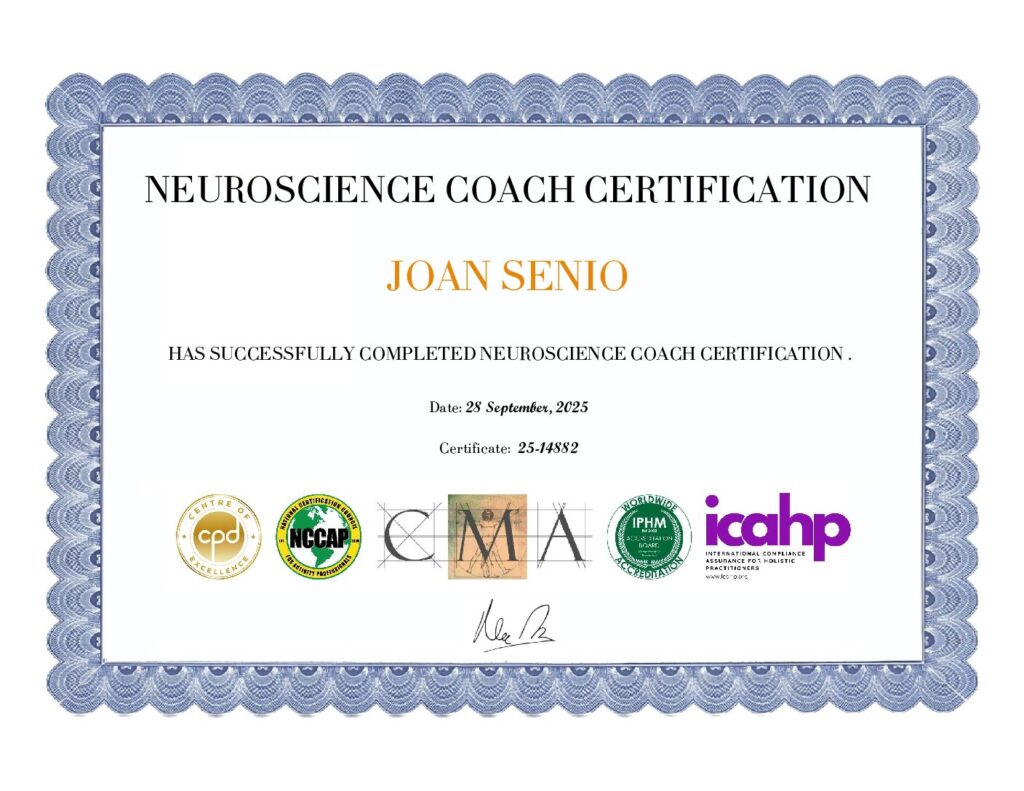
Joan Morabito Senio is the founder of Kindness-Compassion-and-Coaching.com. Joan’s career includes clinical healthcare plus 20+ years as an executive in a nationwide health care system and 15 years as a consultant. The common threads throughout Joan’s personal and professional life are a commitment to non-profit organizations, mental health, compassionate coaching, professional development and servant leadership. She is a certified Neuroscience Coach, member of the International Organization of Life Coaches, serves as a thought-leader for KuelLife.com and is also a regular contributor to PsychReg and Sixty and Me. You can read more about Joan here: Joan Senio.






One Response
[…] This can make it even more difficult to learn how to be assertive when it doesn’t come naturally. […]